Today's briefing covers five verified developments from October 14, prioritizing new releases, important infrastructure changes, and practical engineering insights.
The biggest news: GitHub has introduced a more sophisticated multi-model coding system, Cloudflare has made MySQL support generally available in Hyperdrive, and GitHub Actions now supports dependency lockfiles to strengthen CI/CD supply-chain security.
Today's strongest theme is reliability through better orchestration, reproducibility, and explicit system boundaries.
GitHub launches HydraFusion Max — multiple frontier models collaborate on a single coding task
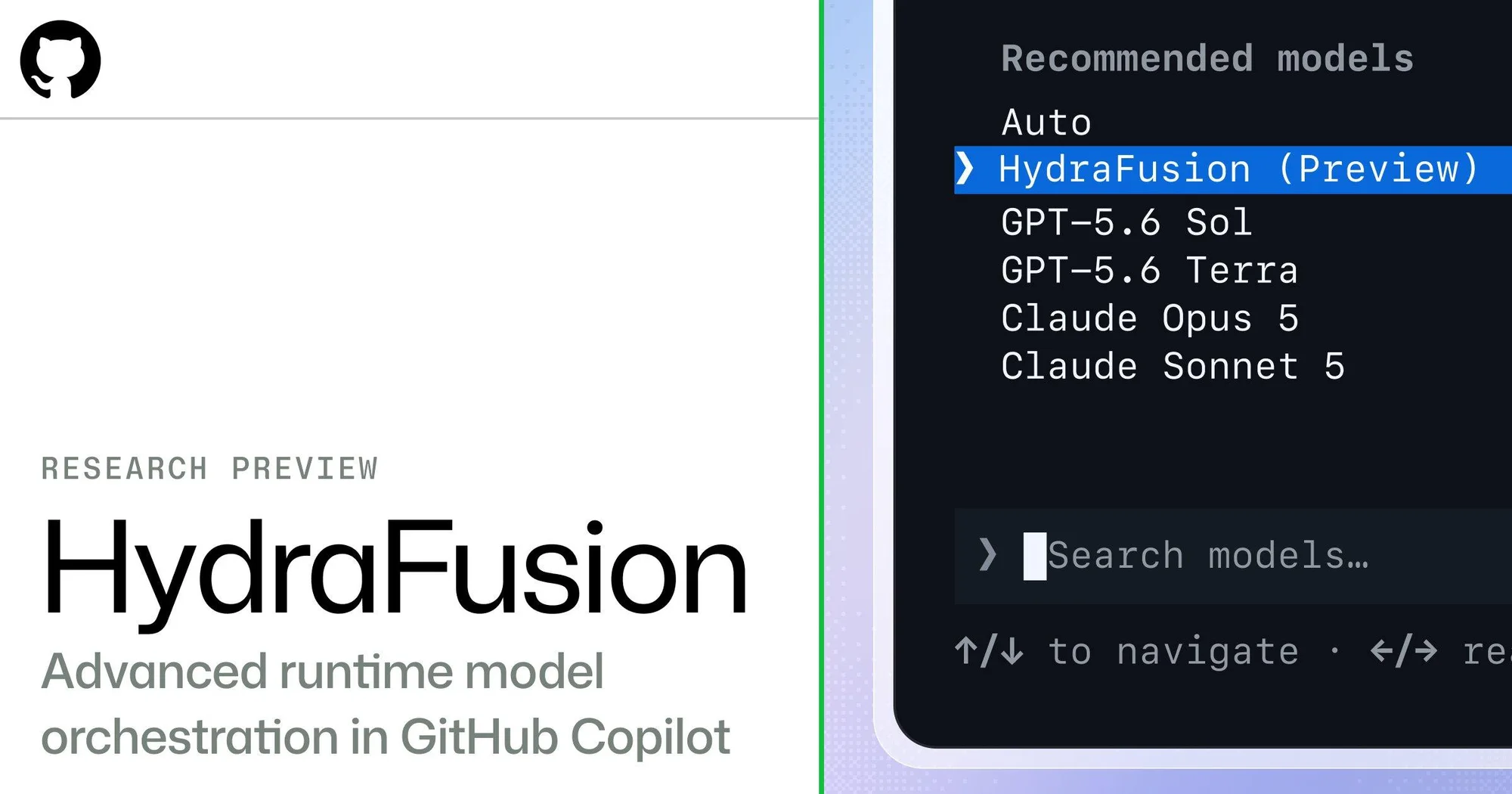 Related illustration — Project HydraFusion: Frontier quality through multi-model orchestration | LavX News
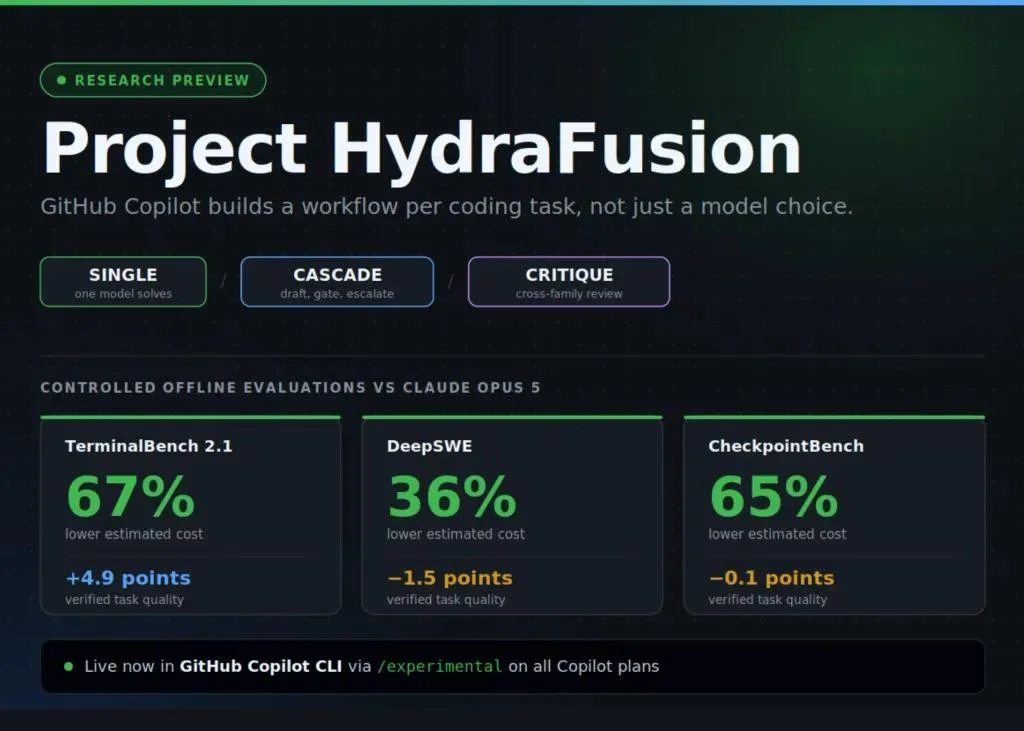 Related illustration — GitHub 推出 Project HydraFusion:多模型编排技术 - feaOS
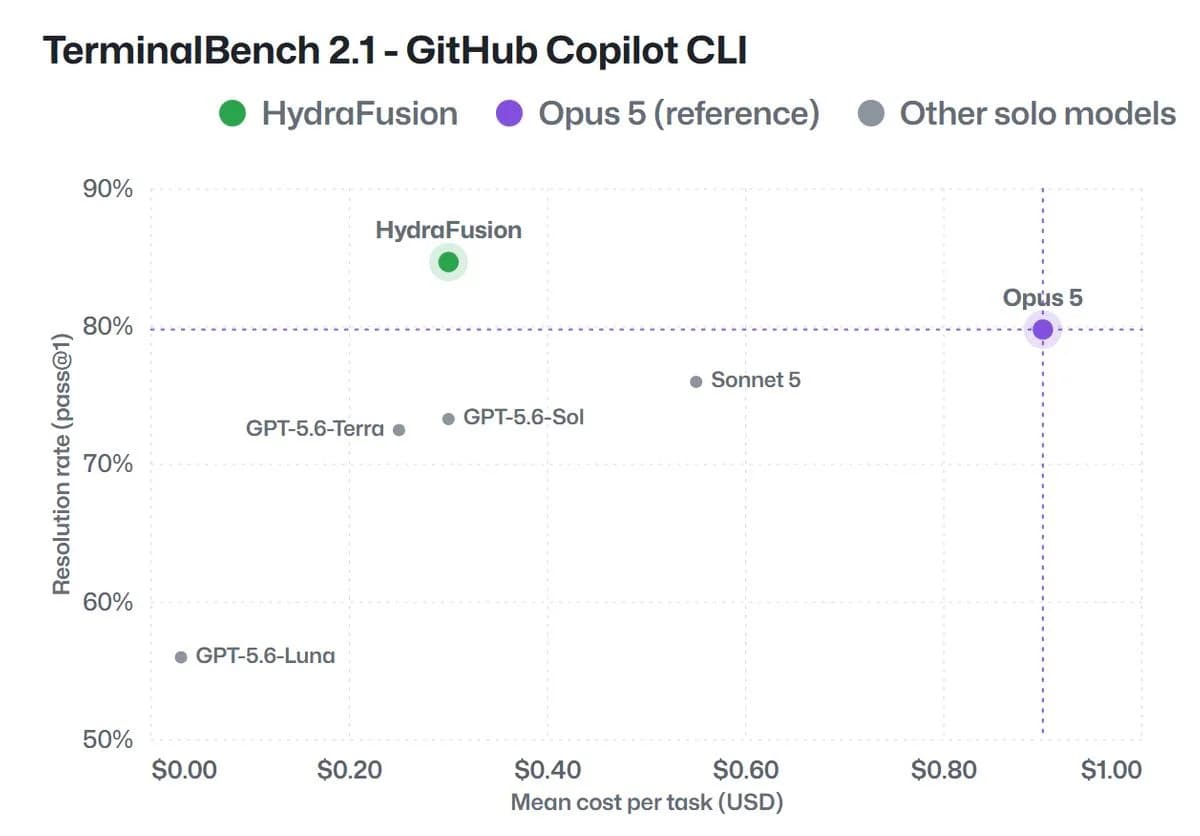 Related illustration — GitHub Copilotが複数AIモデルを自動で使い分ける「HydraFusion」を公開、TerminalBench 2.1でClaude Opus 5比コスト67%減・スコア4.9ポイント向上 - GIGAZINE
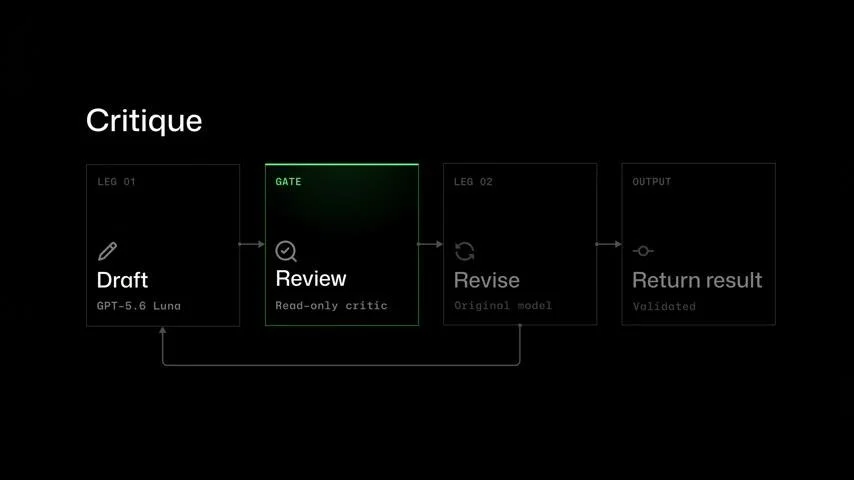 Related illustration — GitHub Copilot 混合路由实验 HydraFusion:终端基准成本降 67% 反超 Opus 5,三档工作流自动选路|觉醒AI知识库
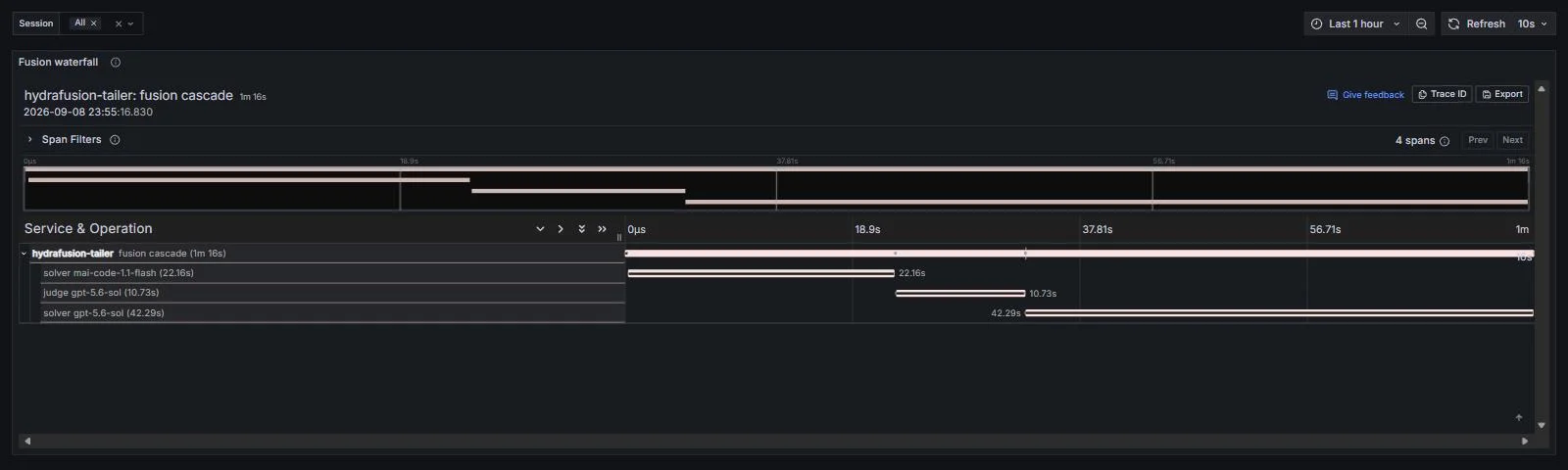 Related illustration — HydraFusion: emit per-phase model, verdict and credit attributes to OpenTelemetry · Issue #4825 · github/copilot-cli · GitHub
Released: October 14, 2026
GitHub has released a substantial update to HydraFusion, its experimental multi-model orchestration system for Copilot.
The update introduces HydraFusion Max, a configuration optimized for demanding software-engineering tasks.
Unlike conventional model selection, HydraFusion doesn't necessarily choose one model for an entire request. It can coordinate several models within the same execution workflow.
Its updated model pool includes Claude Opus 5.5, GPT-6 Astra, GPT-6.1 Sol, and GPT-6 Luna.
What's technically interesting?
GitHub has improved two orchestration strategies.
Cascade: A relatively efficient model generates an initial solution. A separate evaluation step determines whether the result is acceptable or requires repair or escalation.
Critique: A model produces an implementation, while multiple independent critics inspect the actual workspace using tools rather than relying exclusively on textual summaries.
HydraFusion now also adjusts reasoning effort dynamically. Initial drafts can use medium effort, while verification receives higher reasoning effort.
Conceptually:
Task → Initial implementation → Independent review → Repair or escalation
HydraFusion Max applies more intensive reasoning and review to difficult tasks, while standard HydraFusion prioritizes a balance between cost and capability.
Both remain in research preview across VS Code, Copilot CLI, and the Copilot app.
Why it matters for developers
This is an important architectural shift: model orchestration is becoming a first-class part of coding systems.
Rather than expecting one model to be equally good at architecture, implementation, debugging, and verification, different stages can use different capabilities.
For complex repository changes, independent review may catch mistakes that a single model repeatedly overlooks.
Engineering takeaway: evaluate coding agents by successful, verified task completion—not individual model benchmark scores. Multi-model systems may improve reliability, but their additional latency and token consumption must be measured.
GitHub Actions introduces workflow lockfiles — protecting CI/CD against silently changing dependencies
Released: October 14, 2026
GitHub has introduced dependency lockfiles for GitHub Actions, addressing a significant software supply-chain risk.
The feature is now in public preview for GitHub Free, Team, Enterprise Cloud, and Enterprise Cloud with data residency.
The underlying problem
Consider a typical workflow:
steps:
  - uses: actions/checkout@v4
  - uses: actions/setup-node@v4
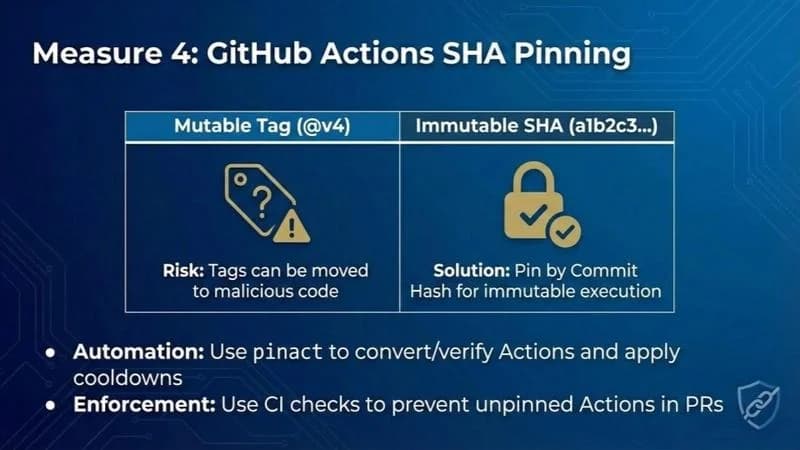
These references use tags rather than immutable commit hashes.
If a referenced tag moves, the workflow can execute different code without any modification to the workflow file.
That creates a security risk: a compromised action or repository could introduce malicious behavior into an otherwise unchanged CI pipeline.
How lockfiles work
GitHub's new system introduces:
.github/workflows/actions.lock
The lockfile records the exact commits associated with workflow dependencies.
Importantly, it also tracks transitive action dependencies and reusable workflow dependencies.
The resulting execution model is:
Workflow reference → Lockfile → Verified commit reference → Execution
GitHub Actions uses the recorded commit rather than blindly trusting the current target of a mutable tag.
Dependabot can update lockfile entries alongside ordinary dependency updates, keeping the workflow and its locked dependencies synchronized.
Administrators can also enforce lockfile requirements at repository, organization, or enterprise level.
Why it matters for developers
This is one of the most immediately useful security improvements in today's briefing.
CI/CD pipelines often have access to sensitive credentials, deployment environments, package registries, and production infrastructure.
A compromised dependency executing inside that environment can have consequences far beyond a failed build.
Engineering takeaway: adopt workflow lockfiles where available and review their contents during pull requests.
Remember that pinning makes execution reproducible; it doesn't establish that the pinned dependency is trustworthy.
Cloudflare makes MySQL Hyperdrive generally available — and reveals a subtle distributed-cache bug
 Related illustration — Pools across the sea: how Hyperdrive speeds up access to databases and why we’re making it free
 Related illustration — Pools across the sea: how Hyperdrive speeds up access to databases and why we’re making it free
 Related illustration — Build global MySQL apps using Cloudflare Workers and Hyperdrive
 Related illustration — Pools across the sea: how Hyperdrive speeds up access to databases and why we’re making it free
 Related illustration — Pools across the sea: how Hyperdrive speeds up access to databases and why we’re making it free
Released: October 14, 2026
Cloudflare has announced the general availability of MySQL support in Hyperdrive, its globally distributed database connection pooler for Workers.
The release is accompanied by an unusually valuable engineering investigation into a production bug that occurred in approximately 0.001% of requests.
The architecture
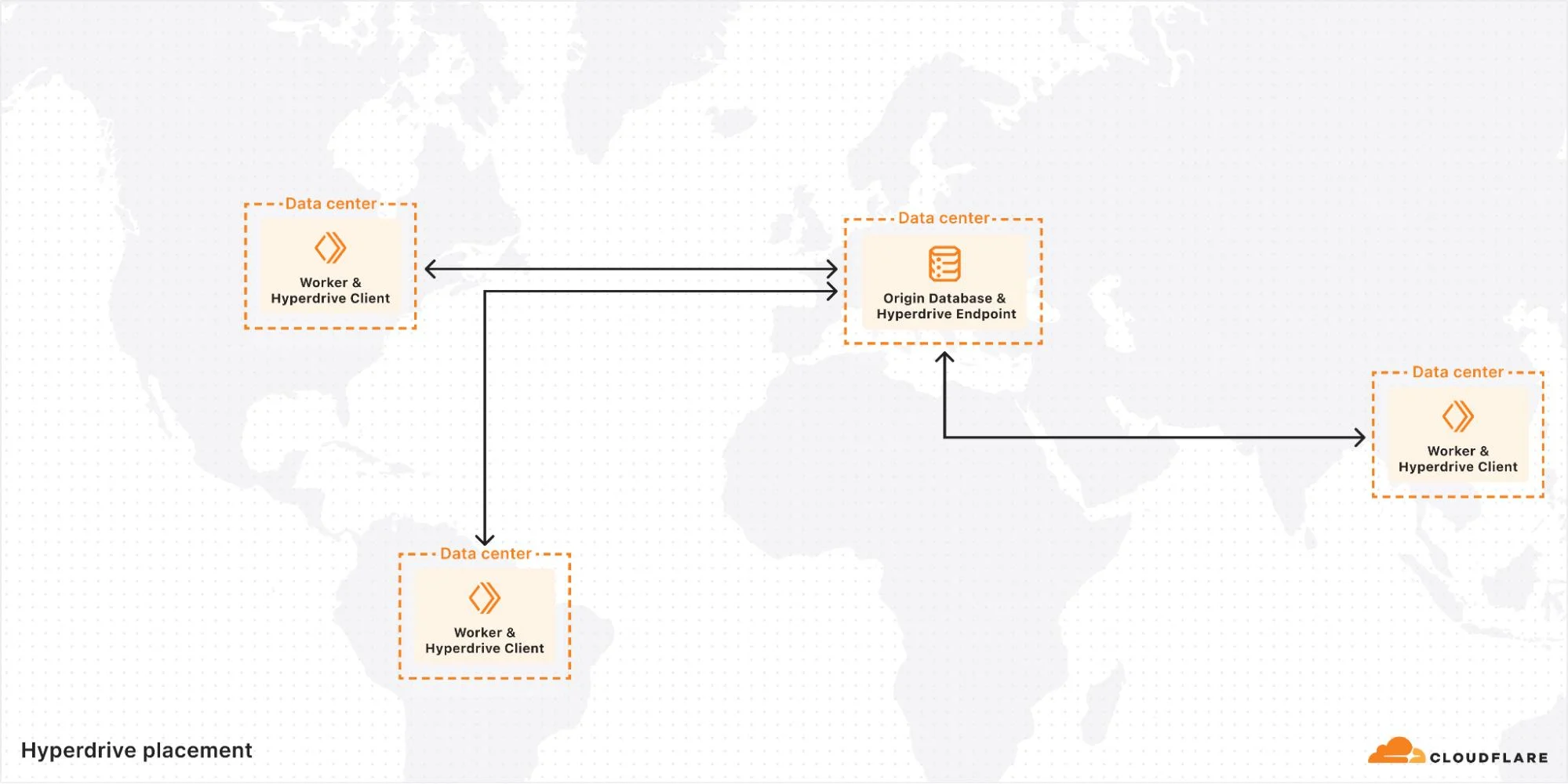
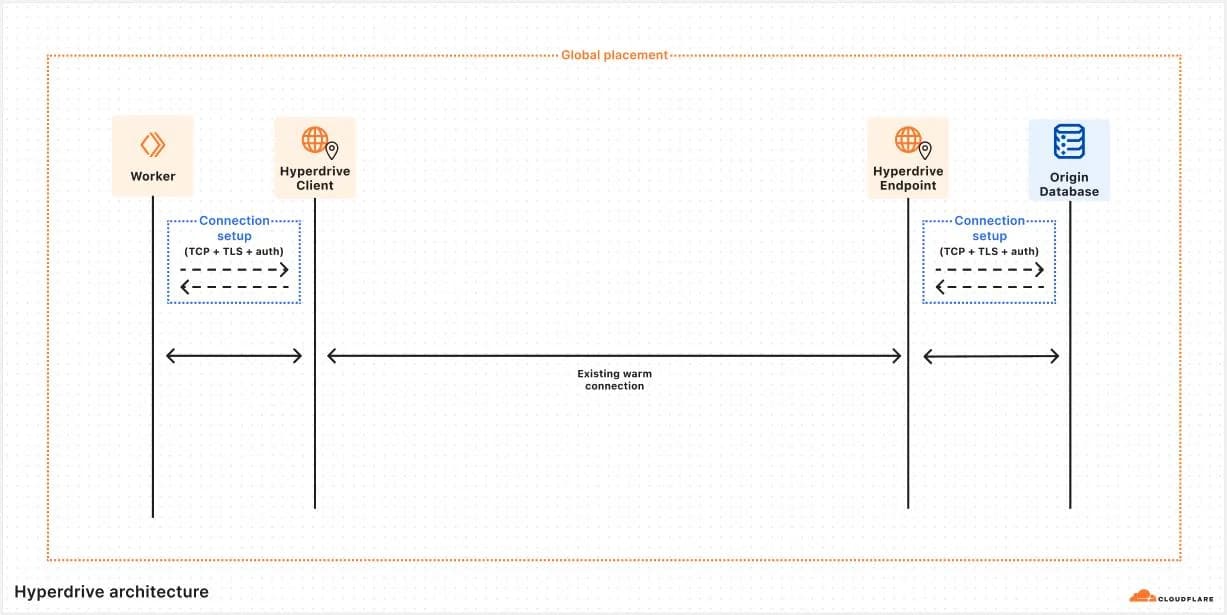
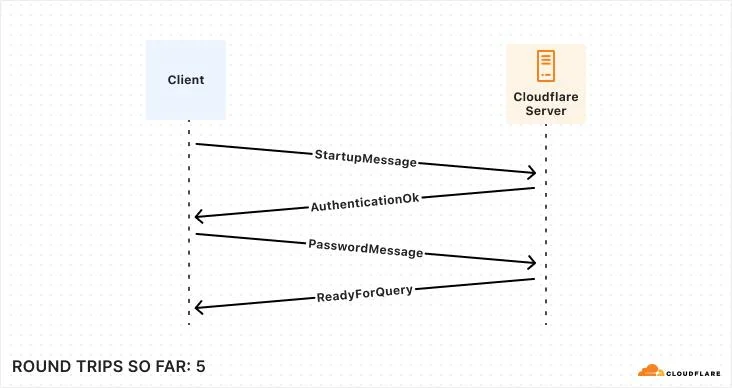
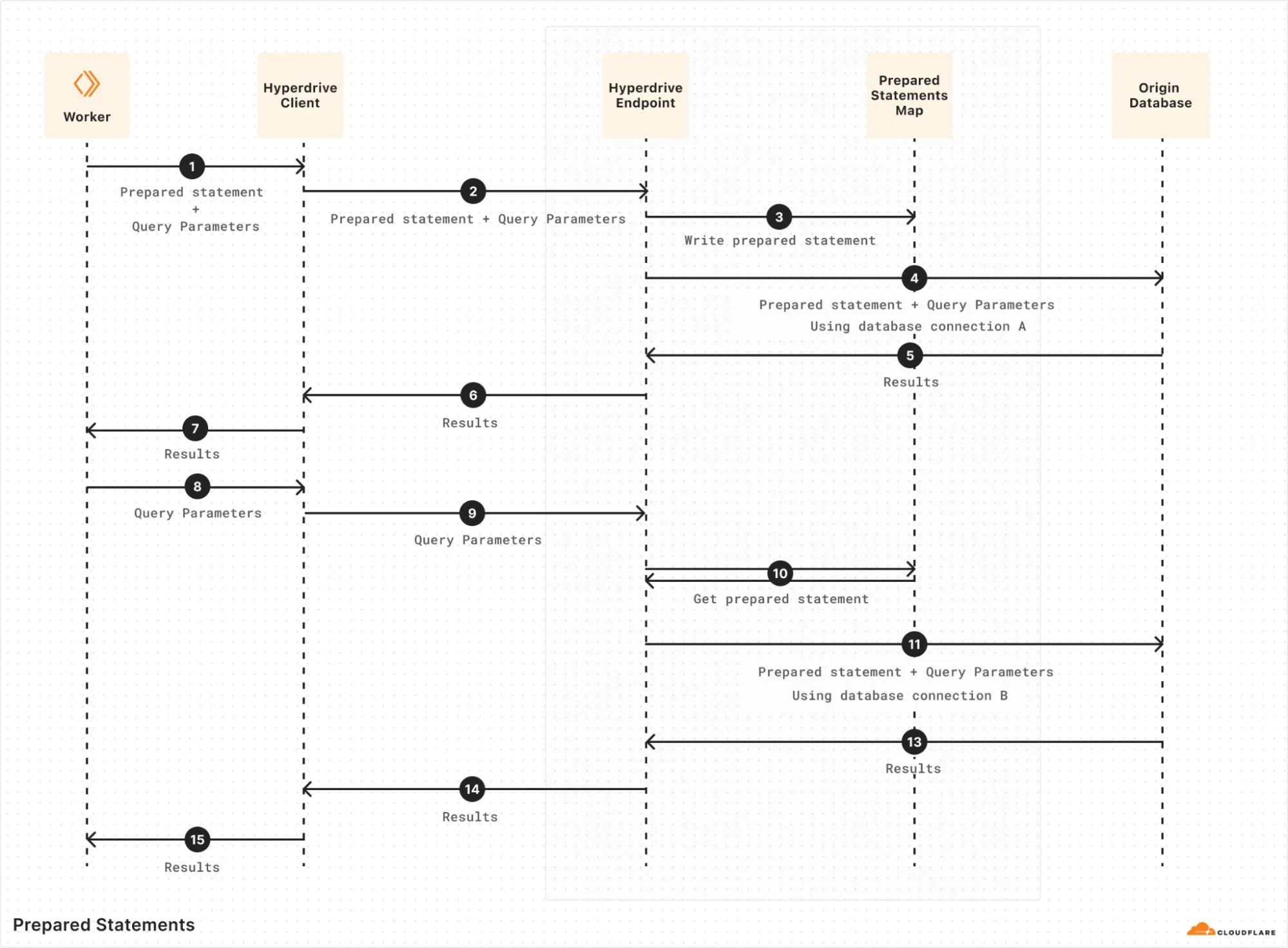
Hyperdrive maintains warm database connections close to the database origin, reducing the overhead of repeatedly establishing connections from serverless functions.
Its architecture contains two main components.
Client: Runs alongside a Worker, handles local caching, and forwards queries when necessary.
Endpoint: Maintains the connection pool near the origin database.
Both components can use Cloudflare's datacenter cache.
When they execute in the same datacenter, they can share that cache.
What went wrong?
The bug involved differences in MySQL protocol capabilities.
Certain clients, including the popular Node.js mysql2 library, don't support the CLIENT_DEPRECATE_EOF capability.
Consequently, Hyperdrive sometimes needed to translate MySQL result packets into a different wire format.
However, its caching implementation assumed that responses written by different components had identical representations.
That assumption was incorrect.
One component could cache a response encoded for the Worker, while another component expected Hyperdrive's internal representation.
Under specific conditions, the mismatch produced empty results or stalled queries.
The fix
Cloudflare changed the caching implementation to store a canonical representation of query results, independent of the capabilities negotiated with individual clients.
After the fix, Cloudflare reports that the empty-result problem disappeared and its connection success rate reached 99.99%.
Why it matters for developers
This is an excellent distributed-systems lesson.
Two representations of the same logical data are not necessarily interchangeable.
The problem wasn't a database query or a conventional cache-invalidation bug. It was a failure to preserve representation invariants across components sharing cached data.
Engineering takeaway: when multiple services share a cache, explicitly define its canonical serialization format. Test compatibility across protocol versions, client capabilities, and encoding configurations.
OpenAI announces the retirement of GPT-4o and GPT-4.1 API models

Announced: October 14, 2026
OpenAI has announced the upcoming retirement of several GPT-4-generation API models.
Developers using these models received deprecation notices on October 14.
The shutdown date is January 14, 2027.
The affected models include:
| Model | Retirement |
|---|---|
| GPT-4o | January 14, 2027 |
| GPT-4o mini | January 14, 2027 |
| GPT-4.1 | January 14, 2027 |
| GPT-4.1 mini | January 14, 2027 |
OpenAI recommends migrating these workloads to GPT-6 Luna.
Fine-tuned versions of the affected models follow the same retirement schedule as their underlying base models.
Why it matters for developers
Model deprecation is increasingly becoming a normal part of operating AI applications.
Unlike traditional software dependencies, hosted model identifiers can disappear from an API even when application code hasn't changed.
A production application might have model names embedded in configuration files, background workers, evaluation pipelines, or database records.
If those references aren't centrally managed, migration becomes difficult.
Recommended architecture
Instead of allowing every service to reference a provider-specific model directly, introduce a logical model abstraction:
Application
    ↓
Model configuration
    ↓
Provider adapter
    ↓
Concrete model version
For example, an application could reference a logical classification or reasoning model rather than embedding a specific provider model identifier throughout its codebase.
The migration process should also include regression tests for structured outputs, tool calling, latency, and cost.
Engineering takeaway: audit existing API model identifiers and establish a migration plan before January 14. Model upgrades should be treated as dependency changes requiring verification, not automatic improvements.
JetBrains integrates TRACE32 into CLion — bringing hardware debugging directly into the IDE
Released: October 14, 2026
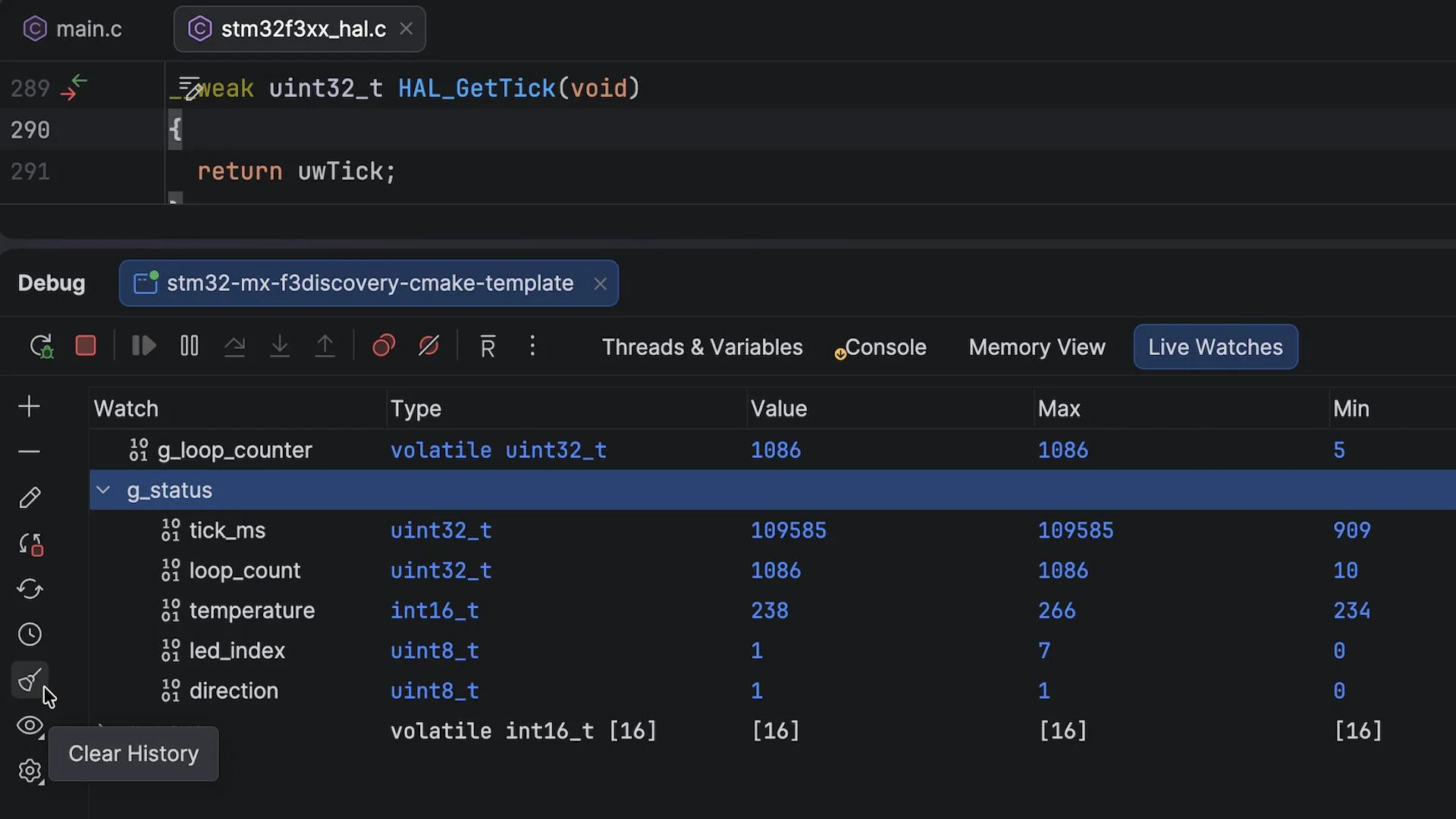
JetBrains and Lauterbach have announced an integration between CLion and TRACE32, a professional debugging and tracing platform for embedded systems.
The integration allows developers to debug software running on actual embedded hardware directly from CLion.
What's technically interesting?
The integration uses the Debug Adapter Protocol (DAP).
DAP provides a standardized interface between development environments and debugging backends.
Rather than implementing a proprietary debugging interface inside every IDE, tools can communicate through a common protocol.
The resulting architecture is:
CLion → Debug Adapter Protocol → TRACE32 → Target Hardware
Developers can control program execution, step through instructions, and inspect variables inside CLion, while TRACE32 handles communication with the underlying hardware.
Two workflows are supported.
Developers can launch a new TRACE32 PowerView session directly from CLion or attach to an existing session.
The integration requires CLion 2026.2.4 or later, TRACE32 PowerView 09.2026 or a supported build, and TRACE32 Debug Adapter 0.1.2 or later.
Why it matters for developers
This is a useful development for embedded and systems programmers, particularly teams working with C and C++.
It also demonstrates the broader value of standardized developer-tool protocols.
The same architectural principle behind DAP appears in other development ecosystems: separating the user interface from the execution or analysis backend.
That allows specialized tools to integrate with multiple development environments without duplicating their entire implementation.
Engineering takeaway: standardized protocols such as DAP and LSP reduce coupling between development tools. For teams building custom developer infrastructure, protocol-based integration is often more maintainable than IDE-specific implementations.
The bigger picture
The most important pattern across today's developments is making complex systems more predictable.
GitHub's HydraFusion is improving how multiple models collaborate and verify results. GitHub Actions lockfiles make CI dependencies reproducible. Cloudflare's Hyperdrive investigation demonstrates why shared representations need explicit contracts. OpenAI's deprecation announcement reinforces the importance of model lifecycle management, while JetBrains' integration shows the value of standardized interfaces.
Three engineering principles stand out:
1. Orchestration should be measurable. More models and more reasoning steps don't automatically mean better results. Evaluate cost, latency, and correctness together.
2. Reproducibility is a security property. Immutable dependencies, explicit versions, and stable serialization formats reduce unexpected behavior.
3. Abstraction boundaries matter. Model adapters, debugging protocols, and canonical data representations make systems easier to evolve without introducing hidden incompatibilities.
Today's top priorities: investigate HydraFusion Max if you use Copilot for complex development tasks, and adopt GitHub Actions lockfiles where available.
For deeper architectural reading, Cloudflare's Hyperdrive investigation is particularly worthwhile. It's a concrete example of how an extremely rare production failure can expose an important flaw in the assumptions connecting distributed components.
These briefings combine summaries of linked primary sources with engineering commentary by Emran Hejazi. Source links accompany each story so you can examine the original announcements and their claims.
Every new issue, in your feed reader.
Explore the architecture and engineering decisions behind my projects.