Today's briefing features five important developments from October 8–12, including a major frontier-model launch, a new Git security mechanism, and significant advances in AI inference infrastructure.
The biggest news: Meta has returned to the frontier-model competition with Muse Wonder. Meanwhile, GitHub is strengthening commit identity verification, Anthropic is introducing new defenses against model extraction, and Google has open-sourced a GPU inference engine already running across millions of devices.
All five stories are new to this briefing series.
Meta launches Muse Wonder and Muse Wonder Full — its most capable AI models yet
Released: October 12, 2026
Meta — Introducing Muse Wonder · Technical research and benchmarks
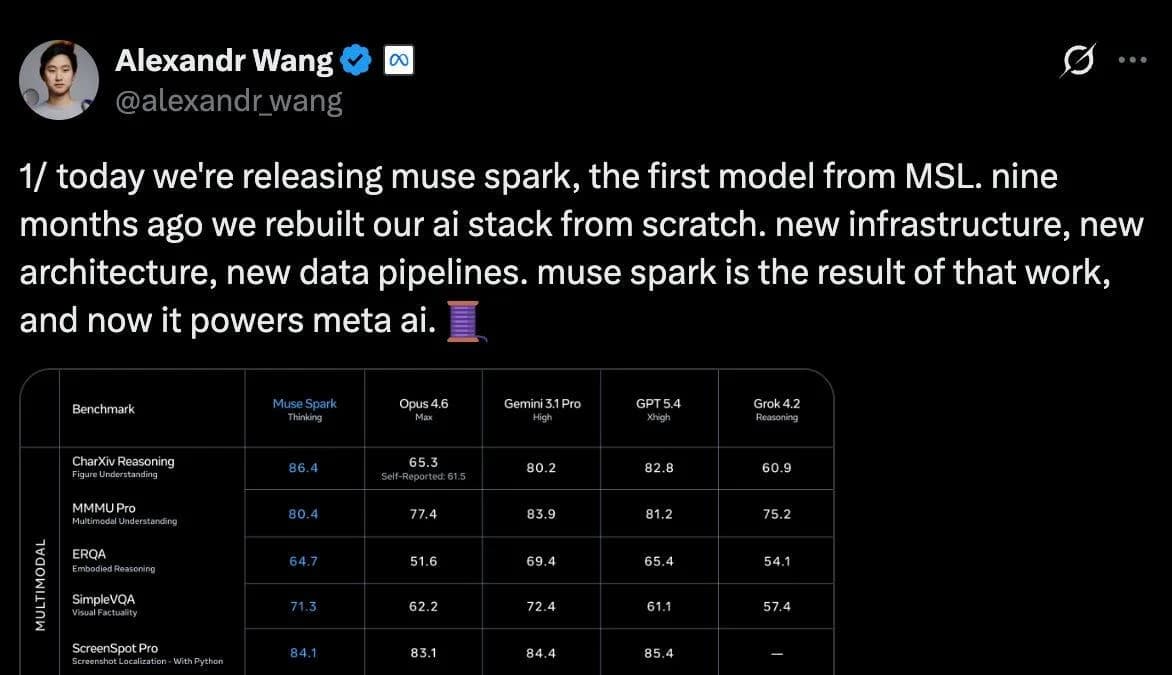
Meta has introduced Muse Wonder and Muse Wonder Full, its first major attempt to compete directly with the most capable frontier models from OpenAI and Anthropic.
The new models focus particularly on coding, reasoning, long-running agent tasks, and persistent memory.
Meta reports performance competitive with leading proprietary models across several benchmarks, although independent evaluation is still needed.
What's technically interesting?
Meta is emphasizing two capabilities.
Active Memory enables models to retain relevant information across conversations and retrieve it when needed.
Active Focus is designed to help agents maintain progress toward objectives, recover from errors, and attempt alternative approaches when an initial strategy fails.
These address two common weaknesses in autonomous systems: losing important context and abandoning tasks after unexpected failures.
The models were trained using Meta's Prometheus AI infrastructure, combining large-scale pretraining with reinforcement learning.
Availability and pricing: Muse Wonder is available through the Meta Model API and Muse Code. API pricing is reportedly $4 per million input tokens and $20 per million output tokens. The more capable Muse Wonder Full is currently restricted to Muse Code subscribers.
Why it matters for developers
The most important development is not simply another powerful model.
It's the growing emphasis on long-horizon agent reliability.
A conventional coding assistant might successfully implement a function but struggle to maintain coherent progress across a complicated, multi-hour task.
Persistent memory and improved error recovery could help address that limitation.
Engineering takeaway: evaluate Muse Wonder against your existing coding models using real repository tasks, particularly those requiring multiple tool calls, failed-test recovery, and extended execution. Don't assume vendor benchmark leadership translates directly into better results on your projects.
GitHub introduces authenticated push attribution — closing a major weakness in Git commit identity
Released: October 12, 2026
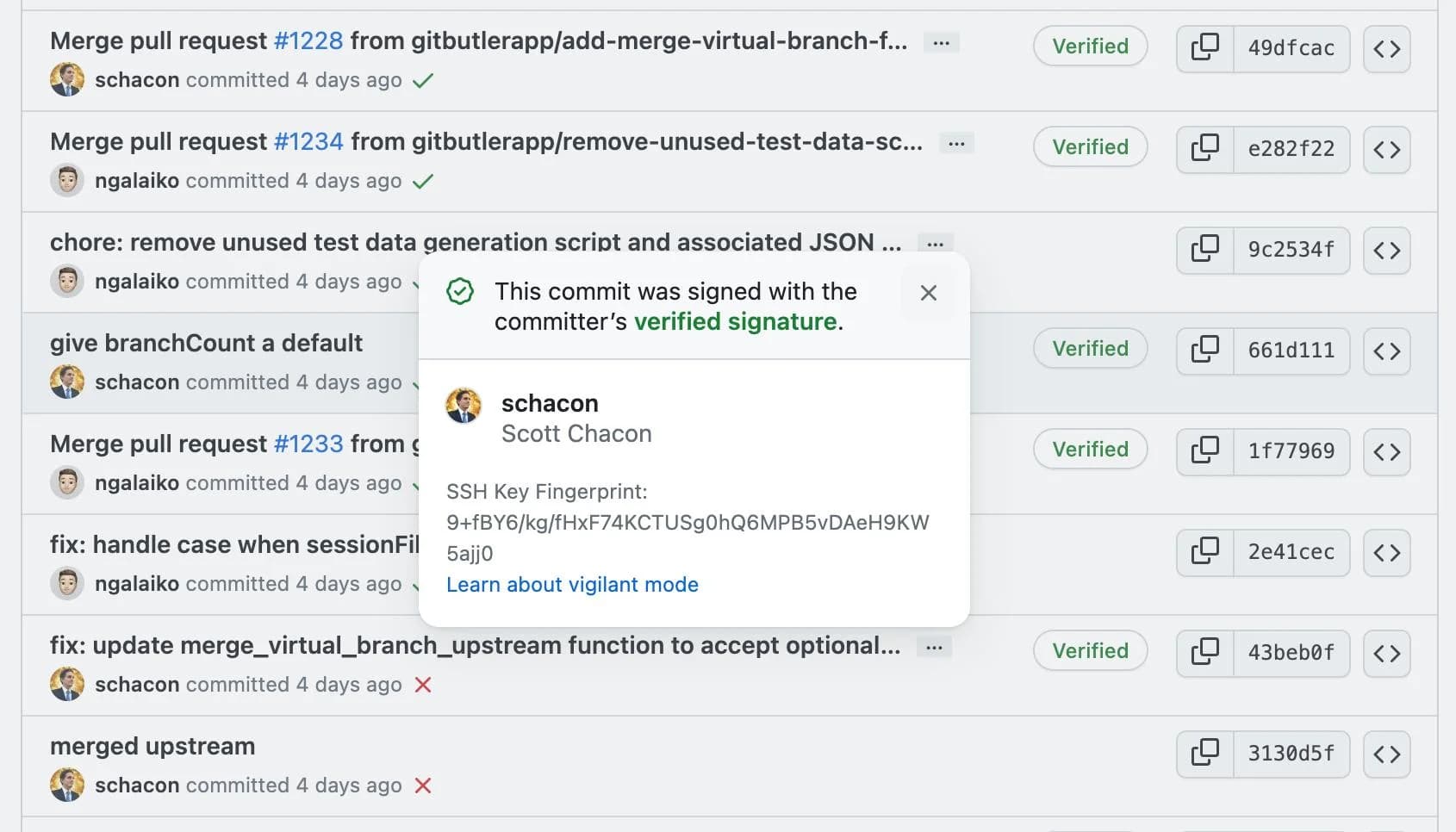
GitHub has introduced a new security mechanism that distinguishes who claims to have authored a commit from who actually pushed it to GitHub.
This addresses a longstanding limitation of Git's identity model.
The underlying problem
Git commits contain two identity fields:
Author:    developer@example.com
Committer: developer@example.com
However, those values are supplied by the Git client.
A developer with repository write access can configure them to contain another person's name and email address.
GitHub authenticates the account performing the push, but that authenticated identity has historically been separate from the commit's displayed author and committer metadata.
This creates opportunities for misleading attribution and can complicate security investigations.
What's changing?
GitHub now records an additional identity associated with each pushed commit:
Commit
├── Author
├── Committer
└── Authenticated Pusher
The authenticated pusher is recorded by GitHub independently of the identity strings supplied in the commit.
GitHub is also introducing a repository rule called Committer must match pusher.
When enabled, it rejects pushes where the committer identity doesn't correspond to a verified email address belonging to the authenticated pusher.
The capability is currently in limited public preview for GitHub Enterprise customers.
Why it matters for developers
This becomes increasingly important as autonomous coding agents create commits and push changes.
A development environment might involve multiple agents, service accounts, CI identities, and human contributors.
Being able to determine which authenticated account introduced a commit strengthens auditing and incident response.
Engineering takeaway: treat Git commit metadata as descriptive information, not sufficient proof of identity. For sensitive repositories, combine authenticated push attribution with signed commits, branch protection, and carefully scoped automation credentials.
Cloudflare explains its new SQL-powered log transformation architecture — processing millions of records without an extra service
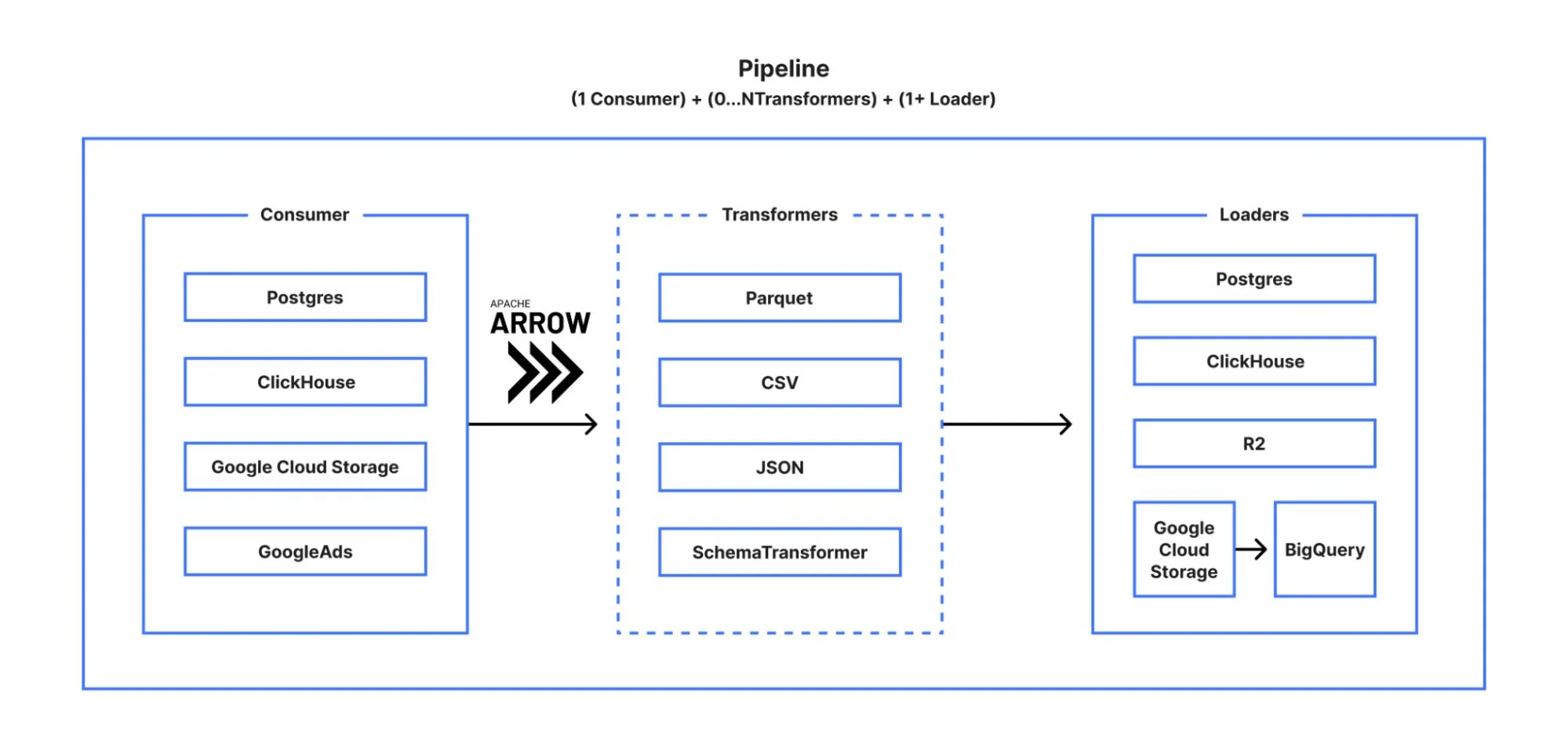 Related illustration — Building Jetflow: a framework for flexible, performant data pipelines at Cloudflare
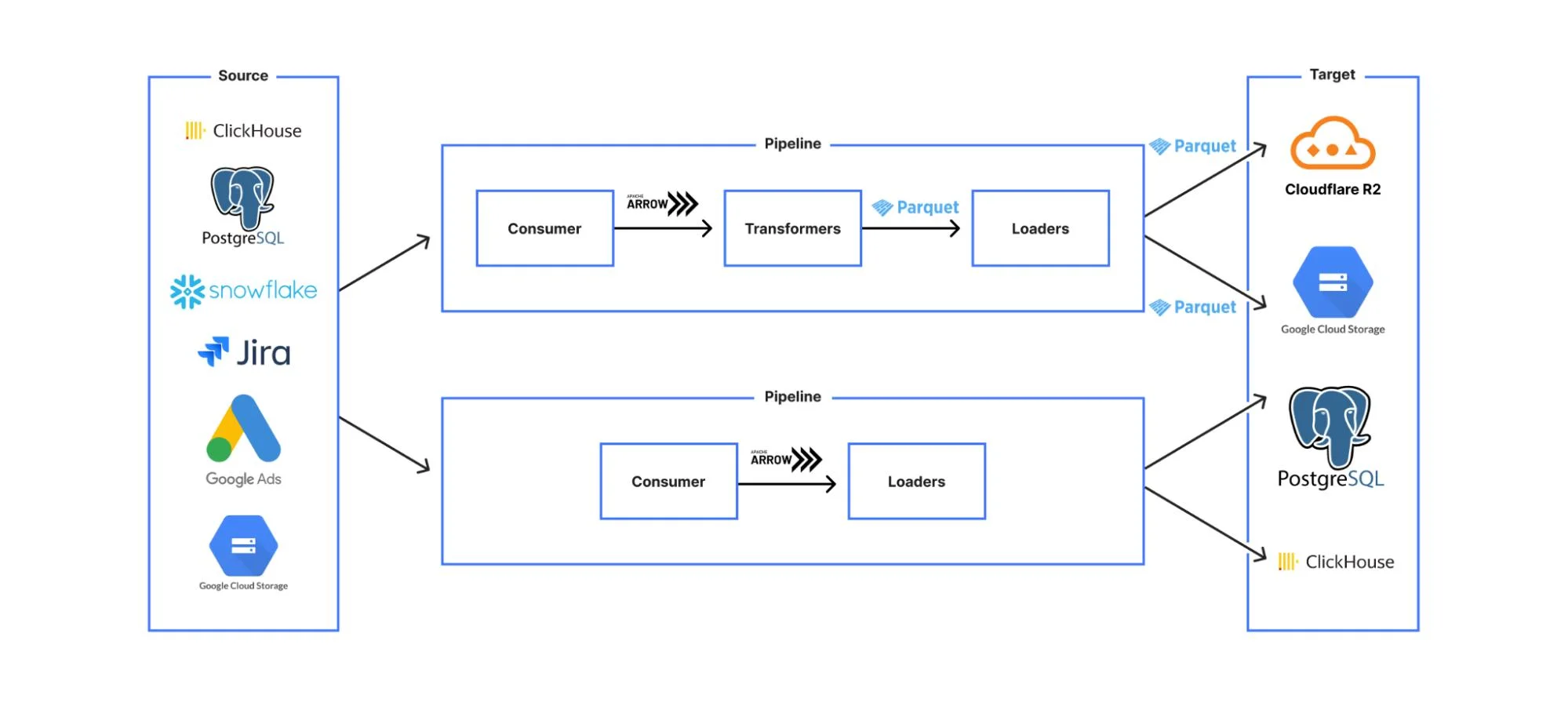 Related illustration — Building Jetflow: a framework for flexible, performant data pipelines at Cloudflare
Technical release: October 12, 2026
Cloudflare published a detailed engineering breakdown of Logpush Transformers, a recently generally available feature that allows developers to manipulate logs before exporting them to external observability systems.
The architecture is particularly interesting because it embeds SQL execution directly into a high-throughput data pipeline.
The problem
Production systems generate enormous amounts of telemetry.
Applications frequently export logs containing unnecessary fields, health-check requests, or sensitive information that should never reach external storage.
Traditionally, teams solve this by introducing another processing service:
Application → Logging Pipeline → Transformation Service → Storage
That additional service requires infrastructure, monitoring, scaling, and failure handling.
Cloudflare's approach removes that intermediate service.
How it works
Developers define SQL transformations that execute inside the Logpush pipeline.
For example:
SELECT
    ClientIP,
    EdgeResponseStatus,
    RayID
FROM http_requests
WHERE EdgeResponseStatus >= 500;
This exports only requests returning server-side errors, selecting the relevant fields.
The underlying execution engine uses Apache DataFusion, a Rust-based SQL engine built on Apache Arrow.
Cloudflare's delivery service is written in Go, so the architecture connects Go and Rust through a foreign-function interface while exchanging typed columnar batches using Arrow IPC.
The resulting pipeline is:
Log Batch → Arrow → DataFusion SQL → Filtered Batch → Export
In Cloudflare's benchmark, processing 5,000 synthetic HTTP-request records took approximately 3 milliseconds, equivalent to around 1.6 million records per second for that test configuration.
Cloudflare also designed transformations to fail closed: when a transformation fails, the system retries rather than exporting untransformed data that might contain sensitive information.
Why it matters for developers
This is an excellent distributed-systems case study.
The key decision was avoiding a network call on a latency-sensitive processing path.
Instead of introducing another microservice, Cloudflare embedded a specialized execution engine inside its existing delivery infrastructure.
Engineering takeaway: not every processing responsibility needs a separate service. For high-throughput pipelines, carefully designed in-process execution can reduce network overhead, operational complexity, and failure scenarios.
Google open-sources ML Drift — a new GPU inference engine for Android, iOS, web, and desktop
Released: October 8, 2026
Google Developers — Introducing ML Drift · ML Drift source code
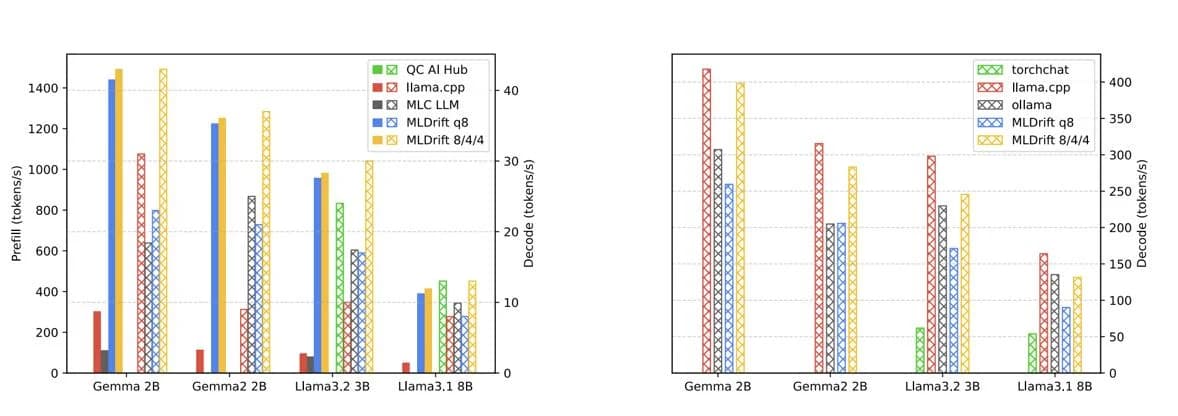
Google has released ML Drift, an open-source GPU compute engine designed to accelerate machine-learning inference across heterogeneous hardware.
The project is available under Apache 2.0 and serves as the new GPU acceleration foundation for LiteRT.
It supports multiple GPU APIs, including OpenGL ES, OpenCL, Metal, and WebGPU.
What's technically interesting?
The most important architectural improvement is tensor virtualization.
Historically, GPU inference engines frequently needed different shader implementations depending on the underlying graphics API.
ML Drift introduces an abstraction that separates logical tensor representations from their physical GPU storage.
Conceptually:
ML Operation → Virtual Tensor → Backend-Specific GPU Representation
This allows more shader logic to be shared across hardware platforms.
ML Drift also introduces several significant improvements.
Five-dimensional tensor support: Enables more natural execution of certain volumetric and spatiotemporal models without restructuring them into four-dimensional representations.
Custom GPU operations: Developers can register specialized GPU kernels and integrate them into model execution graphs.
Stage-aware LLM optimization: The runtime uses different execution strategies for prompt prefill and token generation, reflecting their different compute and memory-bandwidth requirements.
Desktop WebGPU support: Google's Dawn implementation allows the WebGPU backend to run natively on Windows and Linux, alongside Metal support on macOS.
Production performance
Google reports that ML Drift is already deployed across millions of devices.
Its published results include:
- Up to 40% lower average frame latency for selected YouTube Shorts effects.
- Up to 30% faster on-device operations in selected Adobe imaging workloads.
- Up to 12% lower memory overhead than competing frameworks in certain Gemma benchmarks.
These are workload-specific results reported by Google, not universal speedups.
Why it matters for developers
This is particularly relevant to developers building Android applications or privacy-sensitive AI features.
On-device inference can reduce network dependence, eliminate some recurring inference costs, and keep sensitive application data local.
But GPU fragmentation has historically made deployment difficult.
ML Drift attempts to make that infrastructure more portable.
Engineering takeaway: if you're developing applications with local computer vision, semantic search, or small language models, investigate LiteRT's ML Drift accelerator before building hardware-specific inference infrastructure yourself.
Anthropic reports a 90–99% reduction in extracted reasoning data after strengthening its anti-distillation defenses

Published: October 12, 2026
Anthropic published a detailed investigation into protecting frontier models against unauthorized capability extraction.
The company reports that its new defenses have reduced the amount of reasoning data extracted by identified distillation operations by approximately 90–99%.
This is an early internal measurement, not a guarantee against future attacks.
What is a distillation attack?
Model distillation ordinarily involves training a smaller model using outputs generated by a larger model.
It can be a legitimate machine-learning technique when the required permissions are in place.
The attacks Anthropic describes involve unauthorized attempts to collect large volumes of proprietary model behavior, particularly internal reasoning traces, to reproduce capabilities in competing systems.
Anthropic's new architecture
The company describes three defensive layers.
Reasoning-context protection: Newer Claude models restrict how previous reasoning content can be modified, transferred, or accessed across conversations, accounts, and models.
Two-stage classifiers: A specialized detection system identifies requests attempting to extract protected reasoning.
Behavioral enforcement: Accounts repeatedly attempting extraction face stricter limits or removal.
Anthropic reports a false-positive rate below 0.1% for its classifier system.
One experiment also illustrates why reasoning traces are valuable training data.
A model trained using complete reasoning transcripts achieved 80.4% on SWE-bench Verified, compared with 71.8% when trained using summarized reasoning transcripts.
That is an 8.6-percentage-point difference in the reported experiment.
Why it matters for developers
The broader engineering lesson concerns protecting valuable model behavior exposed through APIs.
Rate limiting alone is not sufficient when an attacker can distribute requests across many accounts.
Providers increasingly need multiple layers:
Request → Abuse Detection → Policy Enforcement → Model → Output Controls
There are also legitimate developer trade-offs.
Anthropic acknowledges that some integrations needed changes, that benign requests can occasionally be blocked, and that certain blocked requests are now billable.
Engineering takeaway: developers building AI platforms should consider abuse detection, tenant isolation, request-pattern analysis, and API access policies alongside traditional authentication and rate limiting.
The bigger picture
These five developments highlight three important shifts.
AI models are becoming more capable of sustained work. Meta's Muse Wonder family emphasizes memory, persistence, and recovery from failure rather than isolated question-answering performance.
Infrastructure is becoming more efficient and portable. Cloudflare's in-process log transformations and Google's cross-platform GPU engine demonstrate how carefully chosen abstractions can eliminate unnecessary complexity.
Identity and security are becoming more explicit. GitHub is separating authenticated identity from untrusted commit metadata, while Anthropic is strengthening enforcement around access to proprietary model capabilities.
For software developers, the most useful architectural pattern today is:
Capable models → Reliable execution → Efficient infrastructure → Verified identity → Enforceable security boundaries.
My priority for further technical reading: Cloudflare's Logpush Transformers architecture and Google's ML Drift implementation. Both provide concrete engineering techniques—batch-oriented processing, memory ownership across language boundaries, GPU abstraction, and workload-specific optimization—that can be applied well beyond their original products.
These briefings combine summaries of linked primary sources with engineering commentary by Emran Hejazi. Source links accompany each story so you can examine the original announcements and their claims.
Every new issue, in your feed reader.
Explore the architecture and engineering decisions behind my projects.