Today's briefing covers five major releases from October 15, prioritizing new AI models, full-stack development infrastructure, and production-ready security tooling.
The biggest news: Meta has released an 816-billion-parameter open-weight model optimized for Apple Silicon. NVIDIA has introduced three new models targeting everything from enterprise agents to local inference. Meanwhile, Cloudflare is bringing full-stack development into Vite, and GitHub has made two major AI security capabilities generally available.
All five developments are new to this briefing series.
Meta releases Muse Spark Open — an 816B open-weight model that runs on two Mac Studios

Released: October 15, 2026
Meta AI Research — Introducing Muse Spark Open · Developer documentation
Meta has released Muse Spark Open, an open-weight model designed for complex software engineering, autonomous coding, and long-running agent workflows.
Meta describes it as the most capable open-weight model developed in the United States to date. That is Meta's characterization, rather than an independently established ranking.
The model's specifications are substantial.
| Specification | Muse Spark Open |
|---|---|
| Total parameters | 816 billion |
| Active parameters | 42 billion |
| Architecture | Sparse Mixture-of-Experts |
| Context window | 1 million tokens |
| Input modalities | Text, image, audio, video |
| Primary workloads | Coding, reasoning, agents |
| License | Muse Model License |
The weights are available for download, with hosted inference also offered through several providers.
What's technically interesting?
The biggest announcement is Meta's collaboration with Apple to run the model locally using the MLX framework.
Meta demonstrated the model operating across two M5 Ultra Mac Studios, each equipped with 512GB of unified memory.
Together, the machines provide approximately 1TB of memory.
This matters because a sparse MoE model doesn't need to activate all 816 billion parameters for every token, but its weights still need to be stored and accessed during inference.
The distinction is:
816B total parameters determine the model's storage requirements.
42B active parameters determine much of its per-token computation.
Meta also demonstrated the model autonomously modifying and building an iOS application, alongside operating DaVinci Resolve to inspect and edit video.
For deployment, the model supports inference engines including MLX, vLLM, SGLang, TensorRT-LLM, and llama.cpp.
The release includes optimized GPU kernels delivering 1.03–3.95× speedups in individual kernels, although Meta reports a smaller 3% end-to-end improvement on AMD MI350 hardware.
Why it matters for developers
This is an important step toward owning the infrastructure behind frontier-scale coding agents.
Instead of permanently depending on a proprietary API, organizations can download model weights, customize them, and operate inference inside their own environments.
However, this is not a practical local model for an ordinary laptop. Its memory requirements remain substantial, and the license includes commercial restrictions.
Engineering takeaway: Muse Spark Open is worth evaluating for private coding agents and large-repository analysis, particularly where data residency matters. For individual developers, hosted inference is considerably more practical than purchasing the hardware needed to self-host it.
NVIDIA launches Nemotron 3.5 Super VL and Bolt — bringing powerful agent models to local hardware
Released: October 15, 2026
NVIDIA — Nemotron 3.5 announcement · NVIDIA — Technical architecture deep dive
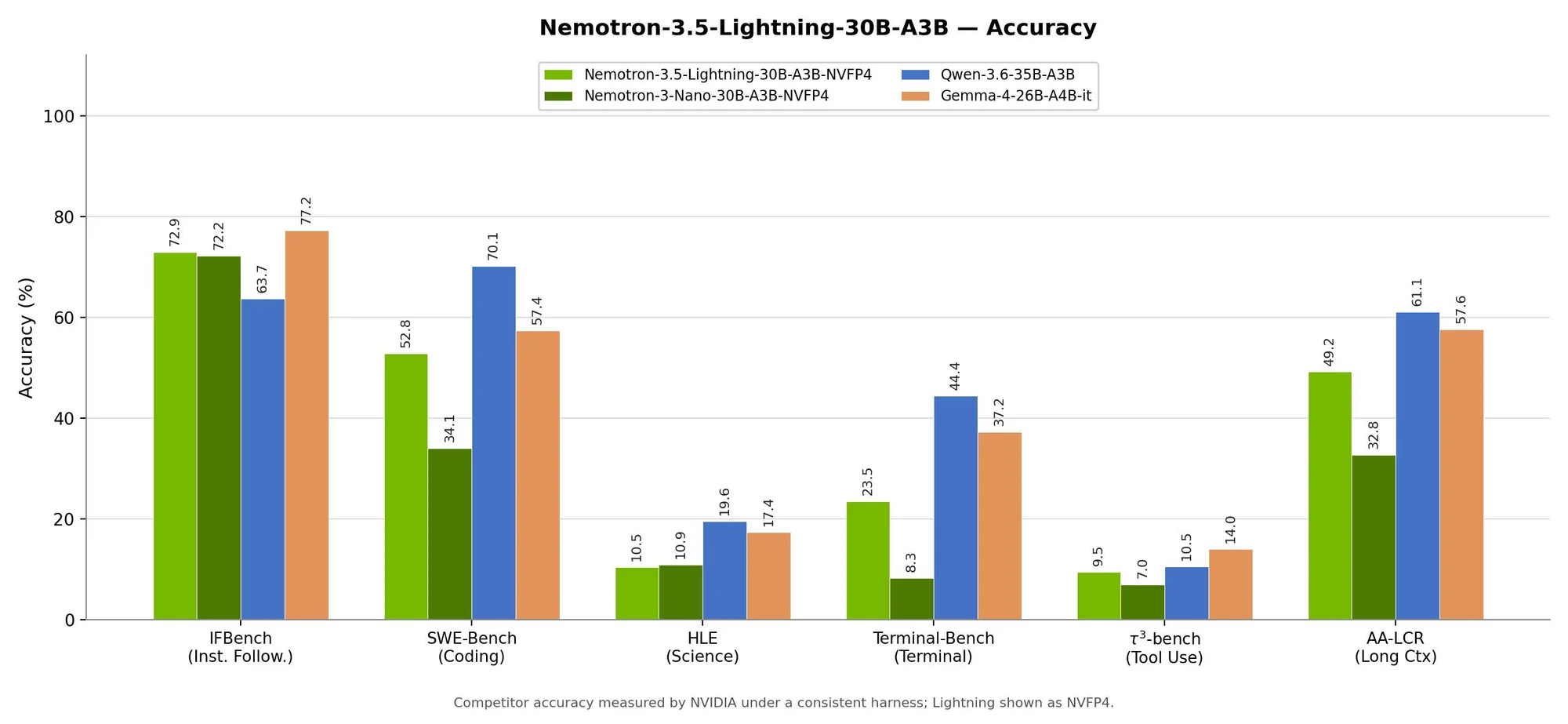
NVIDIA has expanded its open-model family with three models targeting different deployment environments.
Nemotron 3.5 Super VL is a 120-billion-parameter multimodal model, activating approximately 12 billion parameters per token.
Nemotron 3.5 Bolt 74B-A9B targets local coding and agentic workflows, with a quantized version designed to fit within 24GB of memory.
Nemotron 3.5 Bolt E4B targets conversational and embedded agents, with a 4GB configuration scheduled for October 23.
Super VL and Bolt 74B-A9B are available now.
What's technically interesting?
The biggest improvement is inference efficiency.
NVIDIA reports that Super VL achieves up to five times higher throughput than competing open models in its size category.
Its architecture combines several optimizations.
LiLiCorr speculative decoding improves token generation by predicting multiple candidates and validating them efficiently.
NVFP4 quantization reduces the memory and bandwidth required for weights and activations.
Multi-token prediction allows the model to propose several output tokens before verification.
Context reuse preserves attention caches and Mamba recurrent states across repeated agent calls.
These optimizations target a particularly expensive pattern in agentic systems: repeatedly sending similar context through a model during long-running workflows.
NVIDIA also reports substantial improvements from its distributed inference infrastructure.
Using Dynamo with 16 B200 GPUs, KV-cache-aware routing and cache offloading supported up to eight times as many users while reducing time to first token by 85%, at the tested per-user generation rate.
These results are configuration-specific rather than universal performance guarantees.
Why it matters for developers
This is particularly relevant to developers who want to run coding agents locally without purchasing enterprise GPU infrastructure.
Bolt's 24GB configuration makes capable agentic inference more accessible on high-end consumer hardware.
The broader architectural lesson is that model intelligence and deployment efficiency must be evaluated together.
A model with excellent benchmark results but poor throughput can become prohibitively expensive when dozens of agents operate concurrently.
Engineering takeaway: evaluate local coding models using successful tasks per minute, memory consumption, and cost per completed task—not merely tokens per second or parameter counts.
Cloudflare launches Void — a new full-stack framework built around Vite, React, and automatic infrastructure provisioning
Released: October 15, 2026
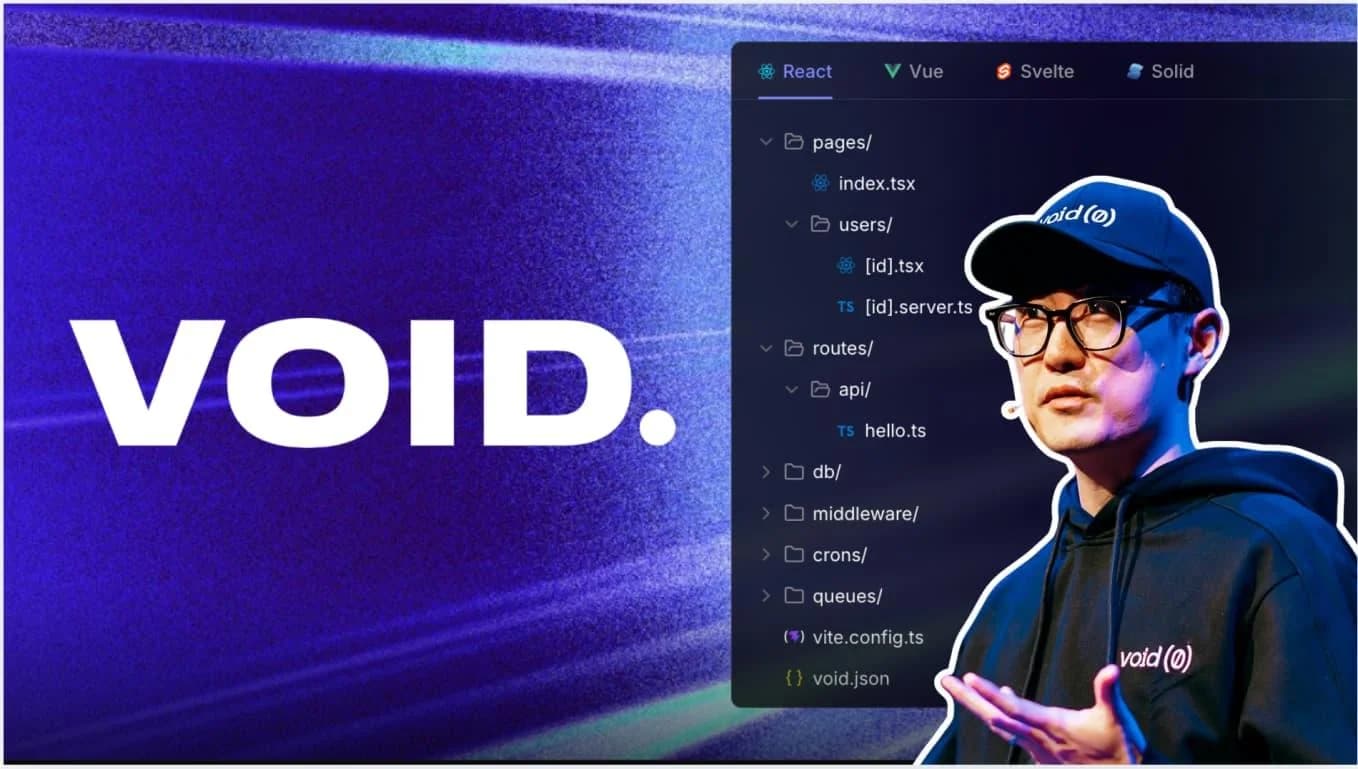
Cloudflare has announced Void, an open-source development platform designed to turn Vite applications into full-stack applications with integrated backend capabilities and automated deployment.
This is one of the most directly relevant releases for JavaScript and TypeScript developers.
Void introduces three components.
Void SDK: A composable JavaScript SDK for building full-stack applications using Vite.
Void CLI: A command-line interface for provisioning resources, deploying applications, and managing infrastructure.
Void Platform: A self-hostable management platform that allows organizations to deploy and govern applications on Cloudflare.
What's technically interesting?
Void attempts to eliminate the separation between frontend development and infrastructure provisioning.
A conventional full-stack application might require developers to configure several independent systems:
Frontend → API → Database → Authentication → Queues → Deployment
Void instead allows applications to declare the resources they need through imports.
For example:
import { db } from "void/db";
During development, Void provides a local database.
During deployment, it can automatically provision Cloudflare D1.
Similarly:
import { ai } from "void/ai";
This enables AI functionality through Cloudflare's AI Gateway without requiring developers to manually configure every underlying binding.
The framework supports React and Vue adapters, file-based API routing, server rendering, caching, and end-to-end type inference.
It can also integrate with existing frameworks, including React Router, SvelteKit, Nuxt, TanStack Start, and Astro.
Void uses technologies such as Hono for resource APIs and Better Auth for authentication.
Deployment becomes considerably simpler
Developers can install the package:
npm install void
Then deploy an application using:
void deploy
The CLI builds the application, applies migrations, provisions required resources, and deploys it to Cloudflare or a configured Void Platform.
Organizations can also operate a shared deployment platform with centralized access controls, resource limits, and deployment management.
Why it matters for developers
This is an interesting development in the competition between full-stack frameworks and deployment platforms.
Void is not simply another frontend framework.
It's an attempt to make infrastructure a consequence of application code.
That can reduce configuration duplication and make it easier for coding agents to build complete applications.
However, automatic infrastructure provisioning introduces its own concerns around migration safety, resource ownership, and environment isolation.
Engineering takeaway: Void is worth experimenting with for new TypeScript applications and internal tools. Its declarative resource model is particularly interesting, but production systems should still require explicit review of database migrations and infrastructure changes.
GitHub makes AI Scan generally available — detecting vulnerabilities beyond CodeQL's language coverage
Released: October 15, 2026
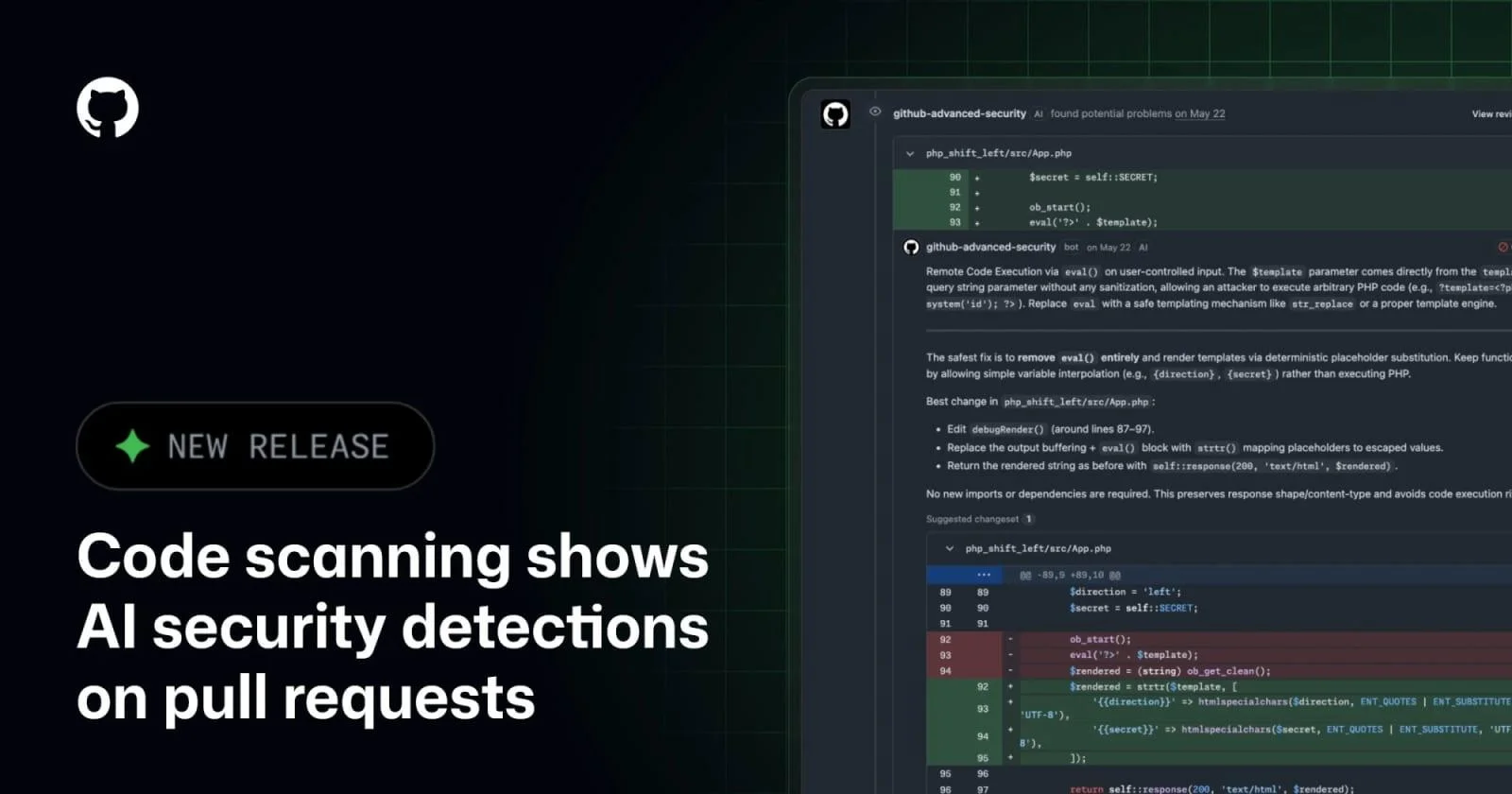
GitHub has made AI Scan for pull requests generally available, expanding its security-analysis capabilities beyond conventional CodeQL coverage.
The feature is designed to identify potential vulnerabilities in pull-request changes, particularly in languages and frameworks that CodeQL doesn't currently support.
These include PHP, Shell/Bash, Terraform HCL, Dockerfiles, Java JSP, and C# Blazor.
AI Scan runs automatically when code scanning and the repository's AI Scan setting are enabled.
What's technically interesting?
CodeQL relies on structured program analysis.
It understands how data flows through an application and identifies security-sensitive operations using language-specific analysis models.
That approach is powerful, but maintaining comprehensive support for every language and framework is difficult.
AI Scan complements CodeQL by using AI-based analysis to inspect changes that traditional analysis may not cover.
Its findings appear directly in pull-request conversations and changed-file views.
Each finding can include an explanation of the security risk and a suggested fix.
The architecture becomes:
Pull request → CodeQL analysis + AI Scan → Security findings → Developer review
The two approaches complement each other rather than replacing one another.
Important limitations
AI Scan findings are advisory.
They do not automatically fail code-scanning checks and cannot currently block pull-request merges through ruleset requirements.
The feature also does not scan pull requests originating from forks or Dependabot.
It is available for public repositories, while private and internal organization-owned repositories require the appropriate GitHub security subscription.
Usage consumes Code Security AI Credits.
Why it matters for developers
This is particularly useful for full-stack repositories containing multiple languages and configuration formats.
A project might have TypeScript application code, Dockerfiles, deployment scripts, Terraform configuration, and shell-based automation.
Security vulnerabilities can appear in any of those layers.
Engineering takeaway: use AI Scan as an additional security signal alongside CodeQL, dependency scanning, and tests. Its findings require verification, and its advisory status means teams must decide how to incorporate them into review policies.
GitHub launches Agentic Autofix — AI agents can investigate, repair, and validate security vulnerabilities
Released: October 15, 2026
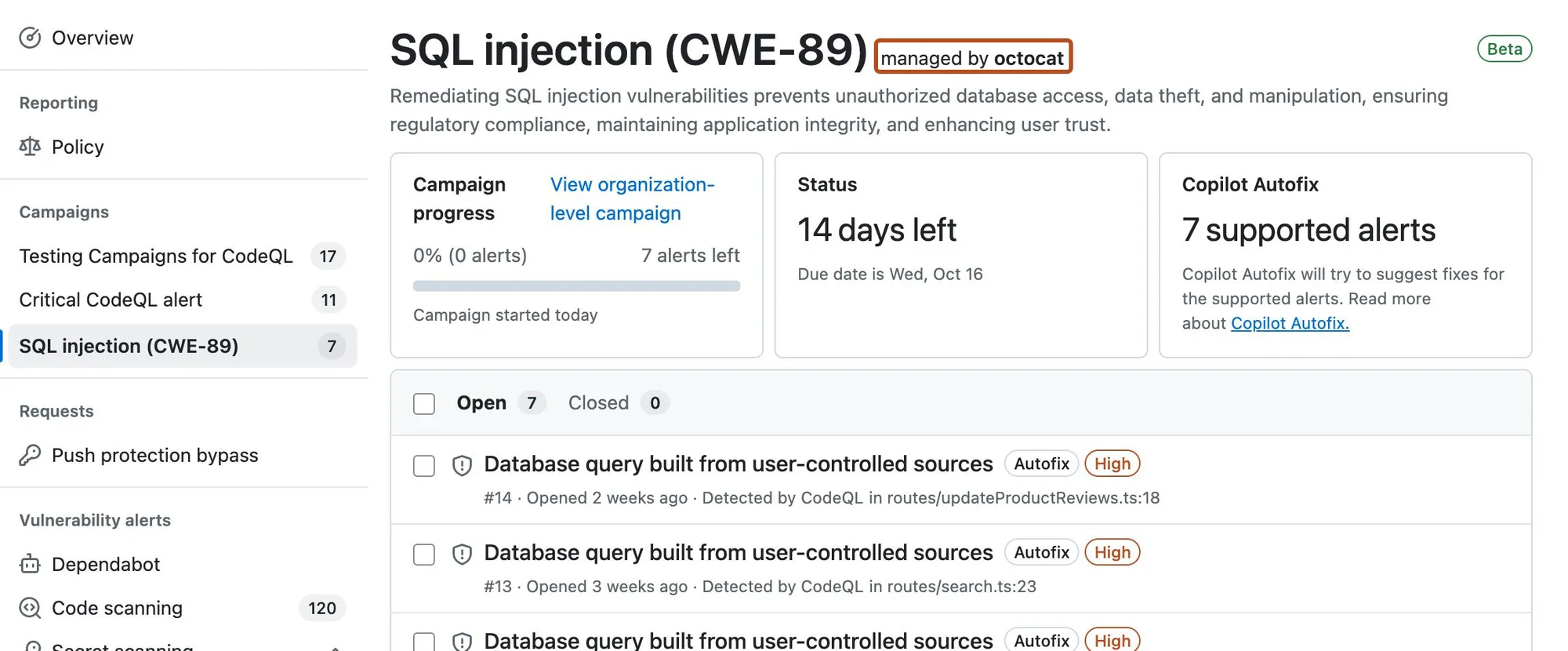
GitHub has also made Agentic Autofix for code-scanning alerts generally available.
Unlike conventional automated fixes, which may generate a small patch based on a vulnerability description, Agentic Autofix can investigate relevant files across the repository before proposing a solution.
The agent then validates its changes by rerunning CodeQL.
If the issue remains unresolved, it can iterate before creating a draft pull request for human review.
How the workflow operates
The process is structured around five stages.
Investigation: Copilot explores the relevant source files and surrounding implementation.
Patch generation: It proposes changes intended to eliminate the vulnerability.
Validation: CodeQL runs again to determine whether the original finding remains.
Iteration: The agent can revise its implementation when validation fails.
Review: GitHub creates a draft pull request containing the proposed fix, its explanation, and the validation steps performed.
The important distinction is that the agent doesn't merely claim the vulnerability has been fixed.
It runs a security-analysis tool to check the result.
Batch remediation
GitHub also supports assigning up to 25 security alerts to Copilot for remediation within a single pull request.
Developers can initiate remediation through the GitHub interface or programmatically through the code-scanning REST API.
The feature currently supports alerts on a repository's default branch, rather than alerts found exclusively on other branches or pull requests.
Availability requires GitHub Enterprise Cloud with the appropriate security subscription and administrator enablement. Usage consumes AI Credits and GitHub Actions minutes.
Why it matters for developers
This is a meaningful development in autonomous software maintenance.
A conventional security pipeline often looks like:
Scanner → Alert → Developer investigates → Developer fixes → Scanner verifies
Agentic Autofix introduces an automated remediation stage:
Scanner → Alert → Agent investigates → Agent patches → Scanner verifies → Human reviews
The distinction between fixing an alert and proving the application is secure remains important.
CodeQL confirming that a particular finding has disappeared does not guarantee the patch preserves application behavior or eliminates every related vulnerability.
Developers still need regression tests, code review, and appropriate security validation.
Engineering takeaway: agentic remediation is becoming a practical addition to security workflows. The strongest implementations combine autonomous investigation with deterministic validation and mandatory human review before merging.
The bigger picture
The most significant theme today is making powerful AI systems more deployable, customizable, and verifiable.
Meta and NVIDIA are approaching the same challenge from different directions. Meta is making frontier-scale capabilities available through downloadable weights, while NVIDIA is optimizing models for specific hardware and workload constraints.
Cloudflare is reducing the infrastructure work required to build full-stack applications, while GitHub is strengthening the security processes surrounding increasingly automated development.
Three architectural developments are particularly important.
1. Open-weight AI is becoming more practical. Developers increasingly have alternatives to proprietary APIs, although hardware requirements and licensing remain important constraints.
2. Application infrastructure is becoming more declarative. Frameworks such as Void are bringing resource provisioning closer to application code.
3. AI-assisted security is moving from detection toward verified remediation. GitHub's latest releases demonstrate how AI reasoning can be combined with established analysis tools to produce reviewable changes.
What deserves your attention first?
For full-stack development, Cloudflare Void is the most immediately interesting release. Its approach to Vite, typed database access, and automatic infrastructure provisioning is worth examining.
For AI engineering, NVIDIA Nemotron 3.5 Bolt deserves attention because its 24GB deployment target makes capable local agents more accessible.
For production security, GitHub's AI Scan and Agentic Autofix are worth evaluating together.
The central lesson: the next major improvement in developer productivity may come less from generating code faster and more from reducing the infrastructure, verification, and maintenance work required to turn generated code into reliable production software.
These briefings combine summaries of linked primary sources with engineering commentary by Emran Hejazi. Source links accompany each story so you can examine the original announcements and their claims.
Every new issue, in your feed reader.
Explore the architecture and engineering decisions behind my projects.