Today's briefing covers five significant developments from October 15–18, selected for their technical importance and relevance to software developers.
The biggest developments: Perplexity has released two open-weight decision models, Cursor has significantly expanded its cloud-agent infrastructure, and Vercel has introduced new observability capabilities for long-running AI sessions.
A new production-usage report also reveals a major shift: open-weight models now handle 71.5% of tokens passing through Vercel's AI Gateway.
Perplexity releases Decider V1.2 — specialized AI models that make multiple decisions in a single forward pass
Released: October 16, 2026
Perplexity — Decider V1.2 model and technical documentation · Decider Flash V1.2
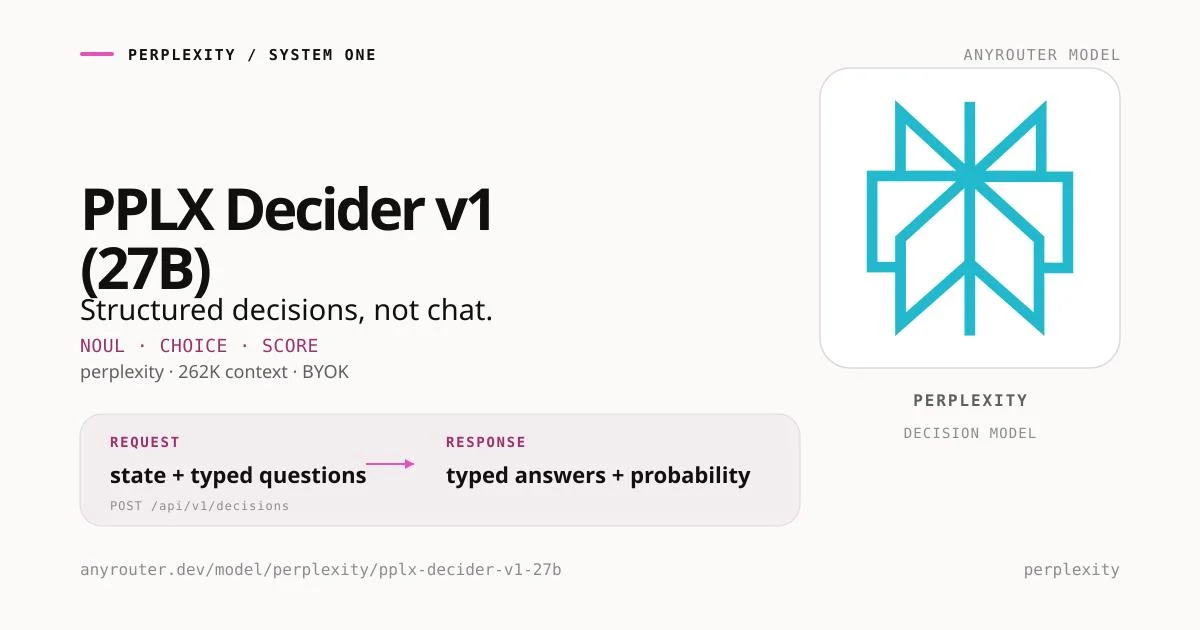
Perplexity has released two open-weight models designed for classification, routing, ranking, and structured decision-making.
Unlike conventional generative models, these systems don't need to generate long textual responses. Instead, they evaluate predefined choices and return probability distributions.
The new releases are Decider V1.2, based on a 27-billion-parameter model, and Decider Flash V1.2, a smaller 4-billion-parameter model.
Both support text and image inputs and are available under the Apache 2.0 license.
What's technically interesting?
The most important change is a new joint-request architecture.
Previously, answering several questions about the same information required separate forward passes.
The new architecture places the shared context and multiple questions into a single sequence.
Each question receives its own output through a dedicated readout marker.
Conceptually:
Input Context
     │
     ├── Which team should handle this?
     ├── Is the request urgent?
     └── What is the priority?
     │
     ▼
Single Model Forward Pass
     │
     ├── Team: Engineering
     ├── Urgent: Yes
     └── Priority: High
This reduces redundant computation when several decisions depend on the same context.
Perplexity also introduced inference optimizations involving torch.compile, CUDA graphs, request packing, and selective execution of the final transformer layer.
Its published benchmarks show improvements over the previous model.
| Metric | V1.1 | V1.2 |
|---|---|---|
| Decision Index | 62.30 | 68.09 |
| Vision Decision Index | 73.22 | 77.43 |
These are Perplexity's own evaluation results. The company also notes that grouping questions can reduce accuracy when the questions represent competing candidates rather than related decisions.
Why it matters for developers
This is an important architectural alternative to using a large language model for every small decision.
Consider a backend that needs to classify incoming support requests, identify security incidents, or route work to different AI agents.
A general-purpose model may be unnecessarily expensive.
A specialized decision model can return structured probabilities without generating a conversational response.
Engineering takeaway: consider decision models for classification, routing, and ranking. Their biggest advantage is reducing the inference cost of repetitive operations, particularly when multiple decisions share the same input context.
Cursor upgrades Cloud Agents — 300-repository environments, interactive canvases, and programmable infrastructure
Released: October 16, 2026
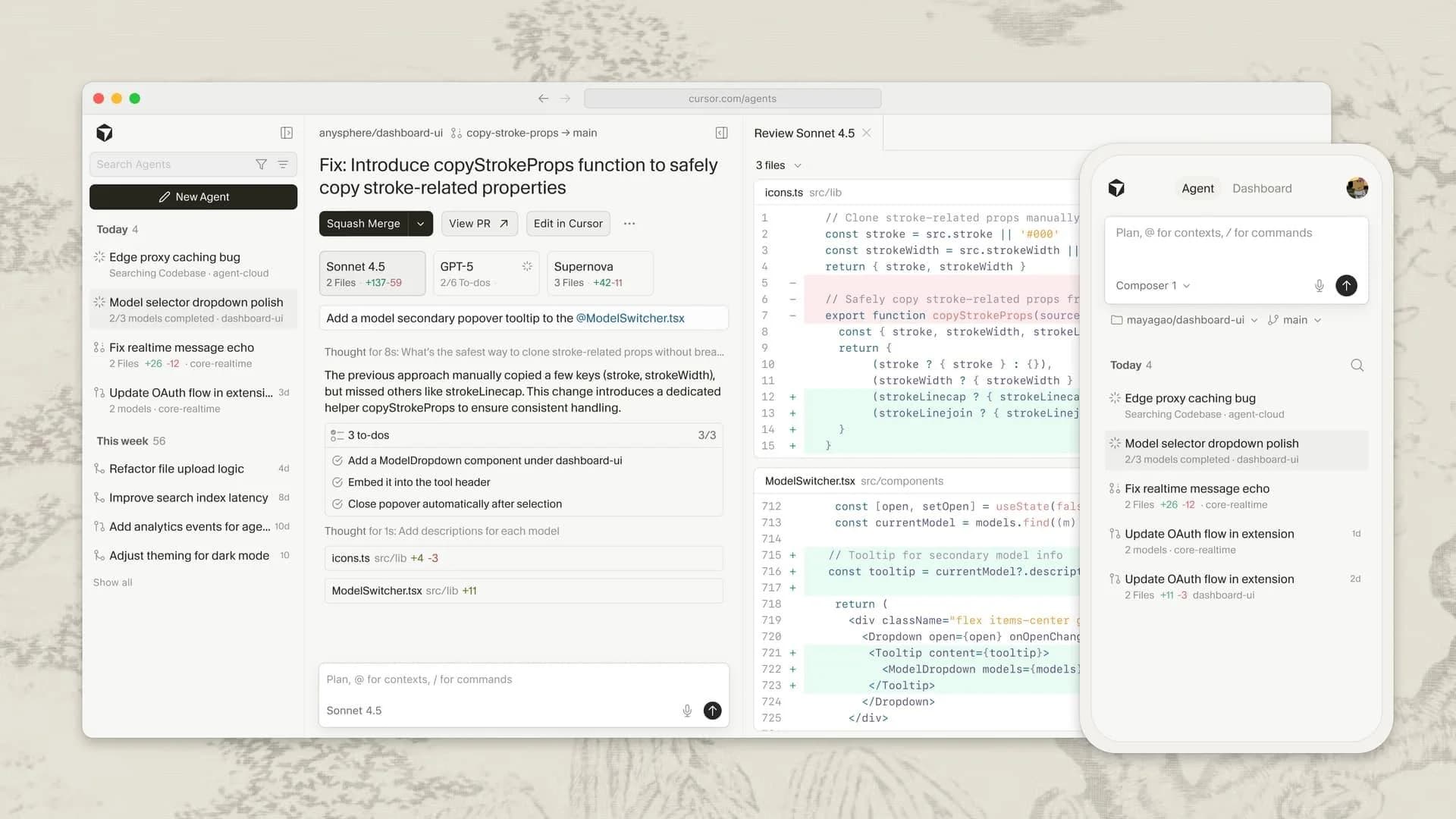
Cursor has released a significant infrastructure update for its cloud-based coding agents.
The update introduces three improvements: interactive canvases, a programmable Environments API, and considerably larger execution environments.
The most important change for engineering teams is that a single cloud-agent environment can now support up to 300 repositories.
Cursor also reports that large environments load approximately five times faster than before.
What's technically interesting?
Programmable agent environments
The new Environments API, currently in beta, allows developers to create and manage the environments in which cloud agents execute.
This is an important step toward treating agent environments as programmable infrastructure rather than manually configured workspaces.
For example, an organization could provision an environment containing several related repositories, configure the required development dependencies, and then assign an agent a task spanning those repositories.
Interactive canvases
Cloud agents can now create interactive canvases as part of their work.
These can be shared with teammates through links, providing another way to inspect or present an agent's output.
Larger execution contexts
Supporting hundreds of repositories is particularly relevant to organizations operating microservices, shared libraries, or large collections of independently deployed applications.
An agent investigating a breaking API change may need to inspect the backend, frontend, shared types, and infrastructure repositories together.
Why it matters for developers
This release addresses a fundamental limitation of autonomous coding systems.
A model cannot reliably modify a system whose dependencies and execution environment it cannot access.
For multi-repository applications, source-code context alone is insufficient. Agents also need compatible dependencies, reproducible environments, and appropriate access permissions.
Engineering takeaway: investigate programmable cloud-agent environments for integration testing, cross-repository refactoring, and automated maintenance.
However, larger repository access also increases the importance of scoped credentials, environment isolation, and explicit authorization boundaries.
Vercel introduces session-aware AI Gateway observability — exposing cache efficiency and provider routing
Released: October 18, 2026
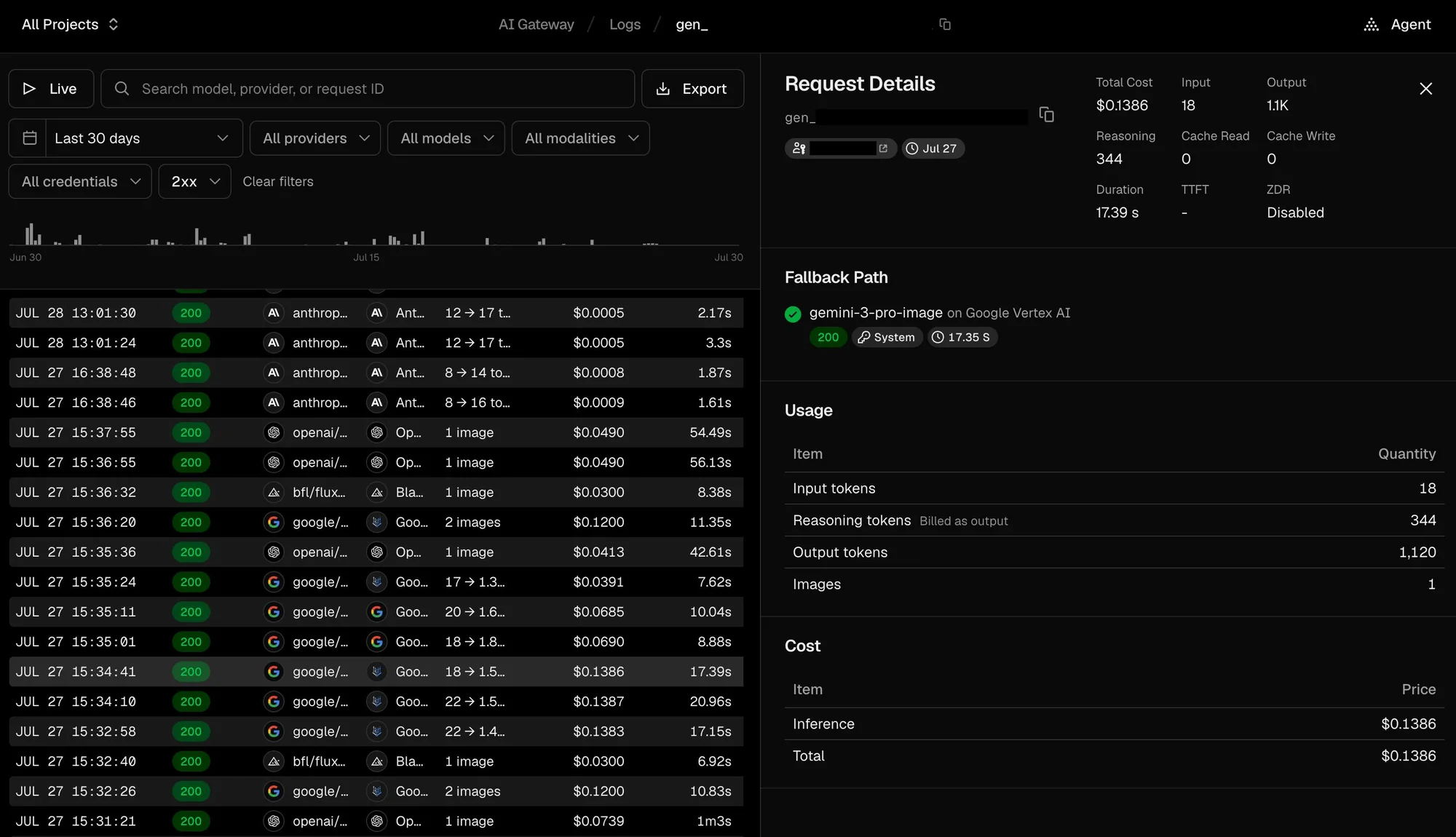
Vercel has introduced a new Sessions view inside AI Gateway, providing visibility into how requests are routed throughout long-running AI conversations.
Previously, developers could inspect individual requests and their costs.
The new interface groups requests into sessions and exposes information about the entire interaction.
This includes the agent or application responsible, model selection, inference providers, cache-hit rates, duration, and accumulated cost.
The underlying engineering problem
Long-running AI agents frequently send similar context repeatedly.
Consider a coding agent that performs 30 operations against the same repository.
Its requests might repeatedly contain system instructions, tool definitions, repository context, and earlier conversation history.
If those requests reach different inference providers, previously cached context may not be reusable.
This creates unnecessary inference costs.
Vercel's approach
AI Gateway uses session affinity to route subsequent requests toward the provider that handled the previous turn.
That increases the likelihood that the provider can reuse cached prompt prefixes.
Conceptually:
Agent Session
     │
     ├── Request 1 → Provider A
     ├── Request 2 → Provider A
     ├── Request 3 → Provider A
     └── Request 4 → Provider A
                       │
                       ▼
                Cached Context
Developers can explicitly associate requests with a session using sessionId in the gateway provider options or the x-session-id header.
Session affinity is enabled by default for text and chat requests.
Why it matters for developers
This is particularly valuable for applications running coding agents, research agents, or long-running automation workflows.
Traditional API observability focuses on individual requests.
Agent observability increasingly needs to measure the entire task lifecycle.
For example, a single agent task might contain 50 model requests and 20 tool calls.
Knowing that one request cost $0.02 tells you very little about the total efficiency of the operation.
You need to understand cumulative cost, context reuse, provider switching, and task completion.
Engineering takeaway: instrument AI applications around sessions and completed tasks rather than individual inference requests.
Monitor cache-hit rates and provider routing alongside latency and cost. Those metrics can reveal substantial optimization opportunities without changing the underlying model.
Google publishes a practical architecture for evaluating autonomous agents beyond their final responses
Published: October 15, 2026
Google has published a technical guide explaining how developers can build reliable evaluation systems for autonomous agents.
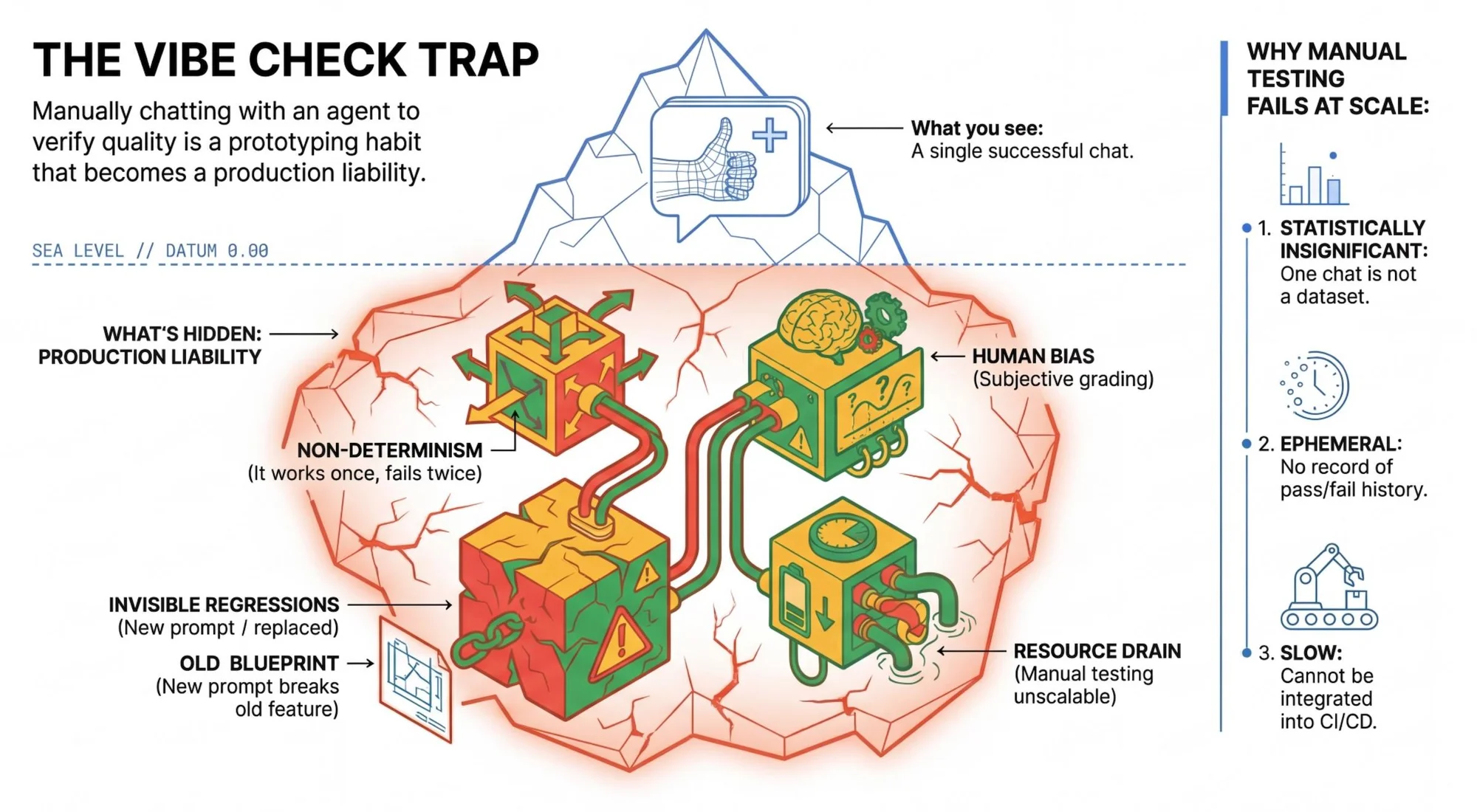
The article addresses an increasingly important engineering problem: an AI agent can produce a convincing final answer while failing operationally.
For example, an agent might complete a task but execute unnecessary tool calls, enter repeated retry loops, consume excessive tokens, or trigger duplicate external operations.
A traditional evaluation that checks only the final answer may not detect these problems.
What's technically interesting?
Google recommends defining evaluations around critical user journeys, rather than relying exclusively on generic model benchmarks.
Each journey specifies the user's objective, operational constraints, and measurable success conditions.
The proposed evaluation architecture combines four testing layers.
Unit tests validate isolated components.
Deterministic metrics measure properties such as execution time, tool usage, and cost.
Model-based evaluation checks outcomes that cannot easily be verified with ordinary assertions.
Integration tests verify complete workflows involving external services.
Google also recommends generating synthetic user interactions to test multi-turn conversations before enough real production data exists.
Its guide uses the open-source agent-eval toolkit and discusses OpenInference-compatible tracing.
A particularly useful recommendation
Google argues that binary evaluation criteria are often more reliable than vague numerical quality scores.
Instead of asking an evaluator to rate an agent's behavior from one to five, define a concrete requirement:
Did the agent verify the account identifier before executing the refund operation?
The answer can be evaluated as pass or fail.
This makes regressions easier to identify.
Google also emphasizes preserving a stable evaluation dataset while changing prompts, models, or orchestration logic.
Otherwise, improvements in reported scores may simply reflect changes to the test cases.
Why it matters for developers
This is directly applicable to production agent systems.
A reliable evaluation pipeline should measure more than whether the agent's answer looks correct.
It should also verify that the agent followed the required process, respected permissions, avoided unnecessary work, and completed the task within acceptable resource limits.
Engineering takeaway: build a small, repeatable evaluation suite before deploying autonomous agents. Start with critical workflows and deterministic checks, then expand into simulation and trace-based evaluation.
Vercel's production data reveals a major shift — open-weight models process 71.5% of AI Gateway tokens
Published: October 15, 2026
Vercel has published its October 2026 AI Gateway Production Index, providing a data-driven look at how developers and businesses are actually using AI models.
The report analyzes production traffic routed through AI Gateway, including token consumption, inference spending, provider selection, and model adoption.
Its most significant finding is that open-weight models now process 71.5% of gateway tokens while accounting for approximately 23% of spending.
That difference reflects the substantially lower average inference cost of many open-weight models.
The most important findings
| Metric | Reported result |
|---|---|
| Open-weight share of tokens | 71.5% |
| Open-weight share of spending | ~23% |
| Growth in total gateway spending since December | ~13× |
| Reduction in average token price | 47% |
| Teams changing their most-used model in September | Nearly 50% |
The report also shows that DeepSeek-V4.1-Flash processed nearly half of September's gateway tokens while accounting for just 2.6% of spending.
Meanwhile, expensive frontier models continued to capture substantial revenue despite handling a smaller share of total token volume.
These findings describe Vercel's own customer traffic, not the entire AI market.
What's technically interesting?
The report suggests that production applications are increasingly using different models for different responsibilities.
High-volume, repetitive operations can run on inexpensive models.
Complex reasoning and demanding engineering tasks can use frontier models.
The resulting architecture might look like:
Application Request
        │
        ▼
   Task Classifier
        │
        ├── Simple task
        │      └── Small open model
        │
        ├── Complex reasoning
        │      └── Frontier model
        │
        └── Specialized operation
               └── Decision model
This approach can reduce operating costs without necessarily sacrificing performance on tasks that require stronger models.
However, routing itself introduces complexity.
Developers need to evaluate whether the chosen model can complete the assigned task reliably.
Why it matters for developers
This report provides evidence that model-agnostic application architecture is becoming increasingly valuable.
Production teams are changing models frequently as new releases offer better performance or pricing.
Applications that depend heavily on one provider's implementation details may become expensive to maintain.
A cleaner design separates application logic from provider-specific inference APIs.
Engineering takeaway: build AI applications around logical model capabilities rather than hard-coded model identities.
For example, distinguish between classification, extraction, reasoning, and code generation.
Then evaluate models independently for each responsibility using cost per successful task.
The bigger picture
The five developments point toward a common architectural shift.
AI applications are moving from single-model systems toward specialized, observable, and independently evaluated execution pipelines.
Perplexity demonstrates how specialized models can make routine decisions efficiently. Cursor is improving the infrastructure needed to run agents across complex codebases. Vercel is exposing the operational costs of multi-turn execution. Google's evaluation methodology helps determine whether agents behave correctly, while Vercel's production data shows that model selection is increasingly dynamic.
The architecture worth watching is:
Task classification → Model routing → Isolated execution → Session observability → Deterministic verification.
For immediate engineering value, the three strongest developments are Perplexity Decider V1.2, Cursor's Environments API, and Vercel's session-aware observability.
The broader lesson is that optimizing AI applications increasingly resembles traditional systems engineering: choose the right components, minimize redundant work, enforce clear boundaries, and measure the complete execution lifecycle.
These briefings combine summaries of linked primary sources with engineering commentary by Emran Hejazi. Source links accompany each story so you can examine the original announcements and their claims.
Every new issue, in your feed reader.
Explore the architecture and engineering decisions behind my projects.