Today's briefing features five important developments from October 20–22, selected from official releases and technical publications.
The biggest news: Hugging Face has released an open-weight model that understands DNA and natural language together. Cloudflare is bringing structured AI-agent interactions to nearly 100,000 storefronts and introducing response-aware web security. Meanwhile, Vercel has made WebSockets generally available, and GitHub has expanded observability for custom coding agents.
Today's central theme is specialized AI, agent-native applications, and infrastructure that understands more than individual requests.
Hugging Face releases Carbon-X — a 14.8B model that understands DNA and natural language together
Released: October 22, 2026 · AI Models & Research
Hugging Face has released Carbon-X, an Apache 2.0-licensed language model developed with researchers from Zhongguancun Academy and the University of Naples Federico II.
Unlike conventional language models, Carbon-X can process raw DNA sequences and natural-language instructions within the same conversation.
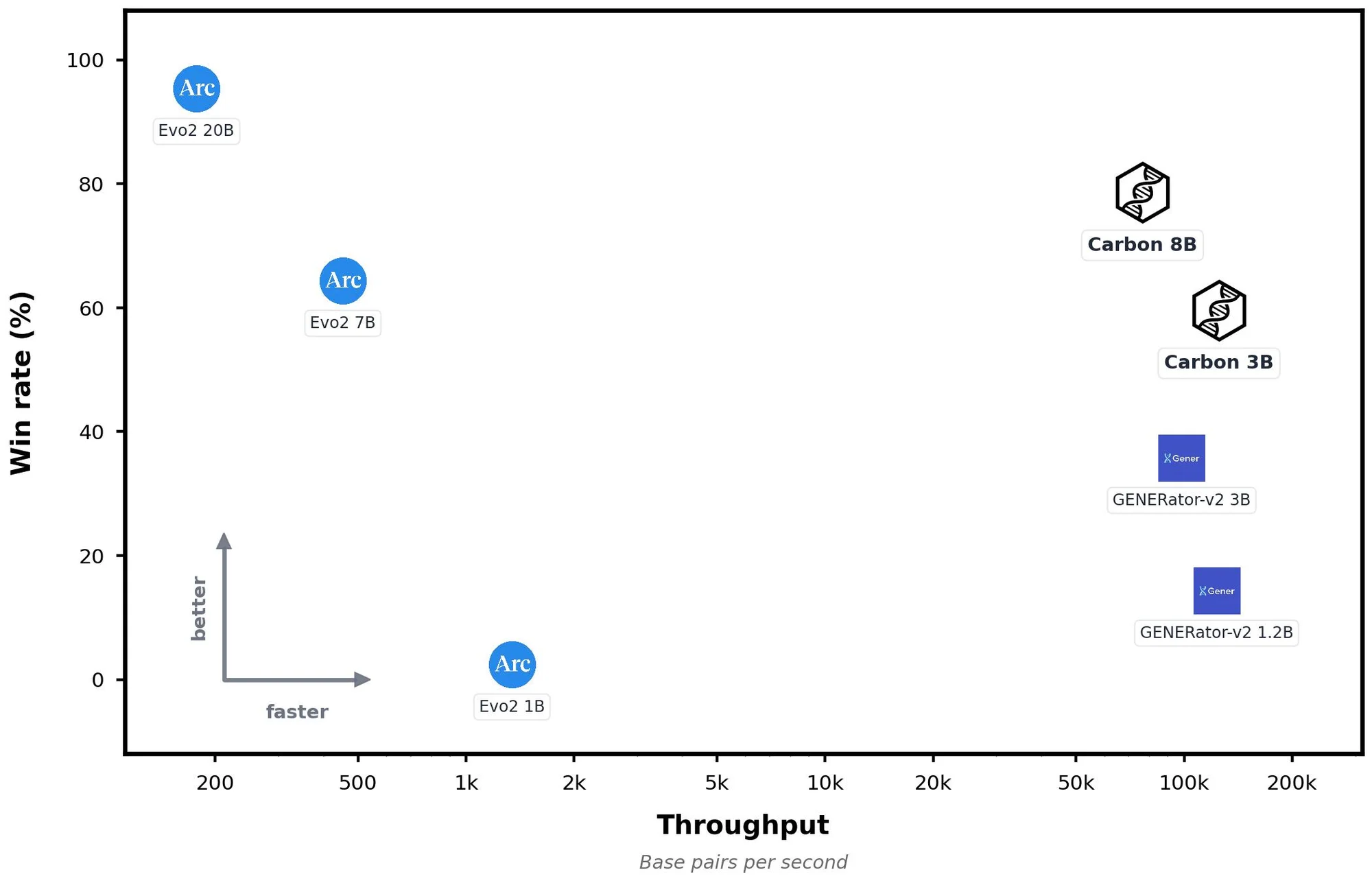
Its architecture is particularly interesting because it demonstrates how a relatively small, specialized model can compete with substantially larger general-purpose systems on narrowly defined tasks.
What's technically interesting?
Carbon-X builds on Qwen3-14B and introduces a hybrid tokenizer.
Instead of processing DNA one nucleotide at a time, it encodes sequences into groups of six bases, called 6-mers.
The architecture looks like:
Natural language + DNA → Hybrid tokenizer → Shared Transformer → Predictions and explanations
This reduces the number of tokens required to represent long DNA sequences while preserving ordinary language capabilities.
The model was trained on approximately 302 billion tokens, combining DNA, biology-related documents, general English, and instruction data.
Its published specifications include:
| Specification | Carbon-X |
|---|---|
| Parameters | 14.8 billion |
| Context window | 40,960 tokens |
| Architecture | Decoder-only Transformer |
| Training | Mid-training, SFT, reinforcement learning |
| License | Apache 2.0 |
| Deployment | Local inference, vLLM, Transformers |
Performance
Across five DNA-specific benchmarks, Hugging Face reports:
| Model | Average score |
|---|---|
| Carbon-X | 66.7% |
| GPT-6.1 Sol | 67.5% |
| Claude Opus 5.5 | 60.9% |
| Gemini 4 Argon | 49.8% |
Hugging Face estimates that Carbon-X achieves this performance at approximately 1/1,800 of the inference cost per problem compared with the frontier-model reference.
These are the project's own benchmark and cost estimates, not independent clinical validation. The model's authors explicitly caution against using it for medical decisions.
Why it matters for developers
The most important development isn't biological analysis itself.
It's the demonstration that domain-specific tokenization and training can substantially improve the economics of specialized AI.
Instead of relying on a frontier model for every workload, developers can adapt smaller models to particular representations and tasks.
The same principle applies to source code, financial records, structured logs, and scientific data.
Engineering takeaway: when developing specialized AI systems, investigate domain-specific representations and continued training before assuming that a larger general-purpose model is necessary.
Cloudflare brings WebMCP to nearly 100,000 storefronts — making websites directly accessible to AI agents
Published: October 21, 2026 · AI Agents & Web Architecture
Cloudflare and Commerce.com have published details of an integration bringing WebMCP capabilities to a commerce platform operating almost 100,000 storefront domains.
This is an important development for the emerging agent-native web.
The underlying problem
Most websites are designed for human interaction.
An AI agent trying to purchase a product typically needs to inspect HTML, identify controls, manipulate forms, and interpret the results.
That approach is fragile.
A small interface change can break an otherwise functioning agent.
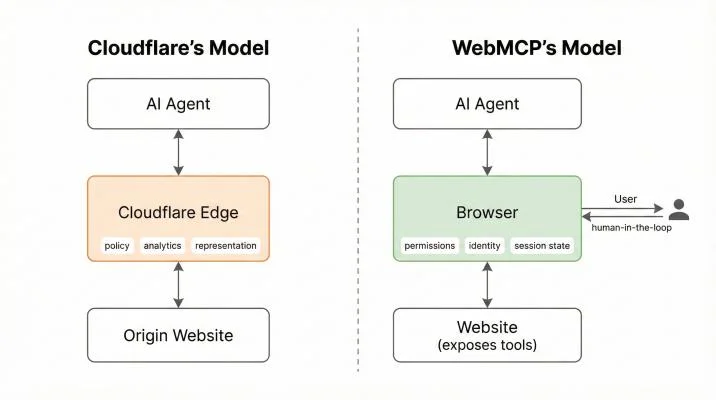
WebMCP attempts to solve this by allowing websites to expose structured tools directly to agents operating inside a browser.
Instead of guessing how to interact with the interface, an agent can discover supported operations.
For example:
await tools.search_products({
  query: "wireless headphones",
  max_price: 150
});

await tools.add_to_cart({
  product_id: "product_123"
});
These are illustrative calls showing the interaction pattern, not a complete standalone WebMCP implementation.
What's technically interesting?
Cloudflare has developed an edge-based WebMCP bridge.
Rather than requiring merchants to modify their applications individually, Cloudflare can inject the integration script into storefront responses.
The resulting architecture is:
Browser agent → WebMCP → Edge bridge → Commerce MCP server → Storefront
The integration preserves the customer's active browser session.
That means an agent can interact with the same cart, prices, and session state visible to the shopper.
Cloudflare also introduced merchant-level opt-outs using custom hostname metadata and Configuration Rules.
This allows the platform to enable WebMCP centrally while giving individual merchants control.
WebMCP remains experimental, with support through Chrome experimental features, origin trials, and selected agent environments.
Why it matters for developers
This represents a potential architectural shift in how applications expose functionality.
Today, most applications have two primary interfaces:
Human interface: HTML, CSS, and JavaScript.
Programmatic interface: REST, GraphQL, or other APIs.
WebMCP introduces another interface:
Agent interface: Discoverable, structured operations available in the browser's application context.
For e-commerce and SaaS platforms, this could reduce the need for agents to reverse-engineer user interfaces.
However, structured tools still require authorization, input validation, and protection against unintended operations.
Engineering takeaway: begin thinking about which application capabilities should be exposed as structured agent operations. Design those operations around explicit permissions and predictable outcomes rather than exposing arbitrary internal functions.
Cloudflare introduces full-transaction WAF detection — security decisions can now examine requests and responses together
Released: October 21, 2026 · Security & Distributed Systems
Cloudflare has introduced two new web application firewall capabilities:
Full transaction detection and response rules.
Both are generally available, including for customers using Cloudflare's Free plan.
The release addresses a fundamental limitation of traditional request-based security inspection.
The underlying problem
A conventional WAF primarily examines incoming HTTP requests.
For example, it might identify a suspicious request attempting to access a restricted file.
However, the request alone doesn't establish whether the attack succeeded.
The application might reject it, return an error, or accidentally disclose sensitive information.
Those outcomes have very different security implications.
The architectural change
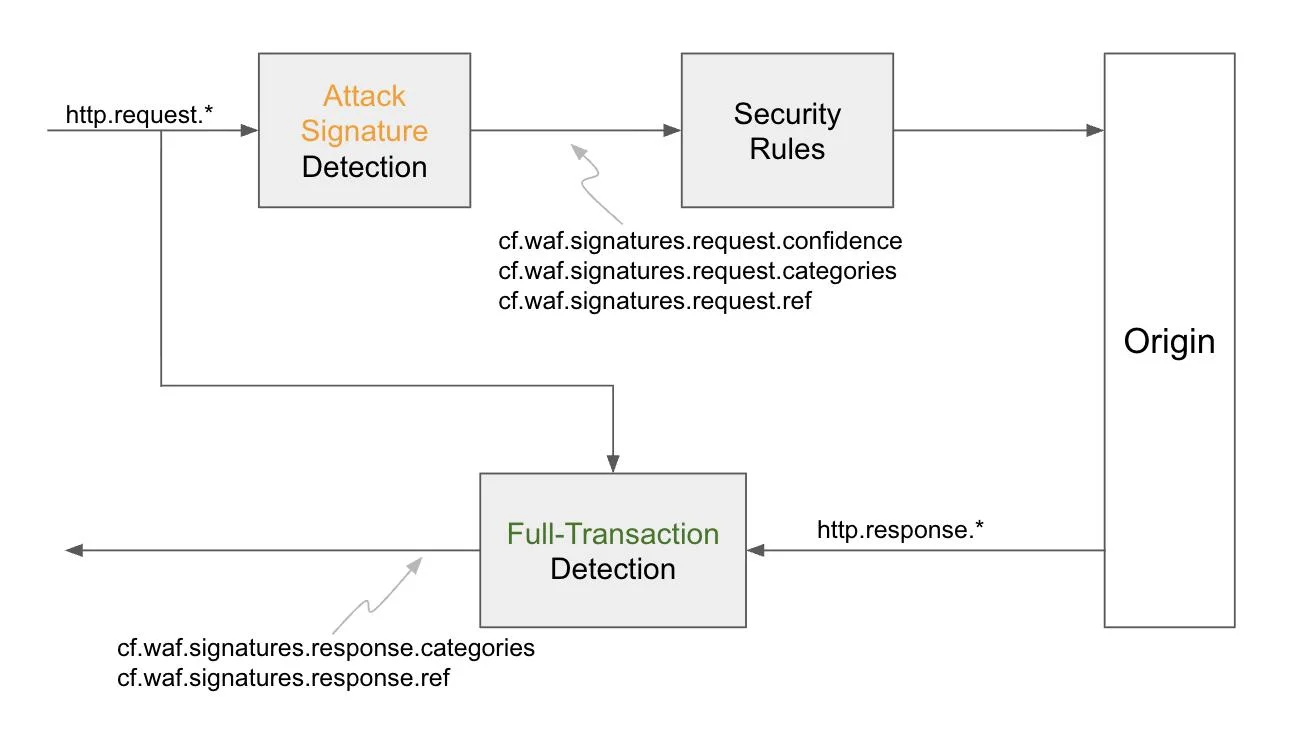
Cloudflare can now correlate incoming requests with their corresponding responses.
The process becomes:
Request inspection → Application execution → Response inspection → Security evaluation
This enables the firewall to distinguish between suspicious requests and requests that appear to have resulted in successful exploitation.
For example, consider a path-traversal attempt.
If the application returns a normal rejection, the system has evidence that the attempted exploit did not produce the expected disclosure.
If the application instead returns configuration data, the response provides evidence of a potentially successful attack.
Response rules can then prevent selected origin responses from reaching the requester.
Cloudflare's first managed protections using this capability address the recently disclosed php2shell vulnerability.
Why it matters for developers
This is particularly relevant to applications exposing sensitive APIs, payment functionality, and administrative interfaces.
Traditional request inspection often faces a trade-off.
Aggressive rules can block legitimate requests, while permissive rules may allow suspicious traffic to reach the application.
Response-aware inspection provides additional context for making those decisions.
The broader architectural principle is:
Security systems should evaluate the outcome of an operation, not just its initial input.
That principle also applies to autonomous agents.
An agent executing a command should be evaluated based on what the command actually changed, not merely whether the requested operation appeared permissible.
Engineering takeaway: consider response-aware detection as another defensive layer, while maintaining application-level authorization, output filtering, and appropriate logging. A WAF should complement secure application design rather than replace it.
Vercel makes WebSockets generally available — bringing persistent real-time connections to serverless functions
Released: October 20, 2026 · Developer Tools & Infrastructure
Vercel has announced the general availability of WebSocket support in Vercel Functions.
This expands the platform's support for applications requiring persistent, bidirectional communication.
The scale of the beta deployment is notable.
Vercel reports that its CDN has handled approximately 300 million WebSocket connections since the public beta began in late June.
It currently handles around 15 million connections per day.
What's technically interesting?
Traditional serverless applications are commonly built around short-lived HTTP requests.
A client sends a request, the function executes, and the connection closes after the response.
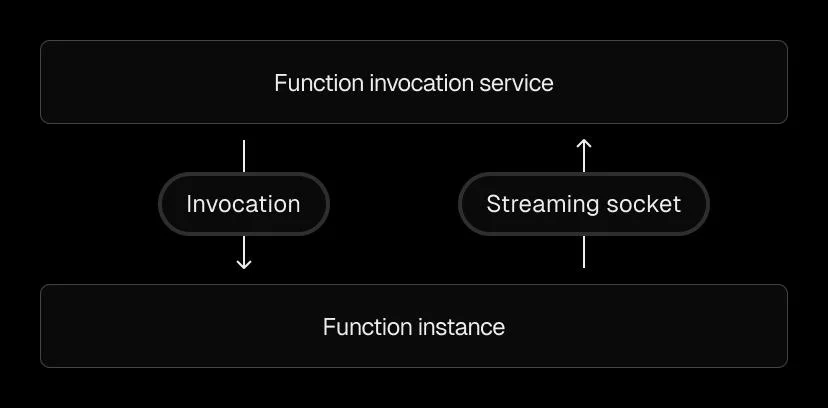
WebSockets support a different interaction model.
After the initial HTTP upgrade, the client and server can exchange messages over a persistent connection.
Conceptually:
Browser / Client
       │
       │ WebSocket connection
       ▼
 Vercel Function
       │
       ├── Receive messages
       ├── Process events
       ├── Send updates
       └── Maintain connection
This is useful for real-time AI applications, collaborative interfaces, multiplayer systems, and live dashboards.
WebSockets also support Vercel AI Gateway's real-time model integrations.
Pricing and execution
Vercel says WebSocket connections follow the same limits and pricing framework as other Function invocations.
Under Active CPU pricing, CPU time is billed when the function processes messages rather than simply because the connection remains open.
That distinction matters for workloads containing many connections with relatively infrequent messages.
Why it matters for developers
This makes Vercel a more practical option for certain real-time applications that previously required separately managed WebSocket infrastructure.
However, supporting WebSockets doesn't eliminate the distributed-systems challenges associated with persistent connections.
Production applications still need to handle reconnects, authentication, message ordering, backpressure, and horizontal scaling.
For example, when an application runs across multiple instances, messages may need to be distributed through a shared event system rather than relying on local process memory.
Engineering takeaway: WebSocket availability simplifies deployment, but connection management and message distribution remain architectural responsibilities.
For real-time dashboards and collaborative applications, this release is worth evaluating against independently hosted WebSocket servers.
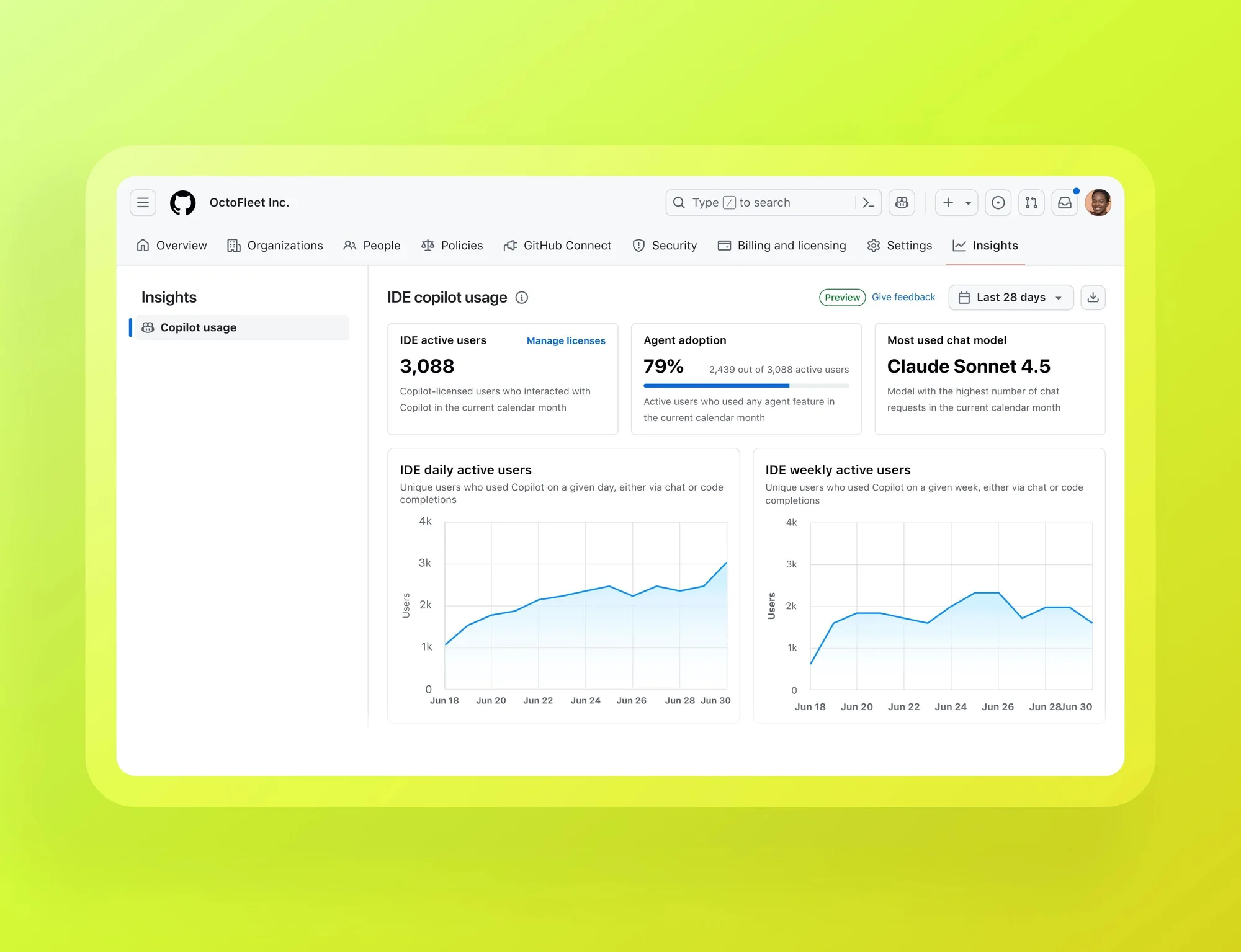
GitHub expands Copilot observability — custom agents, skills, and MCP servers become individually measurable
Released: October 22, 2026 · AI Developer Tools
GitHub has expanded its Copilot usage metrics API to provide more detailed information about how organizations use custom agent infrastructure.
The update addresses a growing operational problem.
As development teams introduce custom agents, skills, MCP servers, and plugins, it becomes difficult to determine which components developers actually use.
Previously, many custom components appeared under generic categories such as other or custom.
What's changing?
GitHub now reports configured names for custom components across several metrics.
The relevant fields include:
totals_by_skill
totals_by_custom_agent
totals_by_mcp
totals_by_slash_cmd
totals_by_plugin
The API also increases the number of individually reported entries from five to 25 per record.
Remaining activity is grouped into an other category.
These changes apply to supported enterprise and organization reports, including daily, rolling 28-day, and aggregated usage reports.
The data can come from Copilot CLI, the Copilot app, supported Agent Client Protocol integrations, and the Copilot SDK.
Some integrations require updated client versions, and GitHub cautions that telemetry can undercount activity.
Why it matters for developers
This is another step toward treating AI development infrastructure as an observable production system.
Consider an engineering organization with several custom agents.
One agent reviews pull requests, another investigates failed tests, and another manages dependency updates.
Without usage telemetry, administrators may know that developers are using Copilot but not which custom components are actually valuable.
The new API makes it easier to measure adoption.
However, usage is not the same as effectiveness.
An agent that receives hundreds of requests but rarely completes tasks successfully may provide less value than a specialized agent used occasionally.
The architectural implication
A useful evaluation model is:
Agent invocation → Tool usage → Task completion → Validation → Cost
GitHub's new metrics provide better visibility into the invocation and adoption layers.
Organizations still need their own evaluation systems to measure correctness, reliability, and economic value.
Engineering takeaway: instrument custom agents with stable identities and meaningful task-level metrics.
Measure successful task completion, retries, execution time, and cost alongside raw usage counts.
The bigger picture
The five developments reveal three important directions in software engineering.
Specialized AI is becoming increasingly competitive. Carbon-X demonstrates how domain-specific representations and training can make smaller models highly effective on targeted workloads.
Web applications are becoming agent-accessible. Cloudflare's WebMCP integration shows how structured operations can replace fragile browser automation while preserving application permissions and session context.
Infrastructure is becoming more outcome-aware. Cloudflare's WAF evaluates responses, Vercel supports persistent communication, and GitHub provides better visibility into custom agent activity.
The architectural pattern connecting these developments is:
Specialized intelligence → Structured operations → Persistent communication → Outcome verification → Observability
For developers, this suggests that future application architecture will increasingly need to accommodate both human users and autonomous software agents.
What deserves your attention first?
Highest architectural significance: WebMCP. The Commerce.com integration demonstrates how agent-accessible interfaces can be introduced across large multi-tenant platforms without requiring individual application rewrites.
Most immediately practical: Vercel WebSockets. This release expands deployment options for real-time applications and AI-powered interfaces.
Most interesting technical research: Carbon-X. Its hybrid tokenizer and training strategy provide a useful case study in building specialized models.
Most valuable security development: Cloudflare's full-transaction WAF. It illustrates why security decisions become more accurate when systems can inspect actual execution outcomes.
Today's key takeaway: the next generation of developer infrastructure won't simply execute requests. It will expose structured capabilities, maintain context across interactions, and provide evidence about what automated operations actually accomplished.
These briefings combine summaries of linked primary sources with engineering commentary by Emran Hejazi. Source links accompany each story so you can examine the original announcements and their claims.
Every new issue, in your feed reader.
Explore the architecture and engineering decisions behind my projects.