Today's briefing covers five verified developments from October 20–21, prioritizing autonomous AI agents, AI-powered security, machine-learning infrastructure, and developer tooling.
Today's biggest development: Anthropic has introduced a proactive AI agent capable of working independently across connected applications. It has also significantly upgraded Claude Security, while AWS has released native PyTorch support for Trainium and GitHub has introduced new protections against malicious dependencies and stolen credentials.
The common theme is moving AI from assisted development toward continuously operating, security-conscious systems.
Anthropic launches Claude Duet — a proactive AI agent that works while you're away
Released: October 21, 2026 · AI & Autonomous Agents
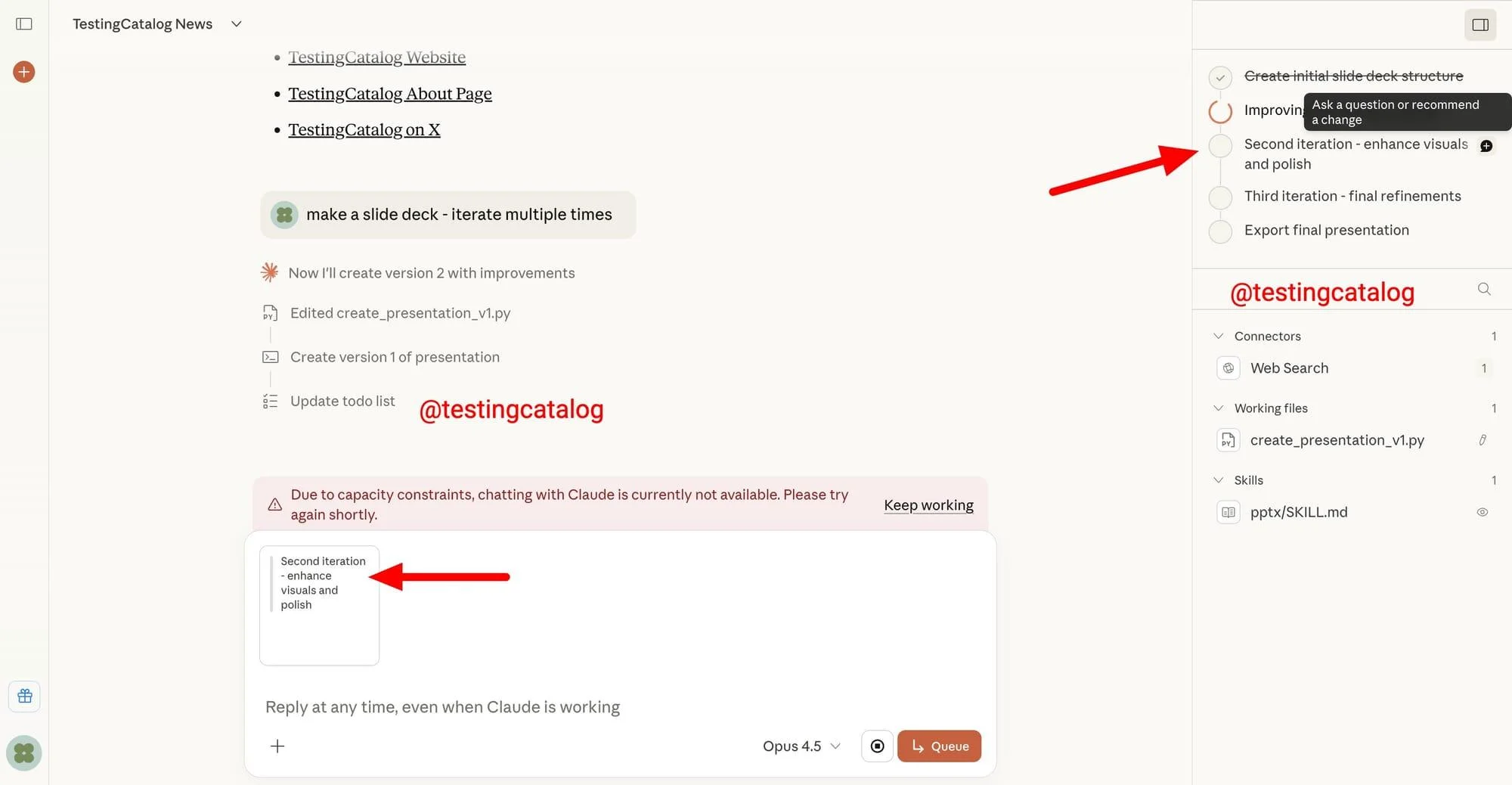
Anthropic has introduced Claude Duet, a proactive personal agent powered by Claude Opus 5.5.
Unlike a conventional assistant that waits for prompts, Duet can monitor connected applications, identify work requiring attention, and continue executing tasks independently.
The product is entering research preview, initially through a waitlist for US-based Pro and Max subscribers.
What's technically interesting?
Duet combines several capabilities that are usually implemented as separate components in autonomous-agent platforms.
Persistent execution: Each agent operates through its own cloud computer and browser. Tasks continue running even when the user's devices are offline.
Proactive monitoring: Duet periodically checks connected applications and decides whether an event requires notification or action.
Cross-application execution: It can use more than 6,000 connectors and plugins to coordinate tasks involving email, calendars, documents, business systems, and other services.
Human authorization: Sensitive actions—including sending messages, making payments, signing documents, and deleting information—require explicit approval.
Credential isolation: Anthropic says its architecture prevents the agent from directly accessing passwords and authentication tokens.
The architecture resembles:
Connected Applications
         ↓
  Background Monitoring
         ↓
   Context Evaluation
         ↓
    Task Planning
         ↓
   Cloud Execution
         ↓
  Approval When Needed
         ↓
    Final Action
Anthropic also describes a dedicated information-protection system intended to prevent agents from disclosing sensitive data without authorization.
Why it matters for developers
This release illustrates the growing importance of event-driven agent architectures.
Building an agent that answers questions is relatively straightforward compared with building one that maintains state, operates asynchronously, interacts with external services, and requests authorization at appropriate boundaries.
The difficult engineering problems include durable execution, credential isolation, prompt-injection resistance, task recovery, and avoiding unwanted actions.
Engineering takeaway: when building autonomous agents, separate reasoning from execution permissions. Use explicit approval gates for consequential operations and persist execution state so tasks can recover safely after failures.
Anthropic upgrades Claude Security — continuous repository scanning, automatic fix tracking, and MCP integration
Released: October 21, 2026 · AI Security & Software Engineering
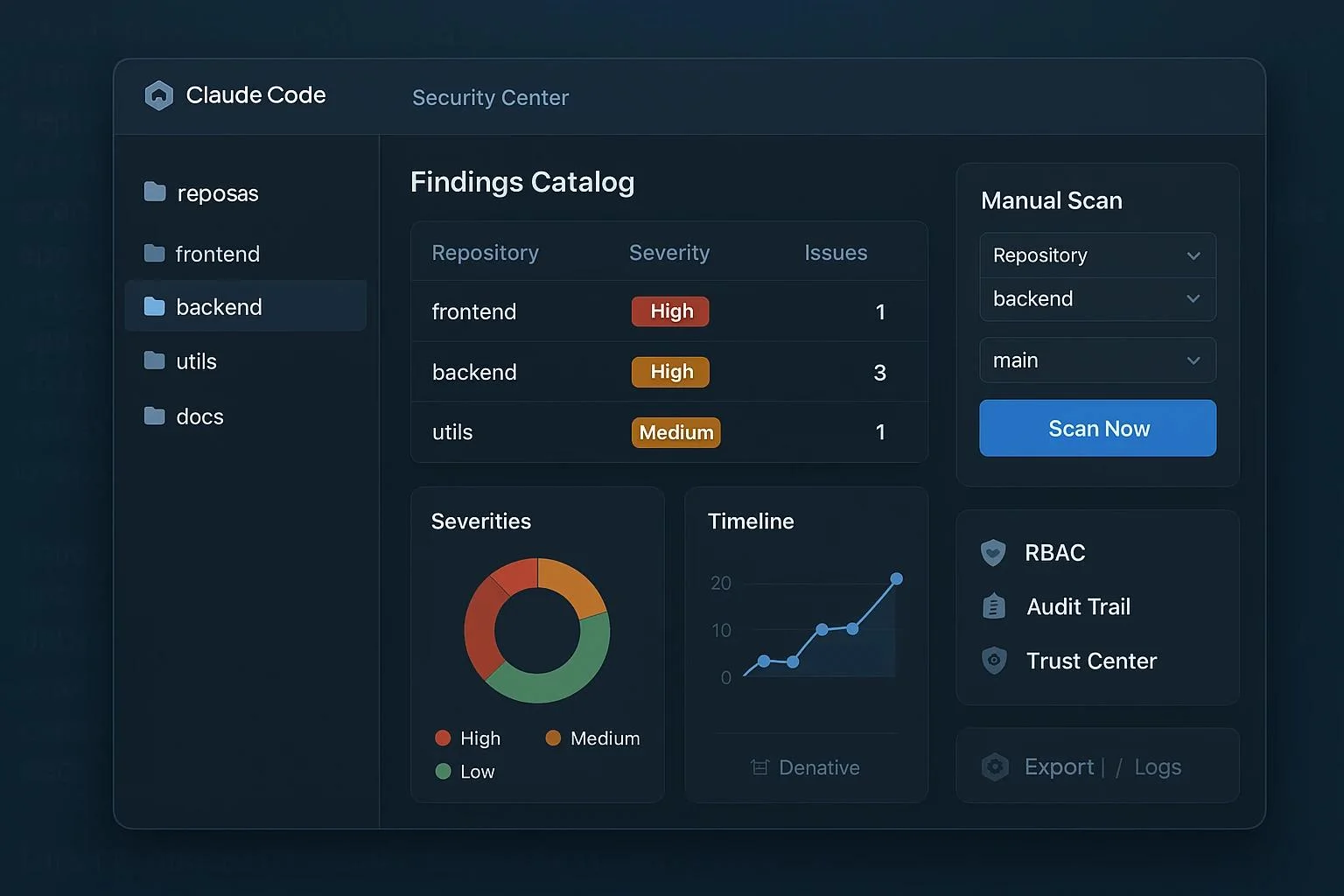
Anthropic has released a substantial upgrade to Claude Security, moving the product from individual security scans toward continuous vulnerability management.
Since the product entered public beta in April, Anthropic reports that organizations have used it to identify more than one million vulnerabilities.
The latest version introduces continuous monitoring, cross-repository analysis, automatic resolution tracking, and programmatic integration.
What's technically interesting?
The most important architectural change is stateful vulnerability tracking.
Traditional scanning tools often produce findings associated with a particular commit or snapshot.
However, the repository continues changing after the scan.
Claude Security now maintains a continuously updated understanding of findings.
Its workflow looks like:
Repository Changes
        ↓
Risk-Based Scanning
        ↓
Vulnerability Detection
        ↓
Threat Model Evaluation
        ↓
Finding Tracking
        ↓
Fix Verification
        ↓
Resolved / Reopened
Several capabilities stand out.
Risk-based incremental scanning: After establishing a baseline, Claude scans subsequent changes according to their risk and complexity.
Cross-repository analysis: A project can contain multiple repositories, allowing the system to investigate vulnerabilities spanning service boundaries.
Context-aware threat modeling: Developers can provide deployment information, security controls, and business-specific constraints. Claude uses this information to prioritize findings.
Automatic fix tracking: Findings are marked resolved when the relevant changes land. If a vulnerability reappears, the finding can reopen.
API and MCP integration: Security findings can be accessed programmatically, and developers can investigate them directly through Claude Code.
Findings also include severity information and explanations of potential exploitation paths.
The upgraded product is available in public beta for Claude Enterprise customers.
Why it matters for developers
This is a meaningful shift from vulnerability detection toward continuous security-state management.
For a full-stack application, a security issue may involve interactions between frontend validation, backend authorization, and database access.
Scanning individual files or repositories may miss those relationships.
The new architecture attempts to evaluate vulnerabilities within their broader operational context.
Engineering takeaway: design security pipelines around the lifecycle of a finding, not merely the output of a scan. Maintain stable finding identities, track fixes across commits, and validate remediation through independent tests.
AI-generated findings still require verification; an automated scanner's confidence is not proof that an exploit is possible.
AWS releases TorchNeuron — native PyTorch execution on Trainium without rewriting entire models
Released: October 20, 2026 · AI Infrastructure & Machine Learning
AWS — Native PyTorch support for Trainium · Technical documentation
Amazon Web Services has launched the public beta of TorchNeuron, an open-source native PyTorch backend for AWS Trainium accelerators.
This is particularly significant because Google introduced its native TorchTPU backend earlier this week.
Together, these releases demonstrate a broader movement toward making PyTorch less dependent on any single accelerator ecosystem.
What's technically interesting?
Previously, running PyTorch workloads on specialized accelerators frequently required substantial integration work.
TorchNeuron introduces a native backend that supports familiar PyTorch interfaces.
For example:
import torch

device = torch.device("neuron")

model = model.to(device)
The backend supports three important capabilities.
Eager execution: Developers can execute supported operations directly, improving compatibility with conventional PyTorch development and debugging workflows.
torch.compile: PyTorch can compile model execution graphs for hardware-specific optimization.
Custom operators: The Neuron Kernel Interface allows developers to implement specialized operations optimized for Trainium.
TorchNeuron also integrates with standard PyTorch distributed execution capabilities.
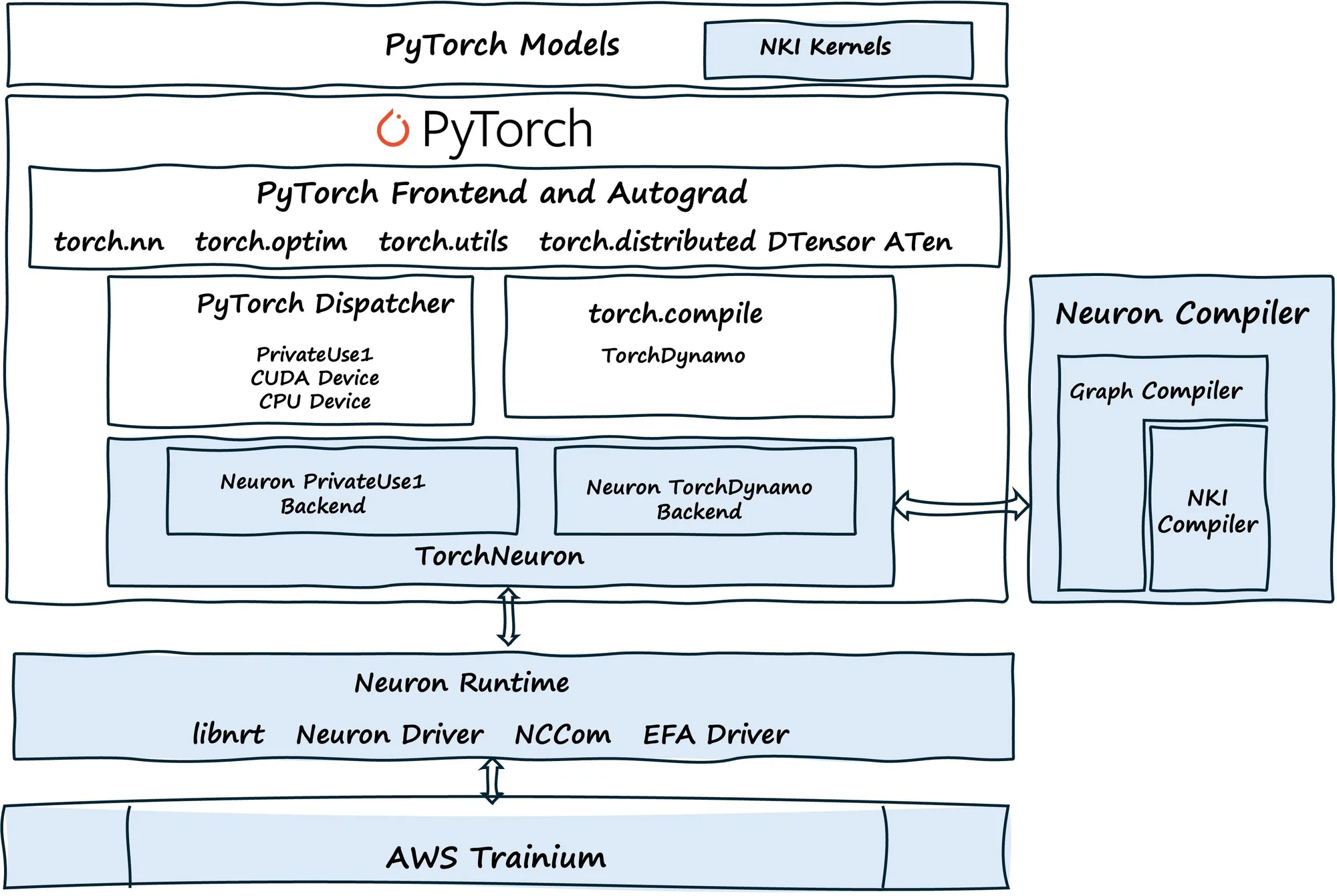
The software stack can be understood as:
PyTorch Application
        ↓
  PyTorch Dispatcher
        ↓
    TorchNeuron
        ↓
  Neuron Compiler
        ↓
   Neuron Runtime
        ↓
   AWS Trainium
The initial public beta supports Trainium2 and Trainium3 instances.
AWS has released TorchNeuron as open-source software, making the backend available for inspection and further development.
Why it matters for developers
This development could reduce the cost of experimenting with alternative AI accelerators.
For teams operating self-hosted inference or model-training infrastructure, hardware selection increasingly depends on throughput, memory, availability, and pricing.
Framework compatibility has historically constrained those decisions.
Native PyTorch support makes it easier to evaluate alternative hardware without maintaining entirely separate model implementations.
However, backend compatibility doesn't guarantee that every PyTorch operator or custom CUDA kernel will work unchanged.
Engineering takeaway: evaluate AI accelerators using end-to-end workload benchmarks rather than peak theoretical performance.
Compare model compatibility, memory requirements, compilation overhead, throughput, latency, and total operating cost.
GitHub introduces Package Firewall — blocking malicious npm dependencies before installation
Released: October 20; announcement updated October 21, 2026 · Supply-Chain Security
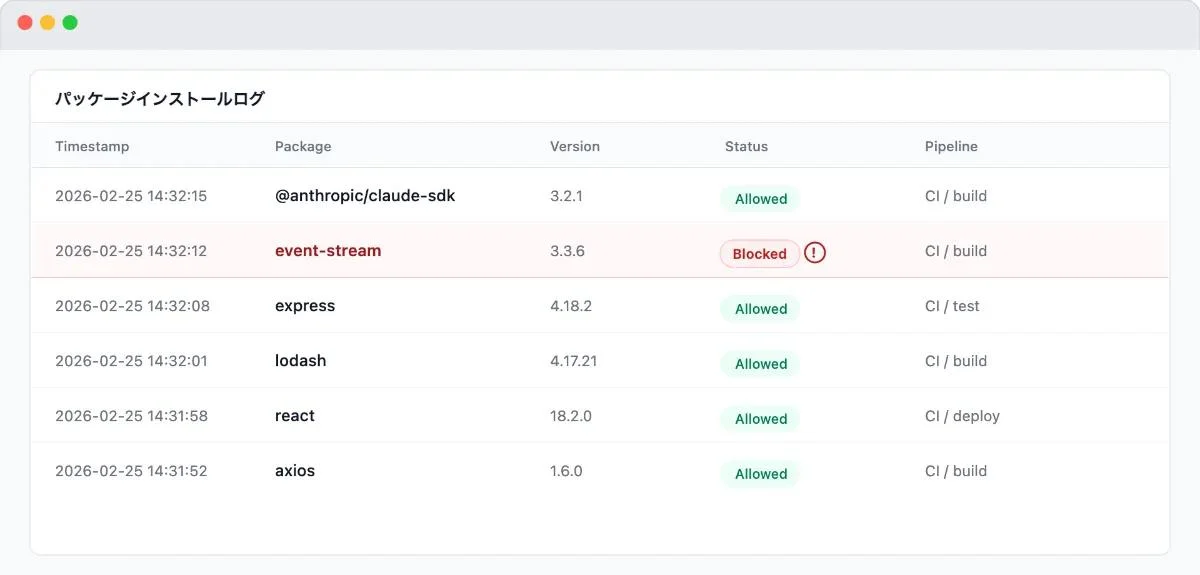
GitHub has introduced Package Firewall, a new security capability designed to prevent malicious dependencies from reaching developer machines, CI/CD runners, and autonomous coding agents.
The feature addresses a particularly dangerous category of software supply-chain attacks.
A malicious npm package doesn't need to be imported by application code to cause damage.
Its installation scripts may execute during dependency installation, potentially accessing environment variables, credentials, or other sensitive information.
What's technically interesting?
Package Firewall introduces a policy-enforcement layer between dependency consumers and package registries.
Developer / CI / Agent
          ↓
    Package Firewall
          ↓
    Policy Evaluation
          │
          ├── Malware checks
          ├── Vulnerability checks
          ├── Release cooldown
          └── Attestation checks
          ↓
      npm Registry
The firewall evaluates both package metadata requests and actual package downloads.
Administrators can configure several controls.
Release cooldowns: Delay installation of newly published package versions, creating time for malicious releases to be detected.
Advisory checks: Compare dependencies against GitHub's vulnerability and malware advisory information.
Attestation downgrade detection: Identify changes that weaken package provenance assurances.
Exception workflows: Developers can request authorization when a legitimate dependency is blocked.
The important architectural distinction is that the security check occurs before package installation, rather than only after dependency analysis.
The initial preview supports npm packages and is available to GitHub Enterprise Cloud customers.
It is free during the preview, with usage-based pricing planned for general availability.
Why it matters for developers
This is particularly important as coding agents gain permission to install dependencies automatically.
Consider an agent implementing a new feature.
It may identify a library, modify package.json, and run npm install without human intervention.
If the selected package is compromised, the attack can occur before the agent executes any generated application code.
Engineering takeaway: treat package installation as a privileged operation.
Combine dependency lockfiles, trusted registries, restricted installation permissions, and install-time security checks.
Package Firewall only protects traffic routed through it, so bypass prevention and endpoint configuration remain essential.
GitHub CLI introduces automatically rotating OAuth credentials — reducing the risks of long-lived tokens
Released: October 21, 2026 · Developer Tools & Security
GitHub has introduced support for expiring OAuth access tokens with automatic refresh in GitHub CLI.
The feature is available in public preview starting with gh version 2.103.0.
What's technically interesting?
Traditional developer authentication frequently relies on credentials that remain valid for extended periods.
If a token is accidentally exposed through logs, configuration files, or compromised software, it may remain usable until explicitly revoked.
The new authentication model uses two credentials.
Short-lived access token: Used for ordinary authenticated operations.
Rotating refresh token: Used to obtain a replacement access token when the existing one expires.
The CLI manages the refresh process automatically.
Developers can enable the feature using:
gh auth login --expiring
Or make it the default for future sign-ins:
gh config set expiring_credentials enabled
For Git operations over HTTPS, GitHub recommends configuring its credential helper:
gh auth setup-git
The architecture becomes:
GitHub CLI
    ↓
Access Token
    ↓
Authenticated Request
    │
    └── Token Expired
             ↓
       Refresh Token
             ↓
       New Access Token
GitHub recommends Git 2.46 or later for improved handling of expiring credentials.
The feature is currently opt-in and supported on github.com, ghe.com, and GitHub Enterprise Server 3.23 or later.
Why it matters for developers
This is a practical improvement in developer authentication security.
Short-lived credentials reduce the period during which a stolen access token remains useful.
However, refresh tokens remain sensitive, and scripts that copy an access token once and reuse it indefinitely may stop working.
Engineering takeaway: prefer short-lived credentials and automated rotation where supported.
For CI/CD, continue using appropriately scoped workload identities, GitHub App installation tokens, or other purpose-built automation credentials rather than relying on a developer's personal CLI session.
The bigger picture
The five developments reveal an important shift in software engineering.
AI systems are becoming more autonomous, while the infrastructure surrounding them is becoming more explicit about security, permissions, and execution boundaries.
Claude Duet demonstrates how persistent agents can operate across applications without requiring constant user interaction.
Claude Security shows how AI can maintain an evolving understanding of a software system rather than analyzing isolated snapshots.
TorchNeuron is reducing friction between machine-learning frameworks and specialized hardware.
GitHub's latest releases strengthen two particularly sensitive boundaries: installing third-party code and authenticating automated development tools.
The architecture worth watching is:
Autonomous reasoning → Controlled execution → Verified dependencies → Short-lived credentials → Continuous monitoring.
For immediate practical value, GitHub's authentication changes are worth reviewing, especially if you frequently use its CLI.
For deeper engineering study, TorchNeuron is the most interesting infrastructure release, while Claude Security provides a useful example of continuous, context-aware analysis across repositories.
Today's central lesson: as software agents become capable of operating with less supervision, infrastructure must become better at independently enforcing what those agents are allowed to access, install, modify, and execute.
These briefings combine summaries of linked primary sources with engineering commentary by Emran Hejazi. Source links accompany each story so you can examine the original announcements and their claims.
Every new issue, in your feed reader.
Explore the architecture and engineering decisions behind my projects.