Today's briefing features five developments from October 8–12, including a new open-weight coding model, significant improvements to OpenAI's Codex CLI, and a newly launched platform for continuously optimizing production AI agents.
The most important trend is that AI engineering is moving beyond generating code toward building autonomous systems that can be measured, controlled, and improved after deployment.
JetBrains releases Mellum2.1 — a 12B open model trained to work inside real repositories
 Related illustration — Mellum2 공개, JetBrains가 낮춘 코딩 에이전트 호출 비용 - Devlery
 Related illustration — Mellum2 공개, JetBrains가 낮춘 코딩 에이전트 호출 비용 - Devlery
Released: October 8, 2026
JetBrains has released Mellum2.1, an Apache 2.0-licensed model designed specifically for coding agents and inexpensive specialized workers.
The model contains 12 billion total parameters, but activates only 2.5 billion per token using a mixture-of-experts architecture.
What makes this release particularly interesting is that JetBrains didn't substantially change the underlying architecture.
Instead, it focused on reinforcement learning.
JetBrains trained the model through millions of executions across thousands of sandboxed environments, teaching it to navigate repositories, modify source files, execute tools, and verify its changes.
The technical improvements
JetBrains reports that Mellum2.1 achieves:
- 47% on SWE-bench Verified, compared with 2% for Mellum2.
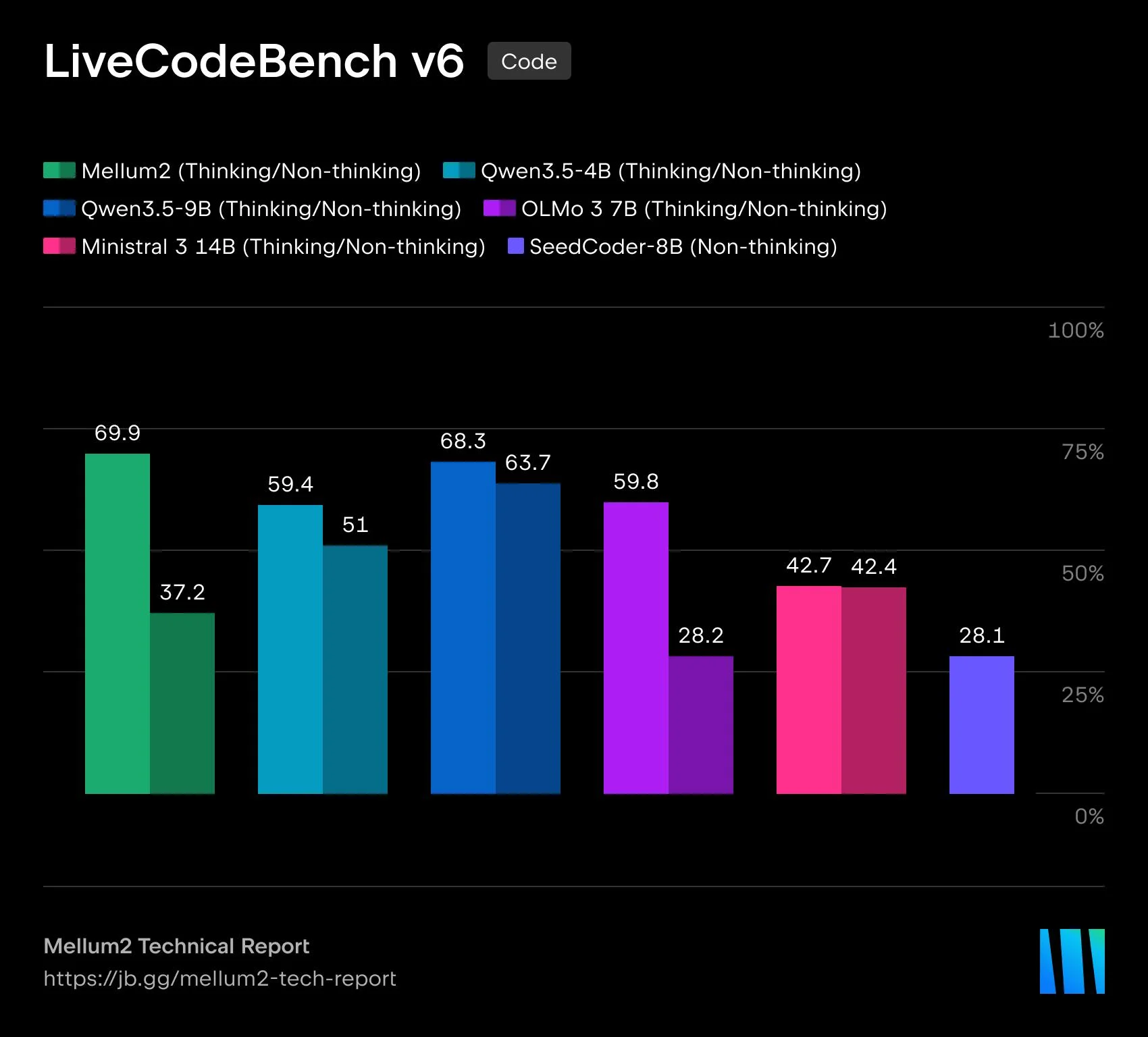
- 82% on LiveCodeBench v6, measuring competitive programming performance.
- Approximately 1.6× faster single-request generation using multi-token prediction.
- Nearly 2× the token throughput of Qwen3.5-9B under the company's high-load benchmark conditions.
These results come from JetBrains' evaluations and should be independently validated for production workloads.
Why it matters for developers
This is a meaningful development for self-hosted coding infrastructure.
A coding agent doesn't necessarily need a frontier model for every task.
Consider a multi-agent architecture:
Frontier model → planning and architecture
Mellum2.1 → repository exploration
Mellum2.1 → isolated code modifications
Compiler and tests → deterministic verification
The expensive model handles difficult reasoning, while the smaller model executes narrowly scoped tasks.
Engineering takeaway: Mellum2.1 is worth evaluating for local repository exploration, test-failure investigation, and repetitive coding subtasks. Its biggest advantage may be reducing the cost of parallel agents rather than replacing frontier models entirely.
OpenAI releases Codex CLI 0.162 — managed Git worktrees, improved agent orchestration, and stronger sandbox security
Released: October 8; corrective update October 9, 2026
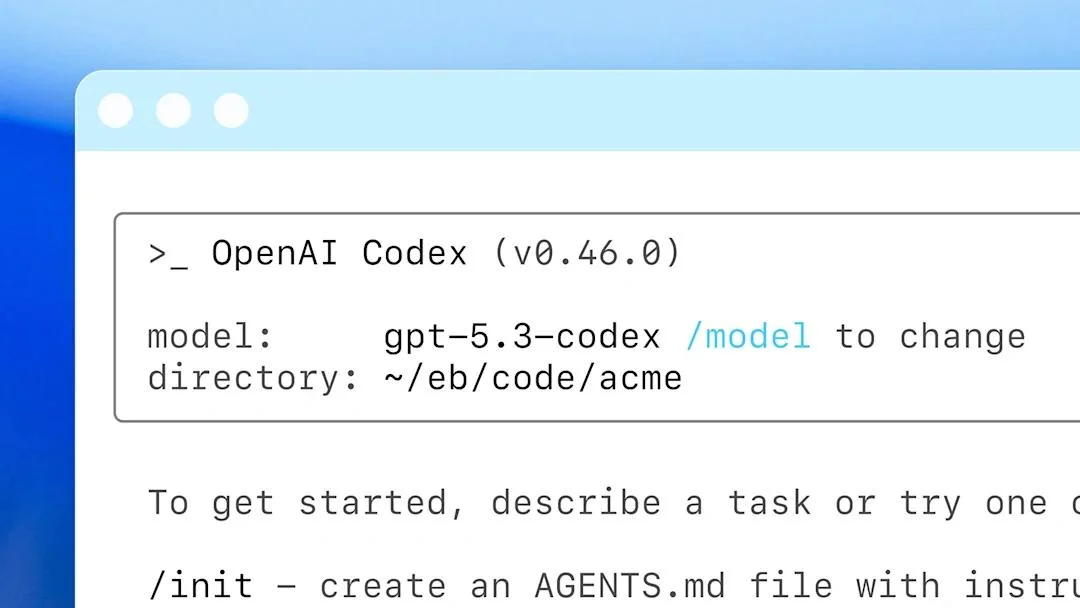
OpenAI released Codex CLI 0.162.0, introducing several changes that are particularly relevant to developers running multiple coding agents.
The most consequential addition is support for managed Git worktrees.
When the feature is enabled, Codex can create and list managed worktrees originating from trusted local projects.
This addresses a fundamental problem with parallel coding agents: multiple agents modifying the same working directory can overwrite each other's changes or interfere with uncommitted work.
What's technically interesting?
Managed worktrees: Agents can work in isolated Git working directories while sharing the underlying repository.
Command Center improvements: Developers can pin important agent tasks, making concurrent work easier to organize.
Code Mode improvements: The release introduces JavaScript helpers for streaming promise results as they settle and optional ranked tool discovery.
Model-provider flexibility: Custom Responses-compatible providers can expose capabilities such as live web access and remote context compaction.
Sandbox hardening: Codex now rejects writable sandbox-construction executables, strengthens denied-file handling on Linux, and prevents certain ripgrep configurations from weakening filesystem restrictions.
The release also improves retry behavior by respecting server-provided Retry-After guidance and fixes line-ending preservation when applying patches.
Why it matters for developers
The worktree improvements are especially useful for autonomous software development.
A more reliable parallel workflow looks like:
Repository
├── Agent A → Authentication changes
├── Agent B → Database migrations
├── Agent C → Frontend implementation
└── Agent D → Tests and verification
Each agent operates in a separate worktree, reducing filesystem interference.
The changes don't eliminate merge conflicts, but they establish a cleaner isolation boundary.
Engineering takeaway: for parallel coding agents, treat filesystem isolation as an architectural requirement. Combine separate worktrees with explicit task ownership, branch management, and automated verification before merging.
Kore.ai launches Autoloop — continuous optimization for production AI agents
Released: October 12, 2026
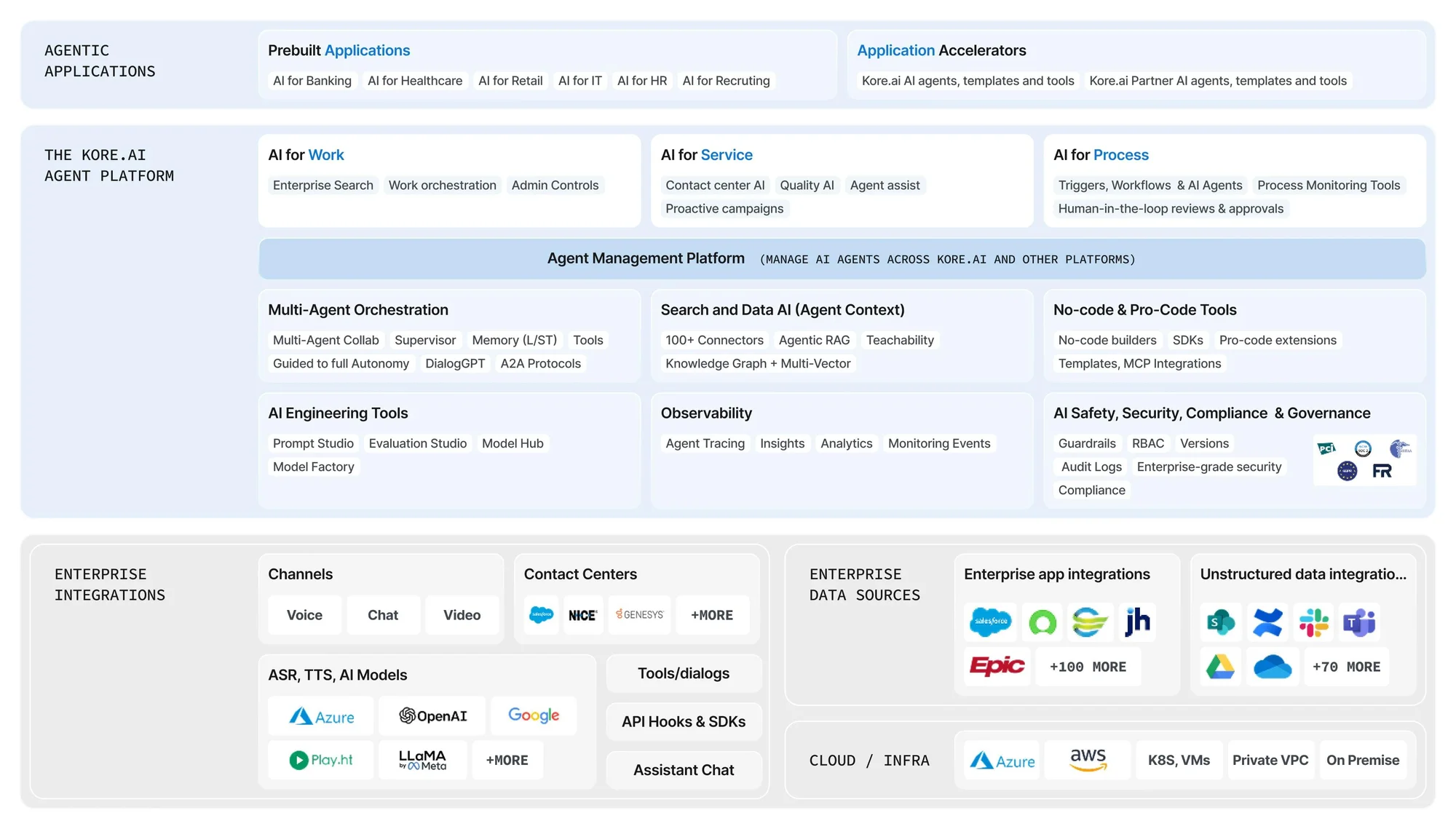
Today's newest major development comes from Kore.ai, which announced the general availability of Autoloop, an optimization engine for its Artemis agent platform.
The premise is important: an AI agent isn't finished when it passes its initial tests.
Once deployed, agents encounter unfamiliar requests, changing business rules, unexpected tool responses, and failures that weren't represented in their development environments.
Autoloop introduces a continuous improvement process:
Build → Evaluate → Diagnose → Optimize → Re-verify.
The underlying architecture
Two technologies are central to the system.
StateTrace captures execution information across agent networks, including delegation, handoffs, state transitions, context, and tool calls.
Agent Blueprint Language (ABL) represents agent behavior through executable state machines, defining routing, tools, business rules, and execution boundaries.
Autoloop connects these components so that production failures can be traced back to particular parts of an agent's execution logic.
It then evaluates proposed improvements against seven dimensions, including task completion, accuracy, business-rule adherence, safety, consistency, user experience, and cost.
The important detail is that improvements must be re-evaluated across the defined objectives, rather than optimizing one metric in isolation.
Kore.ai also reports that its internal coding agents generate approximately 6,500 commits per month across a 2.6-million-line production codebase, operating under 68 guardrails. These are company-reported figures.
Why it matters for developers
This represents a move toward continuous integration and continuous evaluation for AI agents.
Traditional software has:
Code → Tests → CI → Deployment → Monitoring
Agentic systems increasingly need:
Agent definition → Evaluation → Deployment → Execution traces → Failure diagnosis → Regression evaluation
The second process is more complicated because model behavior is probabilistic.
Engineering takeaway: build evaluation datasets and execution tracing into agent systems from the beginning. Measure successful task completion, policy violations, tool failures, latency, and cost per successful task—not simply model response quality.
Anthropic launches Claude Dashboards and Motion — AI-generated analytics with inspectable queries and editable code
Released: October 8, 2026
Anthropic introduced two new capabilities that expand Claude beyond conversational responses.
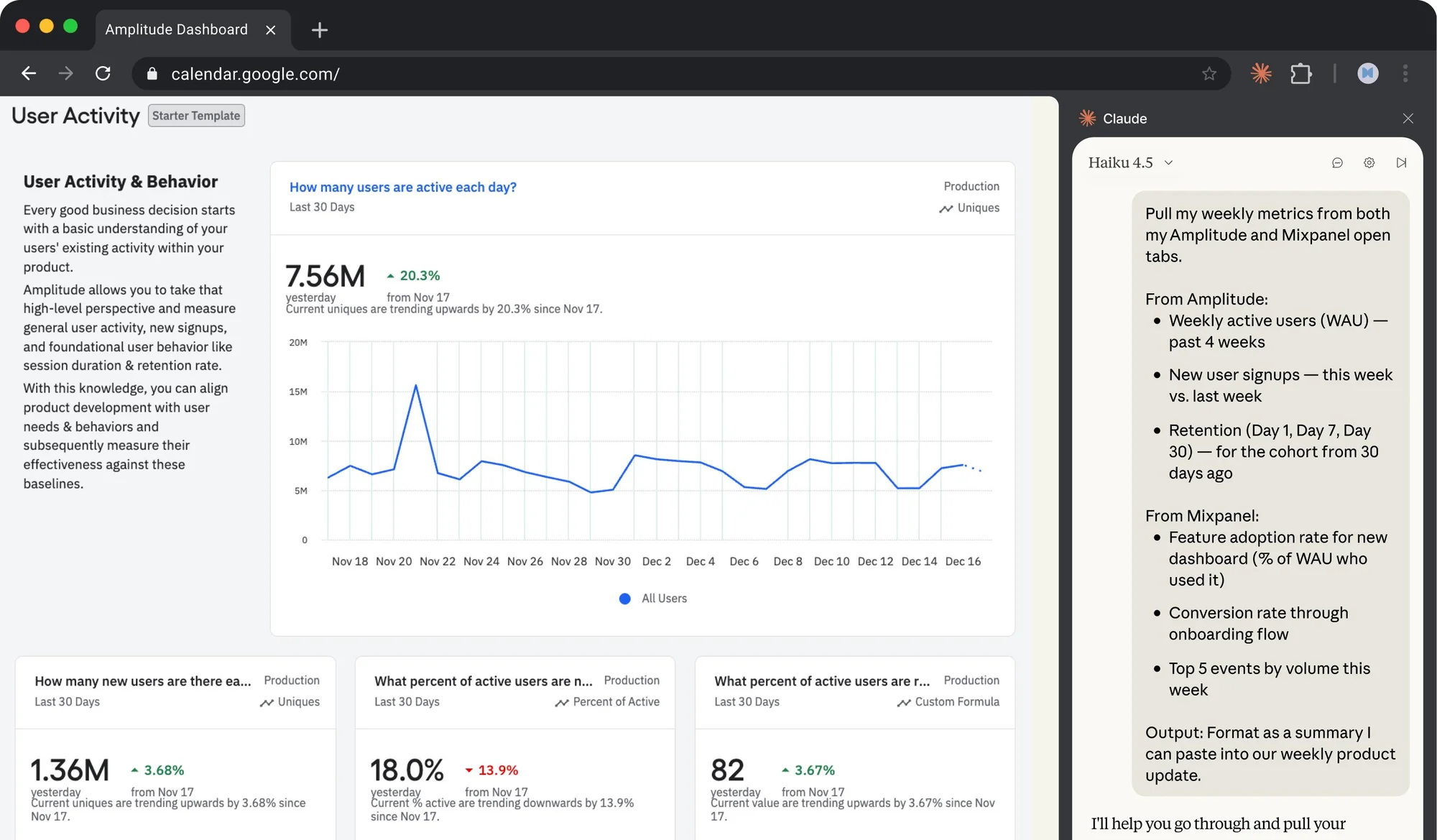
Claude Dashboards allows users to connect enterprise data sources and generate continuously updated dashboards through natural-language instructions.
Supported integrations include Amazon Redshift, BigQuery, ClickHouse, Databricks, Snowflake, and Salesforce.
Instead of producing only a textual explanation, Claude generates charts and dashboard components connected to the underlying data.
Crucially, users can inspect the query responsible for a displayed number and see when its data was last refreshed.
The second release: Claude Motion
Claude Motion creates animated explanations from prompts.
However, it doesn't generate video footage using a diffusion or video-generation model.
Instead, Claude writes code that animates text, shapes, charts, and images.
Users can edit the generated animation, modify timing and content, and export the result as an MP4.
Dashboards is currently in beta on paid plans, while Motion is in beta for Team and Enterprise customers.
Anthropic also made Claude Docs, Slides, and Design generally available across its subscription tiers, including Free.
Why it matters for developers
The interesting engineering development is AI-generated interfaces with inspectable underlying logic.
A conventional natural-language analytics assistant might return:
Revenue increased 18% this month.
A more verifiable system can return a dashboard alongside the actual query used to calculate the result.
That creates an architecture resembling:
Natural-language request → Query generation → Data retrieval → Structured visualization
The user can inspect the intermediate computation rather than trusting an unsupported numerical claim.
Engineering takeaway: AI-generated dashboards should preserve query provenance, authorization boundaries, refresh timestamps, and reproducibility. Generating a visually convincing chart is easy compared with proving that its numbers are correct.
Vercel enables AI agents to purchase domains — while enforcing human approval for financial transactions
Released: October 9, 2026
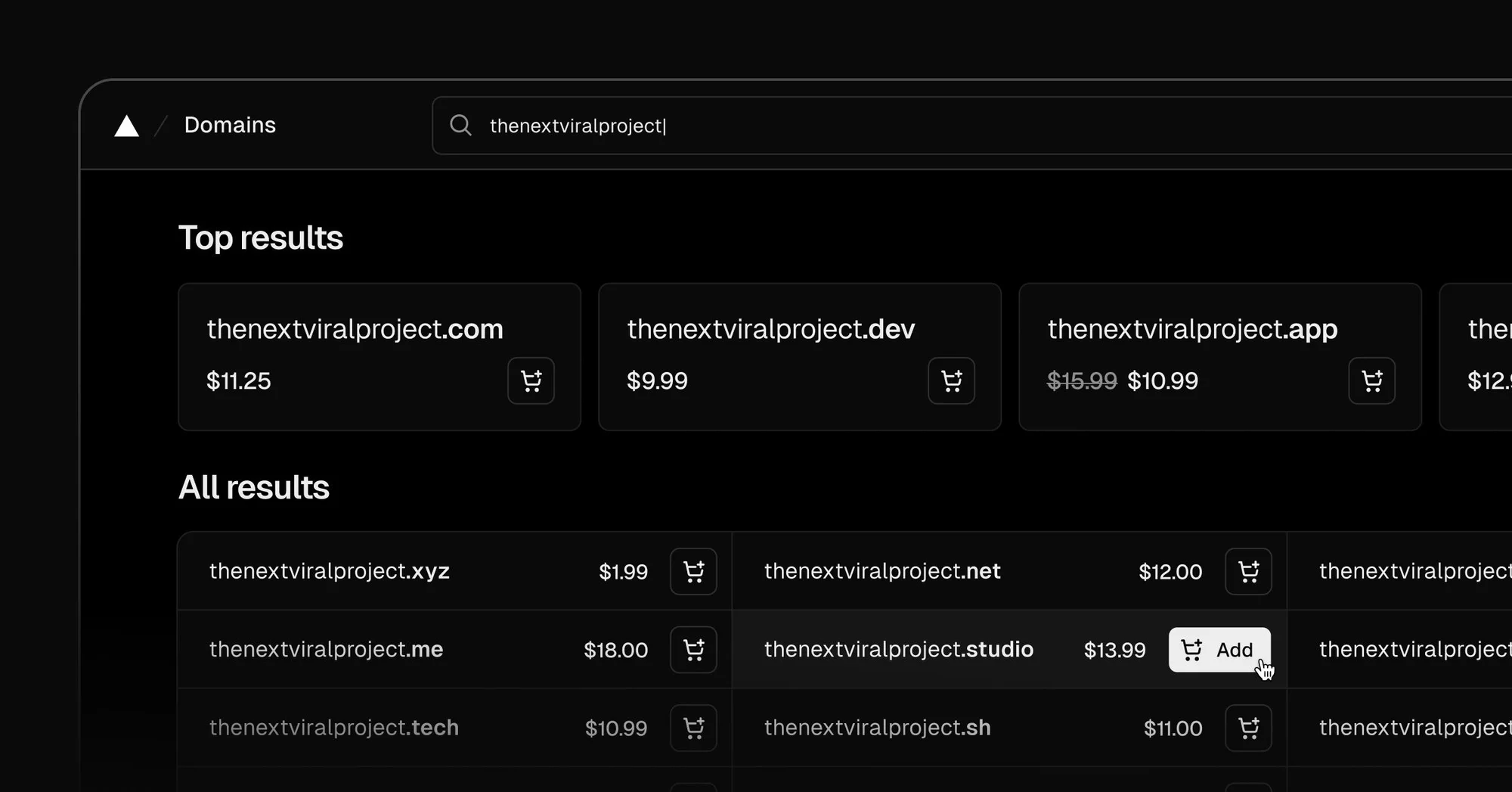
Vercel has introduced domain purchasing capabilities directly into its CLI, with a workflow designed for autonomous coding agents.
An agent can now discover domain candidates, check availability, inspect registration prices, and initiate a purchase without requiring the developer to navigate a web interface.
The workflow uses commands such as:
vercel domains search example
vercel domains check example.com
vercel domains price example.com
vercel domains buy example.com
However, the most important part of the implementation is what happens when the agent reaches the financial transaction.
The agent cannot silently complete the purchase.
When invoked non-interactively, the purchase command returns a structured, machine-readable error explaining that user confirmation is required.
The developer must explicitly confirm the price, automatic-renewal preference, and registrant information through an interactive terminal or dashboard.
Vercel also provides an agent-facing skill describing the complete workflow.
Why it matters for developers
This is a useful example of designing APIs for autonomous agents without giving them unrestricted authority.
The workflow separates two kinds of operations:
Low-risk operations: Search, inspect, compare, and prepare.
High-impact operations: Spend money, register ownership, or establish recurring financial commitments.
That produces a simple but important execution pattern:
Agent plans → Agent gathers information → Agent prepares action → Human authorizes → System executes
This is preferable to relying on prompt instructions telling an agent not to spend money.
Engineering takeaway: design high-impact API operations around explicit authorization boundaries. The same approach applies to production deployments, database deletion, financial transactions, subscription changes, and credential management.
The bigger picture
The strongest developments today concern the infrastructure required to make autonomous agents dependable.
JetBrains is improving the economics of coding agents through specialized open models. OpenAI is strengthening parallel execution and isolation. Kore.ai is bringing continuous evaluation into production agent systems. Anthropic is making generated analytical outputs more inspectable, while Vercel demonstrates how agent-accessible tools can preserve human control over consequential actions.
The emerging architecture looks like:
Planning model → Specialized workers → Isolated execution → Tool permissions → Verification → Deployment → Production traces → Continuous evaluation.
The three developments most worth investigating for software engineering are Mellum2.1, Codex's managed worktrees, and Autoloop's evaluation architecture.
Together, they address three distinct bottlenecks: inference cost, execution isolation, and production reliability.
The central lesson: making agents generate more code is no longer the difficult part. Building systems that allow agents to work concurrently, respect boundaries, demonstrate correctness, and improve without introducing regressions is becoming the more important engineering challenge.
These briefings combine summaries of linked primary sources with engineering commentary by Emran Hejazi. Source links accompany each story so you can examine the original announcements and their claims.
Every new issue, in your feed reader.
Explore the architecture and engineering decisions behind my projects.