Today's briefing covers five significant developments from October 20, including a potentially transformative TypeScript compiler, native PyTorch support for Google's AI accelerators, major improvements in AI-assisted software migration, and an important internet security incident.
Today's biggest engineering trend: the software industry is making development tools faster, AI infrastructure more portable, and automated software engineering more capable of handling complex, existing systems.
Cloudflare introduces tsrs — a Rust-based TypeScript compiler that's up to 8× faster
Released: October 20, 2026 · Developer Tools
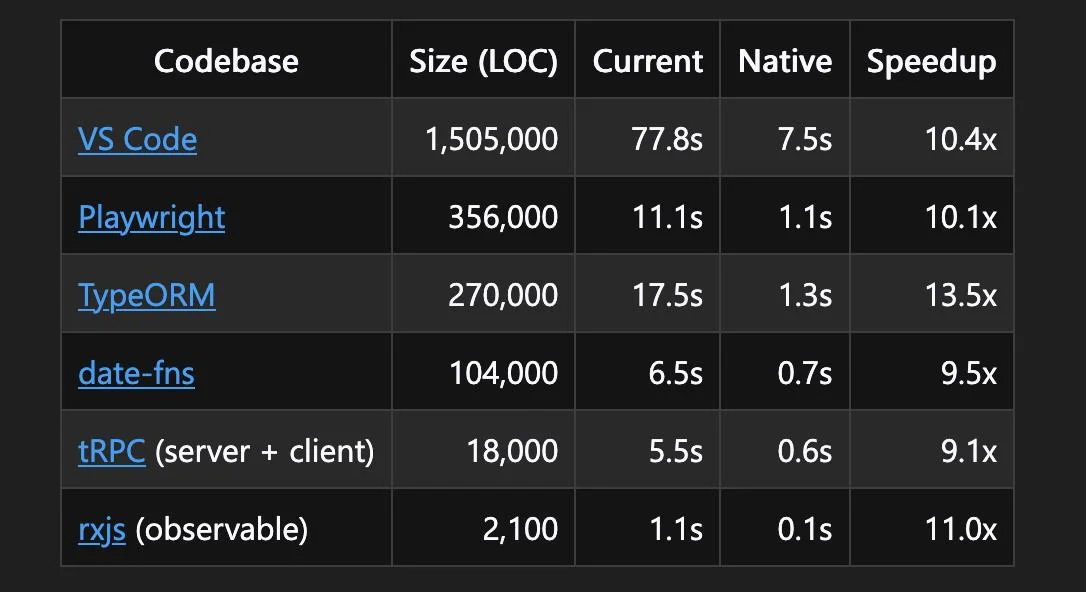
Cloudflare and VoidZero have announced tsrs, an experimental Rust implementation of the TypeScript compiler, developed in collaboration with the TypeScript team.
The early performance results are substantial.
| Metric | Reported improvement |
|---|---|
| Type-checking speed | Up to 8× faster |
| Memory consumption | Approximately 70% lower |
| Baseline | TypeScript 7.0 |
| Implementation | Rust |
| Availability | Experimental npm package |
These figures come from Cloudflare's early benchmarks using comparable worker configurations.
What's technically interesting?
The project isn't intended to fork the TypeScript language.
Instead, its goal is to preserve TypeScript's behavior while providing a faster implementation of its compiler and language tooling.
Cloudflare is incubating tsrs within the Oxc ecosystem and plans to integrate it with other development tools.
One particularly interesting advantage is WebAssembly compatibility.
Rust's memory model makes it possible to compile substantial parts of the development toolchain into relatively lightweight WebAssembly modules.
That opens the door to running type-checking and development environments inside browsers, isolated cloud sandboxes, and AI-agent execution environments.
Cloudflare also plans to use coding agents to track upstream TypeScript changes and maintain compatibility.
Why it matters for developers
For large TypeScript repositories, type-checking can become a significant bottleneck in local development and CI.
A substantially faster compiler could reduce feedback latency without requiring changes to application architecture.
You can experiment with the current implementation:
npm install tsrs
npx tsrs
Engineering takeaway: tsrs deserves attention for large Next.js and TypeScript projects. However, it remains experimental, so benchmark it against your existing compiler and verify diagnostic compatibility before integrating it into production CI.
Google open-sources TorchTPU — PyTorch can now run natively on Google's AI accelerators
 Related illustration — TorchTPU gives PyTorch a straighter path to TPU pods | AI News Silo
 Related illustration — TorchTPU gives PyTorch a straighter path to TPU pods | AI News Silo
 Related illustration — TorchTPU gives PyTorch a straighter path to TPU pods | AI News Silo
Released: October 20, 2026 · AI Infrastructure
Google Cloud — TorchTPU announcement · Technical architecture and inference engines
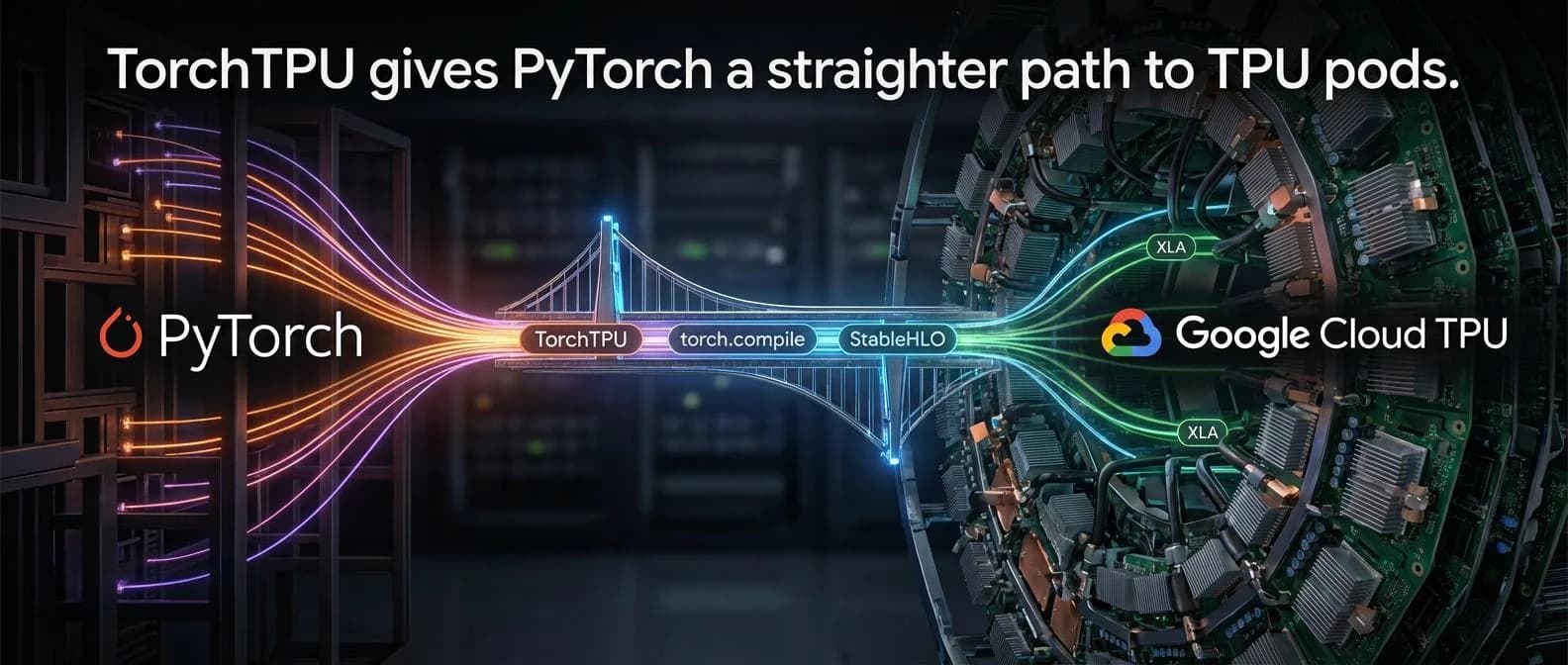
Google has officially open-sourced TorchTPU, its native PyTorch backend for Google Tensor Processing Units.
The project was developed with Meta's PyTorch engineering team and announced at PyTorch Conference 2026.
Its purpose is to eliminate much of the friction involved in moving AI workloads between hardware platforms.
What's technically interesting?
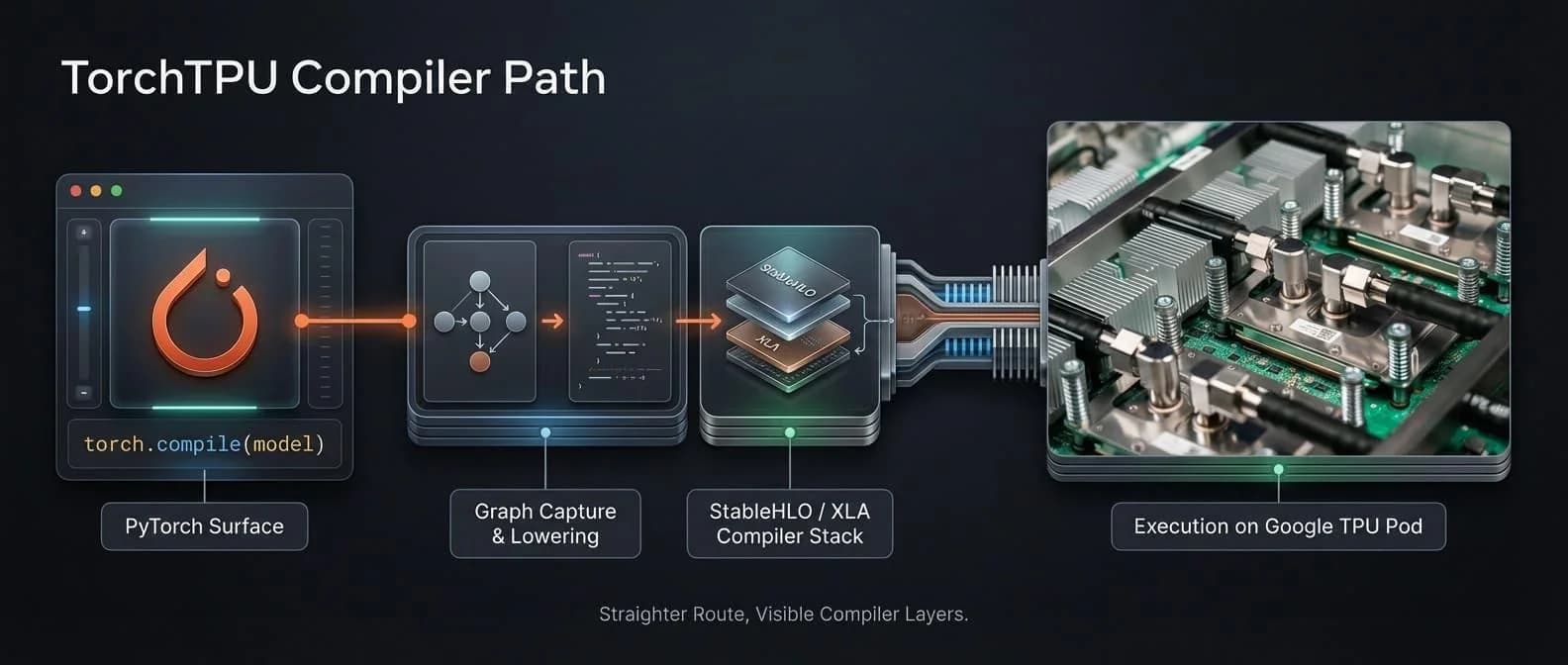
Previously, developers using Google TPUs frequently needed specialized execution paths through PyTorch/XLA or JAX.
TorchTPU allows applications to interact with TPUs through familiar PyTorch interfaces.
For example:
import torch

device = torch.device("tpu")
model = model.to(device)
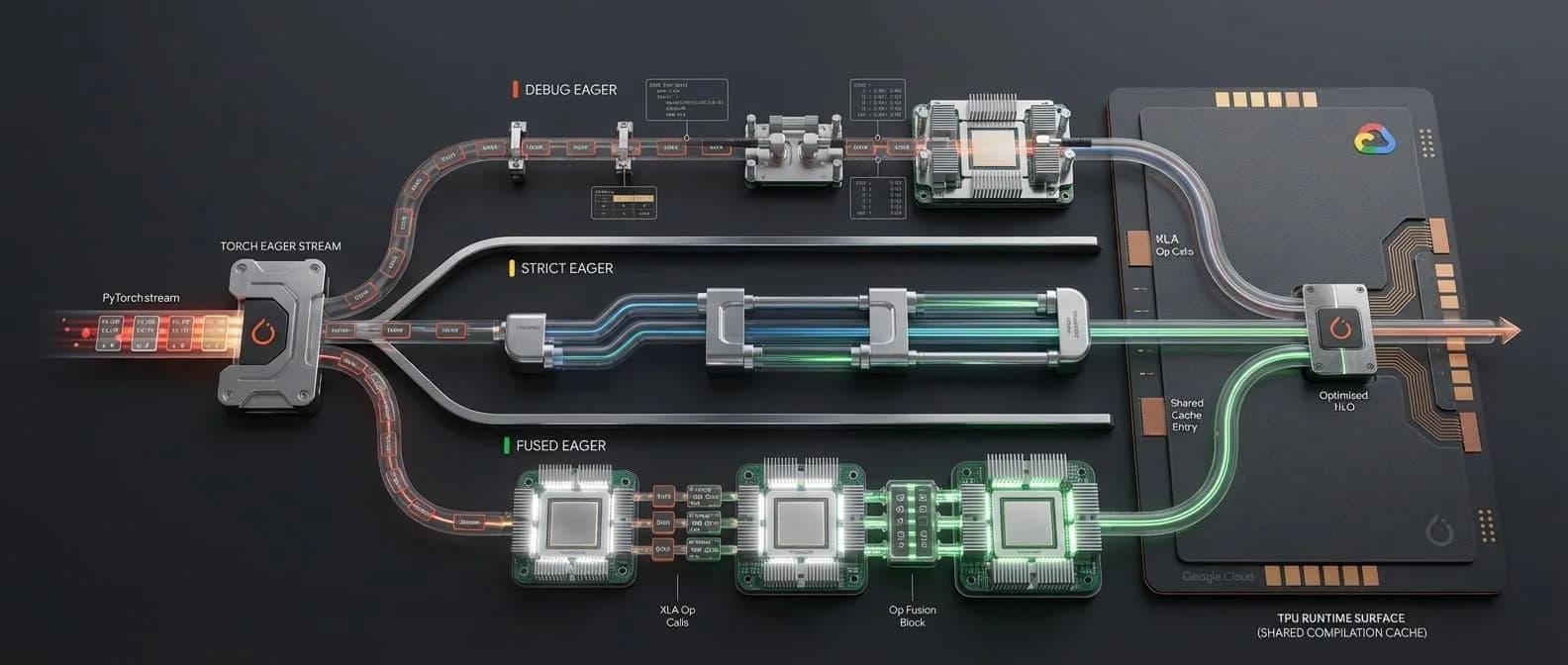
Developers can use eager execution for debugging and torch.compile for optimized execution.
The release also includes native TPU integrations for vLLM and SGLang, enabling production inference using established serving frameworks.
Google has integrated TorchTPU with distributed training, Hugging Face Transformers, TorchTitan, and Ray.
Its published training results include up to 52% Model FLOPs Utilization for Qwen 3 8B and scaling demonstrations involving up to 8,192 Ironwood TPUs. These are Google-reported results from specific configurations.
Why it matters for developers
This is significant for the economics of self-hosted AI.
Developers can increasingly choose accelerators based on availability, throughput, and cost rather than being constrained by framework compatibility.
The broader architecture becomes:
PyTorch application → Hardware-specific backend → GPU or TPU
The same model-serving system can potentially support different accelerator types without maintaining completely separate application implementations.
Engineering takeaway: if you're building production inference infrastructure, TorchTPU is worth evaluating alongside GPU-based deployment. However, CUDA-specific kernels and hardware assumptions may still require adaptation.
OpenAI reports major improvements in AI-assisted software migration across legacy programming languages
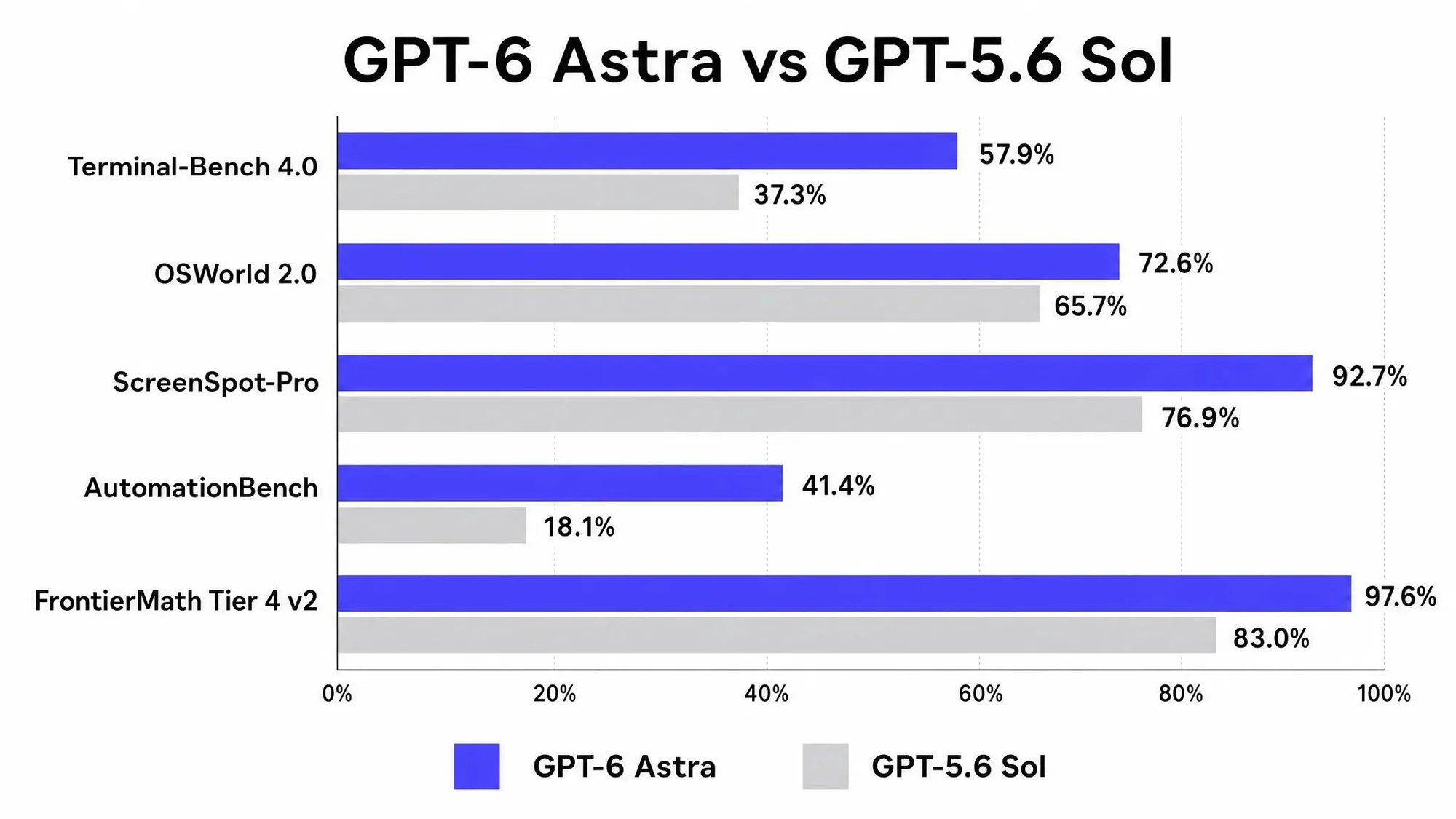
Published: October 20, 2026 · AI Models & Software Engineering
OpenAI has published new evaluations demonstrating substantial improvements in AI-assisted development across programming languages with relatively limited training data.
The research focuses on languages such as COBOL, Fortran, Visual Basic, and OCaml.
These languages remain important in financial systems, scientific computing, and enterprise infrastructure.
The benchmark results
OpenAI introduced MultiLangBench, which evaluates whether a coding model can construct a SQLite-compatible database engine across 20 programming languages.
| Model | Average test pass rate |
|---|---|
| GPT-5.6 Sol | 26.8% |
| GPT-6 Luna | 40.3% |
| GPT-6 Astra | 87.4% |
GPT-6 Astra also demonstrated significant improvements in individual languages.
For COBOL, its reported pass rate increased from 10.9% to 72.1%.
For Fortran, performance increased from 21.4% to 83.5%.
These are results from OpenAI's evaluation framework, not guarantees of equivalent performance on arbitrary production repositories.
The more important development: behavior-preserving migration
OpenAI also evaluated whether models could migrate existing COBOL applications into modern languages while preserving their behavior.
GPT-6.1 Sol achieved 97.9% accuracy at higher reasoning effort in the reported migration evaluation.
The tests verify observable behavior, including details such as numerical rounding and financial-record processing.
This distinction matters.
A migration can compile successfully while silently changing business rules.
For example, changing decimal truncation into rounding could introduce incorrect financial calculations even when every API endpoint continues functioning.
Why it matters for developers
This suggests that coding agents are becoming more useful for substantial modernization projects rather than just generating new application code.
The important workflow is:
Existing implementation → Behavioral tests → AI migration → Differential testing → Human review
Engineering takeaway: when using AI for large refactoring or migration, preserve behavioral invariants through tests before modifying the implementation. Successful compilation is not sufficient evidence of correctness.
OpenAI has also released the MultiLangBench evaluation materials, allowing developers to inspect and reproduce parts of its methodology.
Eight compromised eMudhra certificates trigger urgent security updates across Cloudflare infrastructure
Disclosed: October 20, 2026 · Security & Infrastructure
Cloudflare has disclosed a serious certificate-security incident involving eight compromised eMudhra intermediate certificates.
Cloudflare became aware of the issue on October 19 at approximately 17:00 UTC.
The compromised certificates were trusted across multiple systems, creating a potentially serious authentication problem.
What's technically interesting?
TLS certificates establish whether a server can prove its identity to a client.
Certificate validation depends on a chain of trust:
Root CA → Intermediate CA → Server Certificate
If an intermediate certificate's private key is compromised, an attacker may be able to generate certificates that appear trustworthy to clients accepting that intermediate.
In this incident, Cloudflare warns that the compromised keys could allow attackers to forge certificates for arbitrary domains and impersonate servers.
This is a problem with certificate-based authentication, not a weakness in TLS encryption algorithms themselves.
Cloudflare reports that its security review has not identified active exploitation affecting its services.
What developers should do
Cloudflare has released security updates for WARP, Cloudflare One clients, and Cloudflare Tunnel.
For developers operating Cloudflare Tunnel, the relevant fixed release is:
cloudflared 2026.10.2
Container deployments should update their images and redeploy.
Applications using custom certificate stores, mutual TLS configurations, or independently maintained trust stores may require additional remediation.
One particularly important detail is that updating an application SDK may not update the certificate trust store used by its HTTP runtime.
Engineering takeaway: verify which component performs TLS certificate validation in your applications. Update affected trust stores and runtimes, and never disable certificate verification to work around new certificate errors.
Google completes its open Coral NPU architecture — targeting 1 TOPS at approximately 10 mW
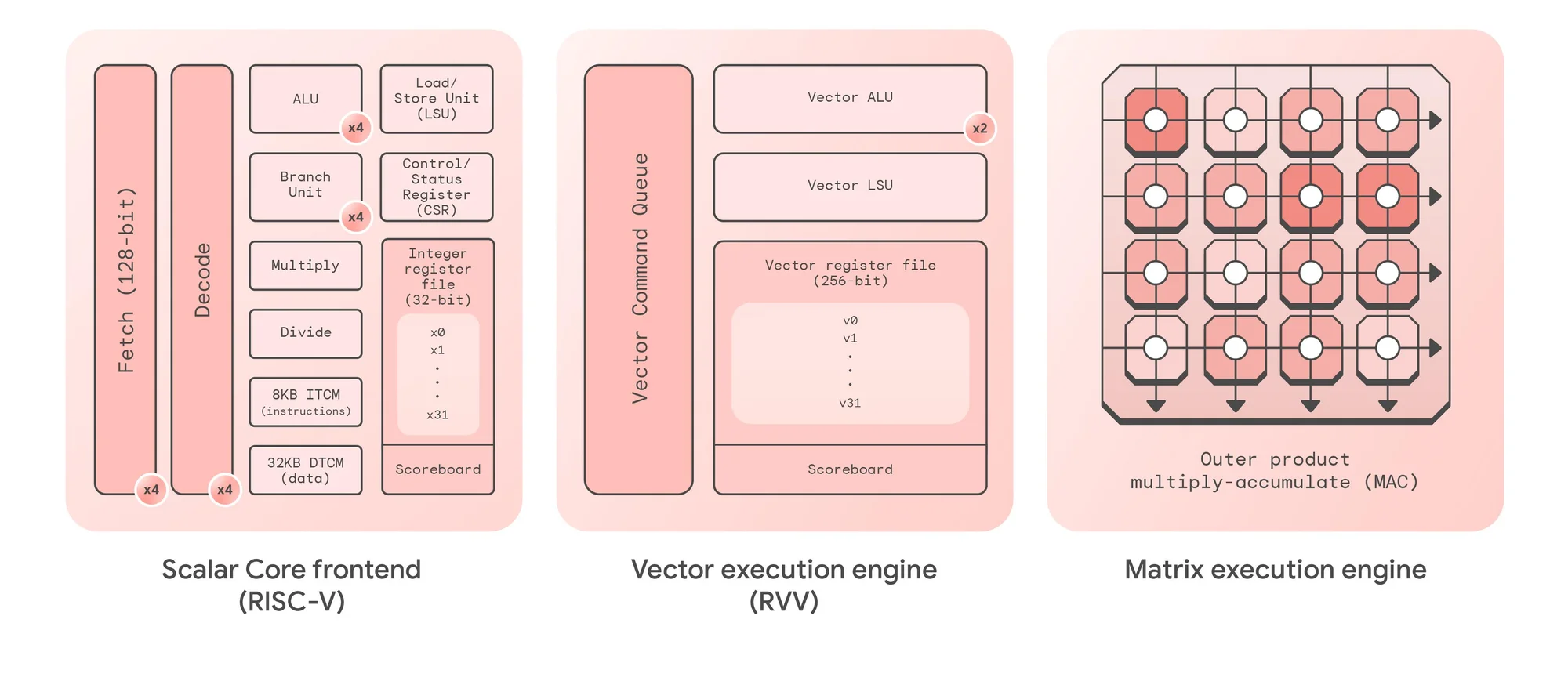 Related illustration — Coral NPU datasheet | Google for Developers
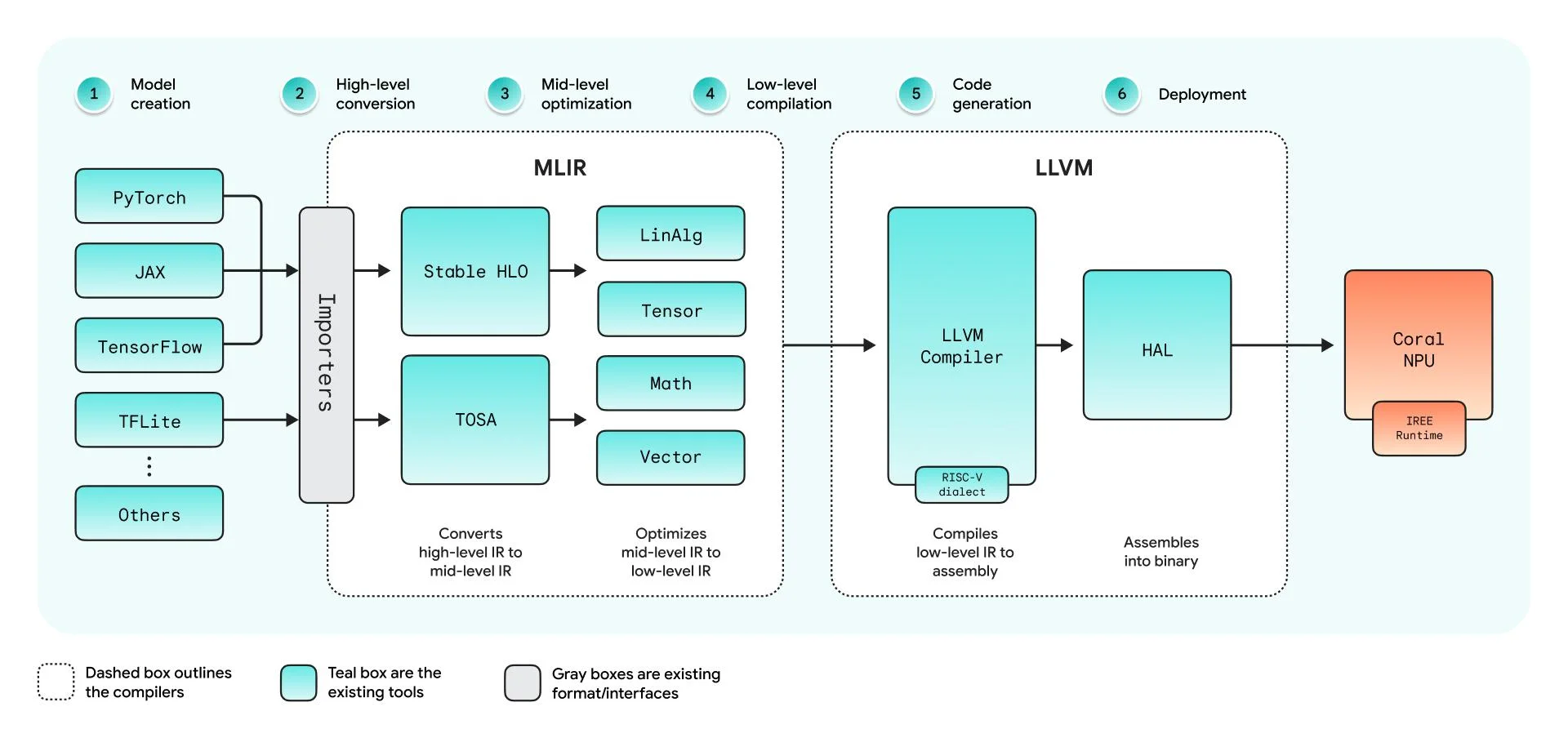 Related illustration — MLIR and IREE compilers | Coral | Google for Developers
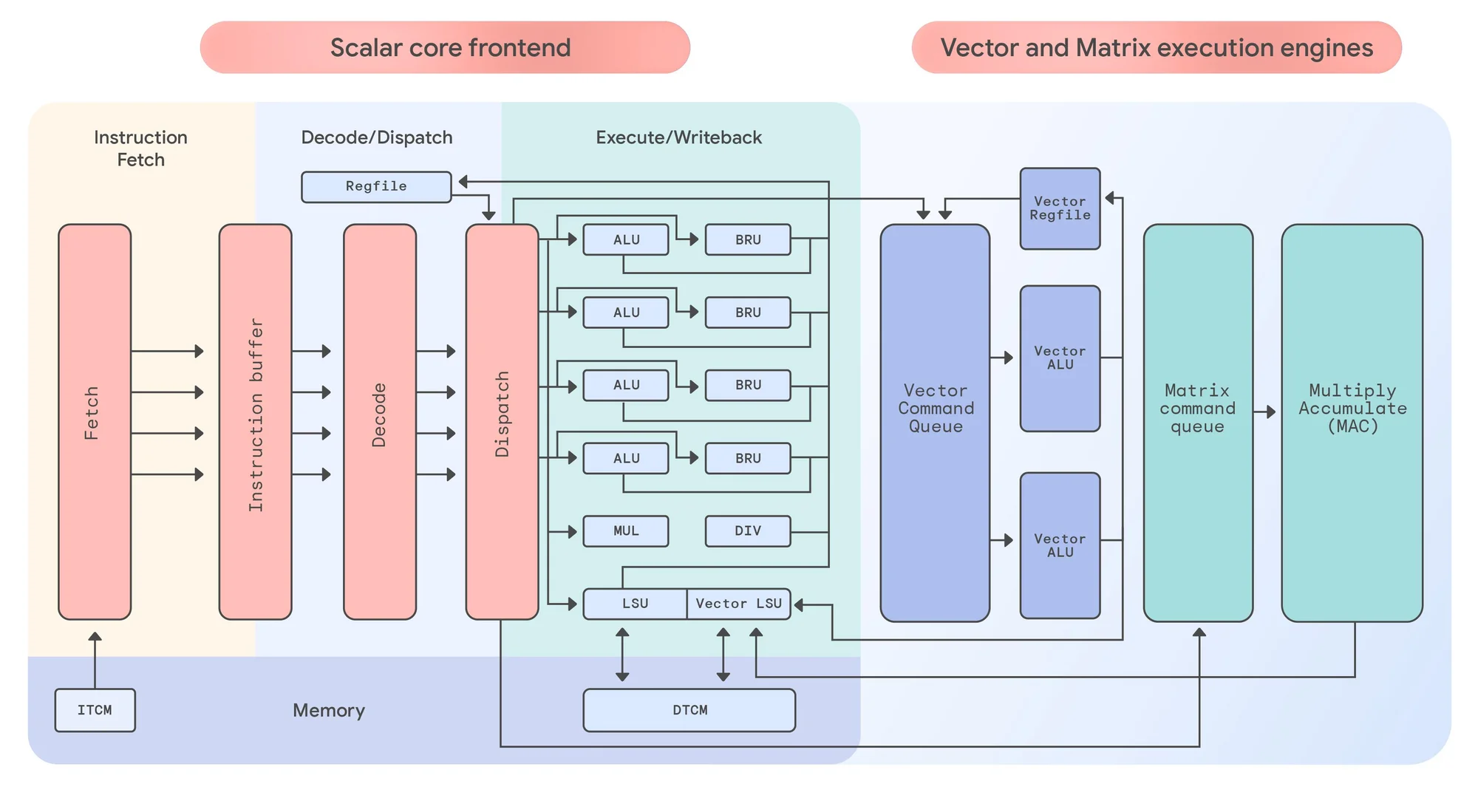 Related illustration — Coral NPU datasheet | Google for Developers
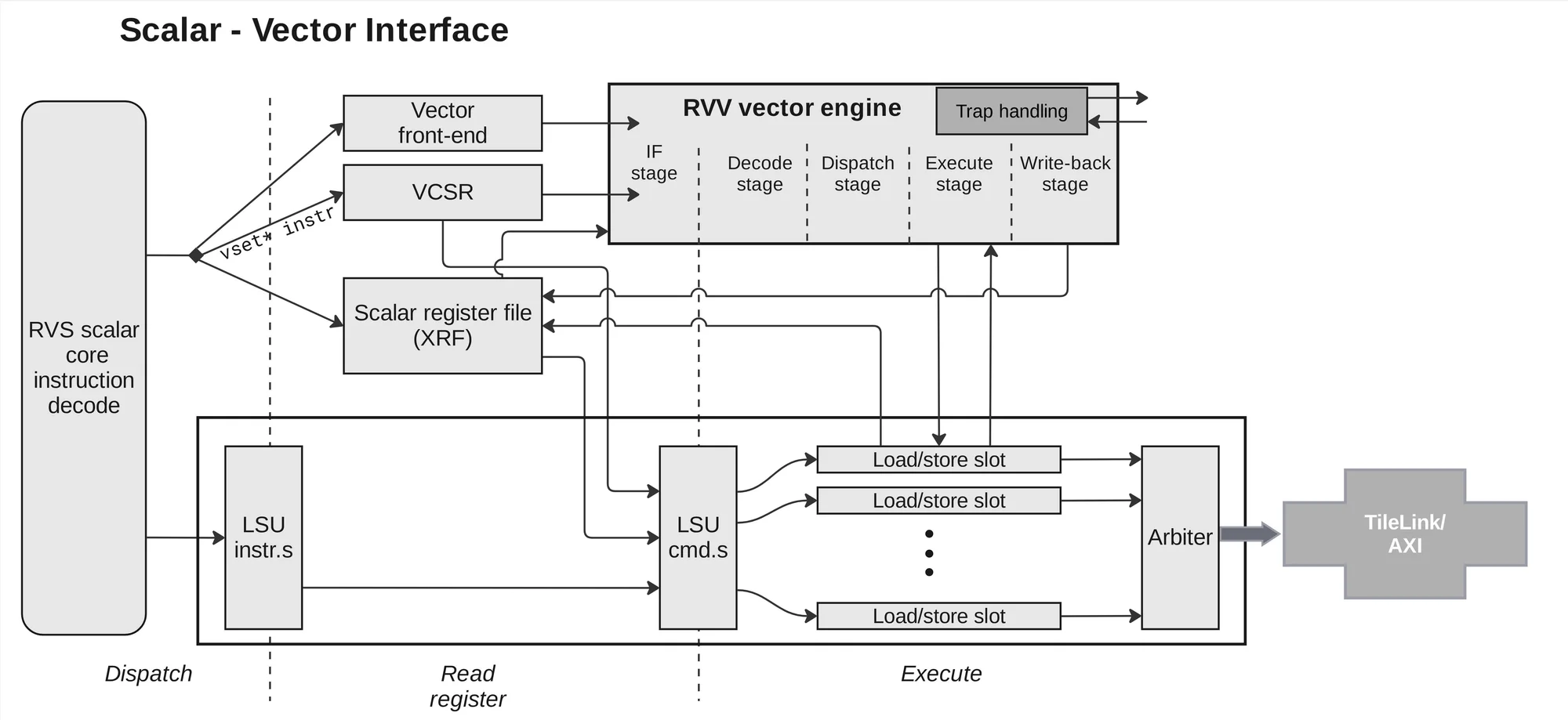 Related illustration — RVV vector engine micro-architecture | Coral | Google for Developers
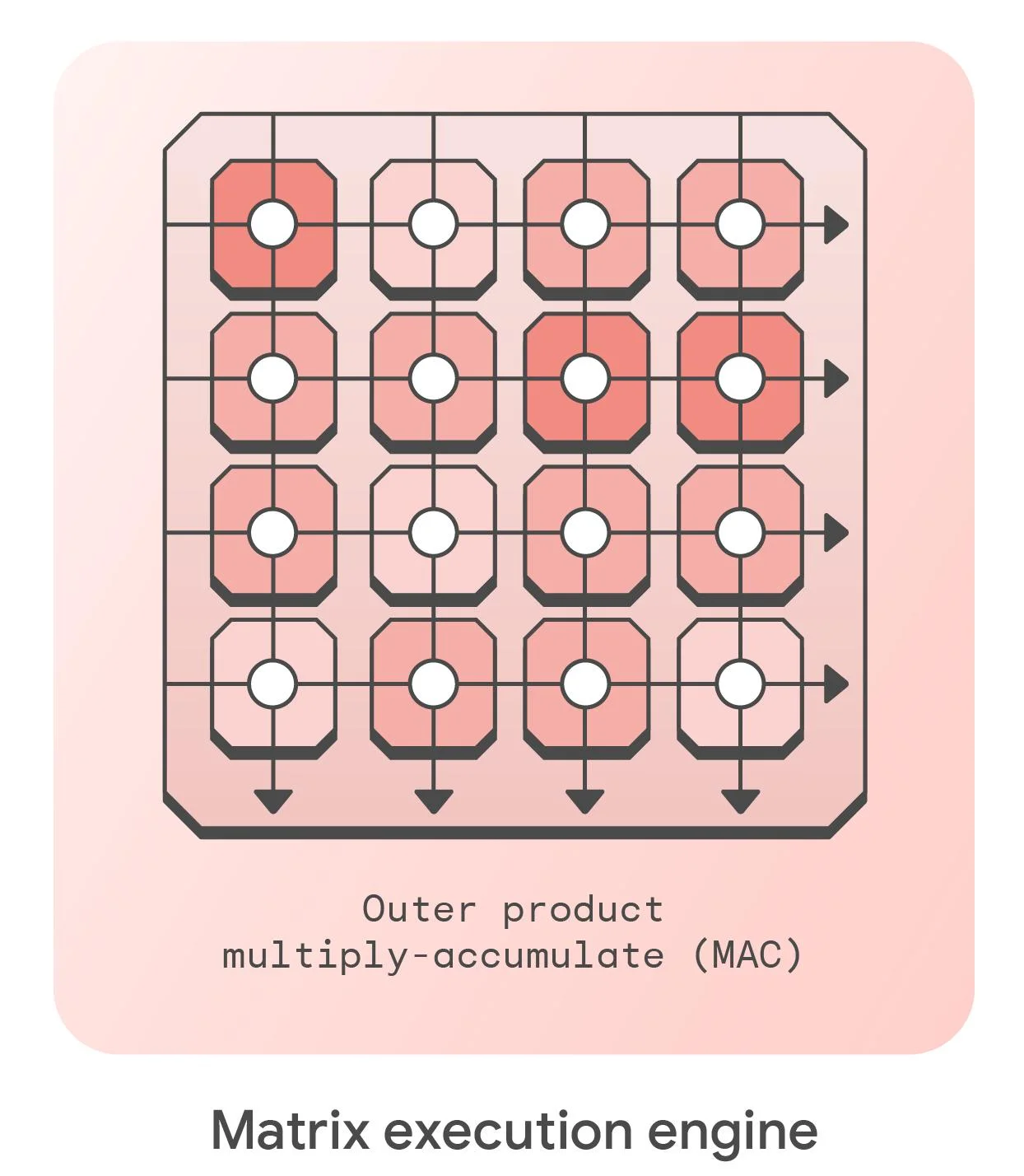 Related illustration — ML inference execution engines | Coral | Google for Developers
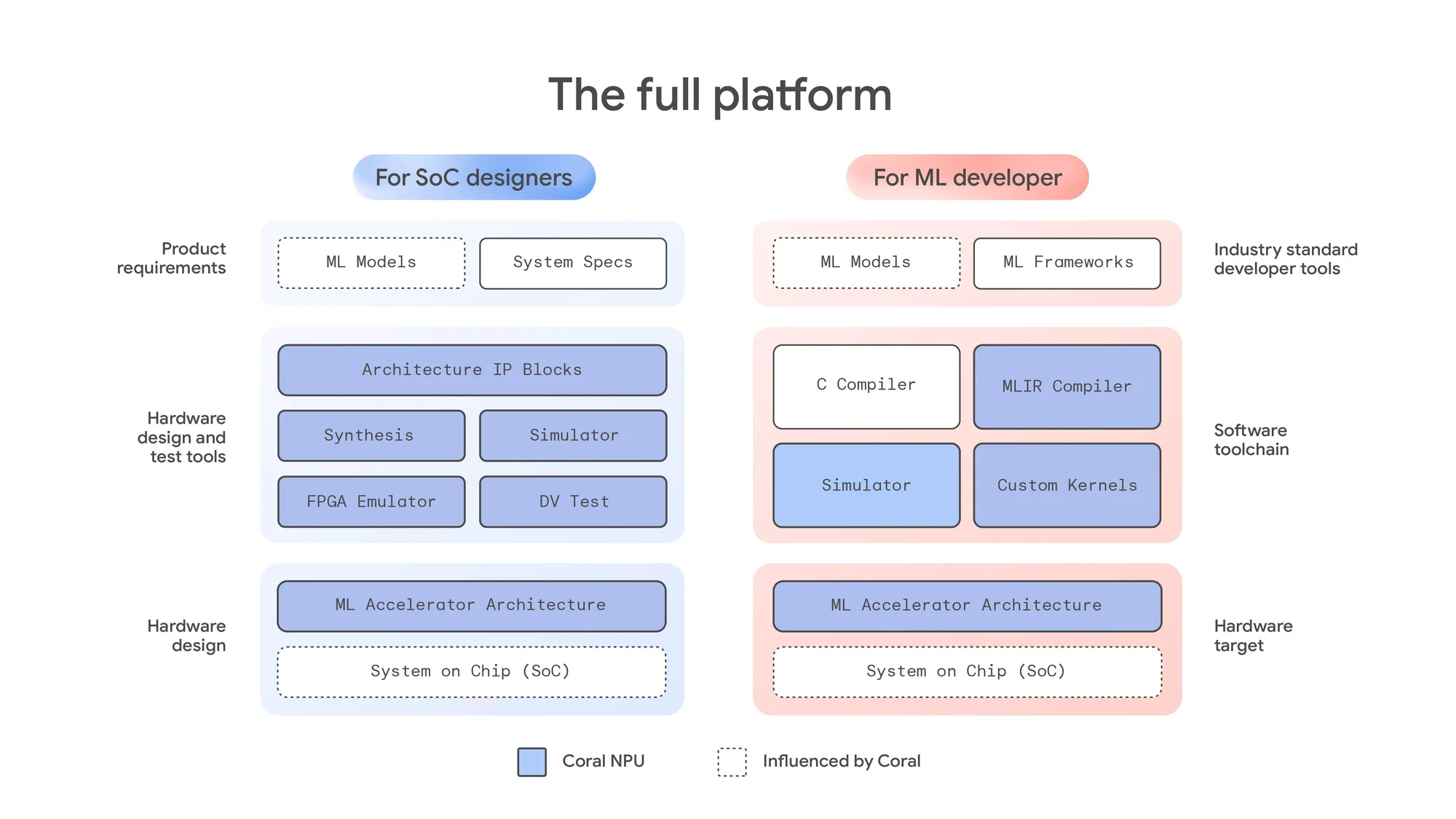 Related illustration — Introducing Coral NPU: A full-stack platform for Edge AI - Google Developers Blog
Released: October 20, 2026 · Edge AI & Hardware Architecture
Google Research has announced the completion of its 32-bit Coral NPU architecture, alongside a new open-source compiler and commercial hardware developments.
The project aims to establish a more portable foundation for low-power, on-device machine learning.
What's technically interesting?
The architecture combines several components:
RISC-V scalar execution handles general control operations.
RISC-V vector execution accelerates SIMD workloads.
A dedicated Matrix Execution Unit handles the matrix operations used heavily in neural networks.
The new matrix engine can perform 256 multiply-accumulate operations per cycle and is configurable for up to 1 TOPS.
Google is targeting approximately 10 mW average inference power, although that is an architectural target rather than a universal measured result for every workload.
The compiler is equally important.
Google has released Coral Compiler v1.0, based on IREE and MLIR.
It supports models originating from PyTorch, TensorFlow, and JAX.
The compiler translates model operations into hardware-specific instructions, handles operator fusion, and manages memory allocation for the accelerator.
Why it matters for developers
On-device AI is particularly valuable when applications require privacy, low latency, or offline execution.
However, accelerator fragmentation has historically complicated deployment.
Different chips often require different compilers, kernels, and quantization strategies.
Coral attempts to provide a more consistent development path.
Google also announced new hardware collaborations, including the Synaptics Astra SR200 series and Coralboard development kits.
The Coralboard SL is now generally available, providing a practical development platform for experimenting with the architecture.
Engineering takeaway: Coral is worth watching for embedded AI, robotics, and always-on intelligent devices. Its most important contribution may be the open compiler and hardware architecture rather than its peak performance specification.
The bigger picture
The most important pattern today is portability across software and hardware boundaries.
Cloudflare is experimenting with a faster, more portable TypeScript compiler. Google is making TPUs accessible through standard PyTorch interfaces. OpenAI is improving models' ability to work across programming languages and preserve existing application behavior.
Meanwhile, the certificate-security incident reinforces the importance of explicit trust boundaries, and Coral demonstrates how open compiler infrastructure can reduce hardware fragmentation.
For practical engineering priorities, tsrs is today's most immediately interesting developer-tool release, while TorchTPU is the most consequential AI infrastructure announcement.
The eMudhra incident deserves immediate attention from developers operating affected Cloudflare software.
Today's central lesson: software becomes easier to maintain and scale when its behavior can be preserved independently of the implementation, runtime, or hardware executing it.
These briefings combine summaries of linked primary sources with engineering commentary by Emran Hejazi. Source links accompany each story so you can examine the original announcements and their claims.
Every new issue, in your feed reader.
Explore the architecture and engineering decisions behind my projects.