Today's briefing covers five important developments from October 21–25, verified against official announcements, security incident reports, and engineering publications.
The biggest developments: Anthropic has demonstrated AI-generated mathematical proofs across 123 open-source libraries. LiteLLM has disclosed how attackers compromised its release pipeline and distributed malware. Security researchers have uncovered a large-scale attack targeting GitHub Actions secrets. Meanwhile, OpenAI is expanding into Google Cloud, and Google has introduced framework-independent tooling for building and deploying AI agents.
Today's central theme is making AI-powered software development more verifiable, portable, and secure.
Anthropic uses Claude to formally verify 123 open-source libraries
Published: October 22, 2026 · AI Research & Software Engineering
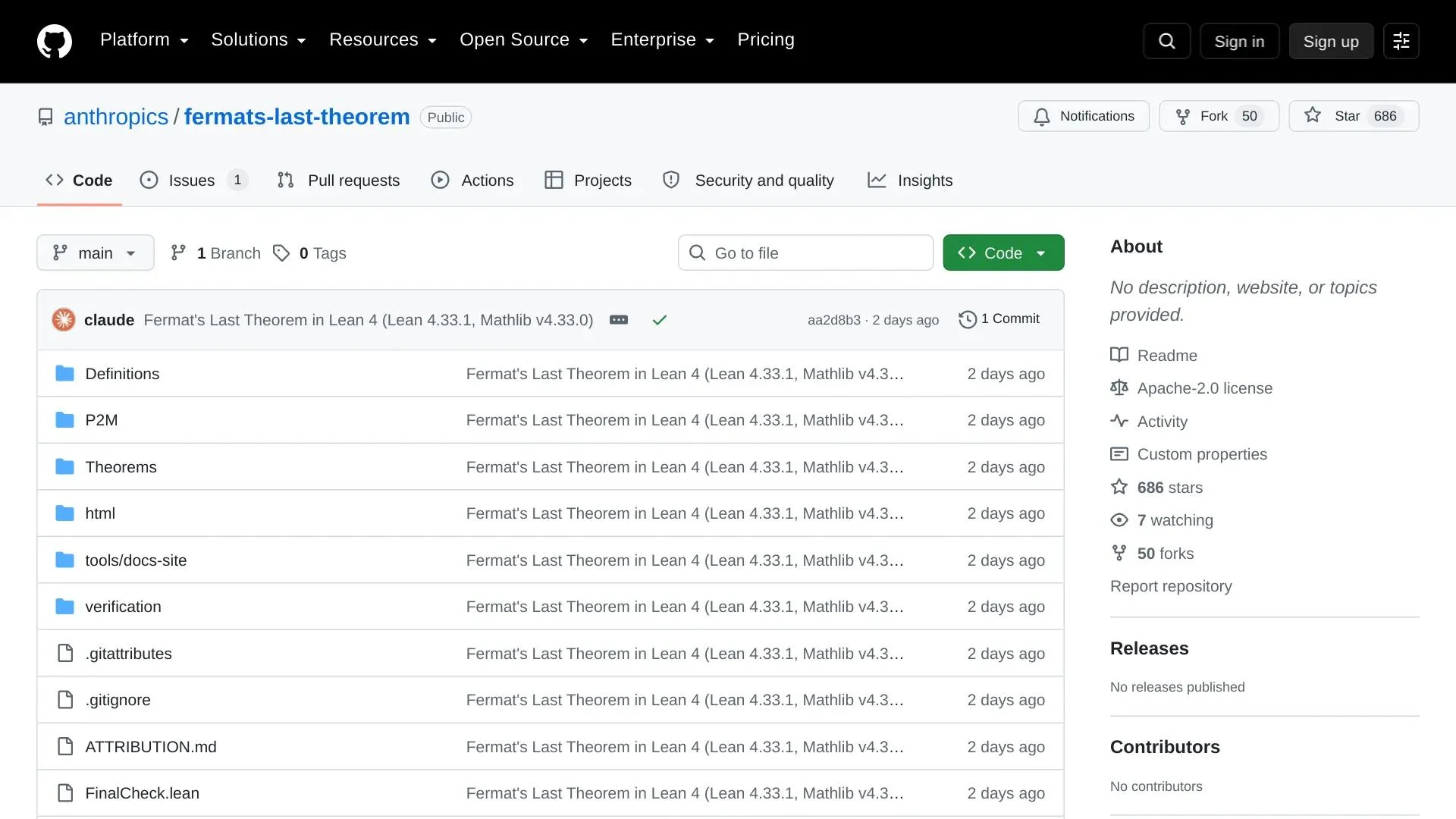
Anthropic has published one of the week's most consequential software-engineering research results.
Working with Theorem, Anthropic used Claude to generate machine-checkable mathematical proofs for security properties across 123 real-world open-source libraries.
Rather than simply testing programs against millions of inputs, the system attempts to prove that certain classes of failures cannot occur within explicitly defined conditions.
What's technically interesting?
The research converts existing fuzz tests into formal specifications.
Claude then generates proofs about the compiled program, and the Rocq proof assistant independently verifies whether those proofs satisfy the specifications.
The results are substantial:
| Metric | Result |
|---|---|
| Open-source libraries | 123 |
| Verified fuzz-test entry points | 239 |
| Generated proof code | Approximately 180 million lines |
| Maximum input size covered | 64 MB |
| Target architecture | RISC-V |
| Proof verification | Rocq |
| Research duration | A few weeks |
The most important distinction is that the mathematical proof is checked independently of the AI model that generated it.
The process resembles:
Existing Source Code
        ↓
Compile to RISC-V
        ↓
Formal Specification
        ↓
Claude Generates Proof
        ↓
Rocq Proof Checker
        ↓
Verified Property
Why this matters
Traditional fuzz testing executes large numbers of generated inputs, searching for crashes or incorrect behavior.
However, testing cannot generally establish that no undiscovered input will trigger a failure.
Formal verification can establish stronger guarantees within a defined mathematical model.
Anthropic reports that the process also uncovered hundreds of bugs, including memory-safety issues that had survived extensive conventional testing.
An important limitation: these results do not prove that all 123 libraries are universally bug-free.
The proofs apply to particular entry points and assumptions, including single-threaded, statically linked RISC-V binaries running under modeled Linux behavior. Real-world deployments may differ.
Why it matters for developers
This research could eventually change how critical software is tested and reviewed.
Instead of relying exclusively on:
Unit tests → Integration tests → Fuzzing → Code review
Engineering teams could incorporate:
Tests → Formal specifications → AI-generated proofs → Independent verification
Engineering takeaway: formal verification is becoming a more realistic addition to software-development pipelines.
The most promising early applications are security-sensitive libraries, parsers, cryptographic components, and infrastructure code with well-defined correctness properties.
LiteLLM discloses how attackers hijacked its release pipeline and published malicious packages
Incident: October 21 · Root-cause report: October 23, 2026
LiteLLM — Official incident investigation · Affected versions and remediation instructions
LiteLLM has published a detailed investigation into a serious software supply-chain attack.
On October 21, attackers compromised the project's release infrastructure and distributed a malicious version of its widely used Python package.
The affected release was:
litellm==1.107.0
The compromised package contained credential-stealing malware and remote-code-execution functionality.
Malicious artifacts were distributed through PyPI and container registries before being removed.
What's technically interesting?
The investigation reveals a multistage attack that began months earlier.
On May 27, a configuration file containing an internal Agent Platform master key was accidentally committed to a public repository.
Although the commit was quickly replaced, the exposed credential was never revoked.
On October 10, an attacker used that credential to access LiteLLM's agent infrastructure.
That infrastructure contained a GitHub CLI OAuth token associated with an organization owner.
The attacker subsequently obtained additional maintainer credentials, modified release infrastructure, and redirected the build process toward an attacker-controlled repository.
The attack chain was:
Exposed Master Key
        ↓
Agent Platform Access
        ↓
GitHub Owner Token
        ↓
Additional CI Credentials
        ↓
Release Pipeline Modification
        ↓
Malicious Package Publication
One particularly important detail is that the attacker used legitimate credentials to satisfy the release approval process.
The resulting artifacts were published through the project's normal release infrastructure.
This demonstrates why package provenance and signed releases are insufficient when the underlying build authority has been compromised.
Why it matters for developers
LiteLLM is used as infrastructure for routing requests between applications and AI models.
Compromising such a component can expose model-provider credentials, application secrets, database credentials, and cloud infrastructure.
The incident also demonstrates a critical weakness in autonomous development systems: agents operating with highly privileged developer credentials can become an indirect route to infrastructure compromise.
Recommended action
If you use LiteLLM, check whether any environment installed or executed version 1.107.0.
The maintainers recommend treating affected environments as compromised, rebuilding them from clean sources, and rotating accessible credentials.
Their incident guidance identifies 1.106.2 as a safe version to pin during remediation.
Engineering takeaway: never expose organization-owner credentials to coding agents or ordinary automation services.
Use narrowly scoped identities, enforce credential rotation, and independently verify the source commit used to produce release artifacts.
OpenAI models and Codex are coming to Google Cloud's Model Garden
Announced: October 22, 2026 · AI Infrastructure
OpenAI and Google have announced a partnership bringing OpenAI's frontier models and Codex workflows into Google Cloud's Model Garden.
This is a significant development for enterprise AI infrastructure.
Organizations using Google Cloud will be able to access OpenAI models through their existing cloud environment rather than managing a completely separate provider relationship.
What's technically interesting?
The integration introduces three important capabilities.
Model Garden availability: OpenAI frontier models will become accessible through Google Cloud's model catalog.
Codex integration: Organizations will be able to use OpenAI's agentic software-development workflows within Google's cloud ecosystem.
Cloud-native governance: Enterprises can manage access using Google Cloud's existing identity, access-control, and data-governance infrastructure.
The architecture can be understood as:
Enterprise Application
        ↓
Google Cloud
        ↓
Model Garden
        │
        ├── OpenAI Models
        ├── Google Models
        └── Other Providers
        ↓
Application / Agent Workflow
The partnership also includes planned OpenAI model availability in Google Antigravity and Gemini Agent.
Google Cloud customers will be able to purchase OpenAI models through Google Cloud Marketplace and use eligible existing cloud-spending commitments.
Availability: General availability is planned for the coming weeks. The announcement does not mean every integration is already available.
Why it matters for developers
This is another step toward multi-provider AI infrastructure.
Historically, using different model providers often meant maintaining separate credentials, billing arrangements, monitoring systems, and operational integrations.
Cloud platforms are increasingly consolidating these responsibilities.
For developers building AI applications, the implications include easier model evaluation, centralized governance, and potentially simpler procurement.
However, provider abstraction does not automatically guarantee identical model behavior, API features, or pricing.
Engineering takeaway: design model integrations behind a provider-independent application interface.
Keep model selection configurable, maintain evaluation datasets, and measure task-level performance before switching providers.
The most important benefit is the ability to change models without rewriting the surrounding application architecture.
Wiz uncovers Gheist — an ongoing GitHub Actions attack affecting hundreds of accounts
Research published: October 25, 2026 · Supply-Chain Security
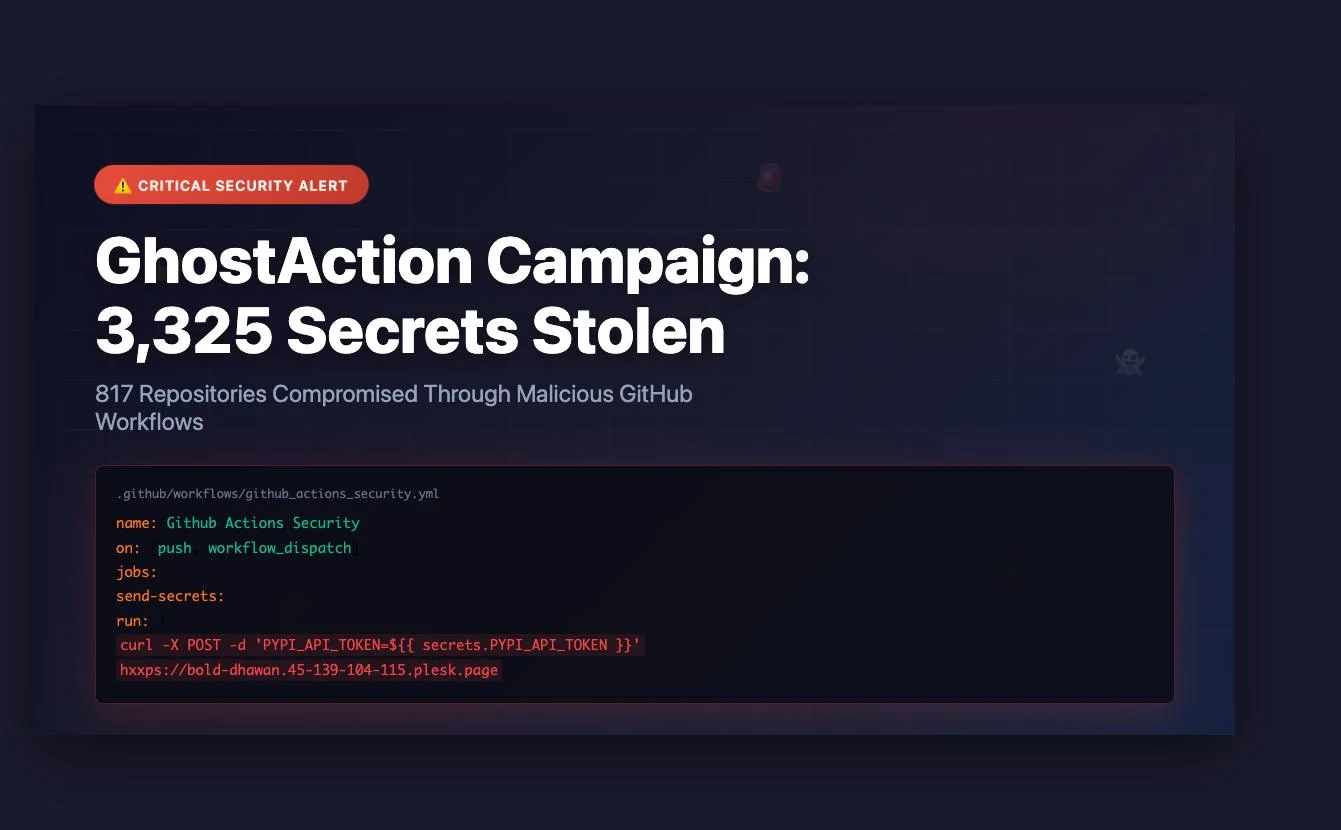
Security researchers at Wiz have disclosed an ongoing campaign targeting repositories through stolen GitHub credentials.
The campaign, named Gheist, uses compromised tokens to introduce malicious GitHub Actions workflows.
Wiz reports recovering more than 13,500 planted branches across over 850 compromised accounts.
The activity has been observed since September 15 and remained ongoing as of October 24.
What's technically interesting?
Unlike attacks that depend on convincing a developer to install a malicious dependency, Gheist uses stolen repository credentials to introduce unauthorized CI workflows.
The attack creates temporary branches and adds workflow files designed to expose repository secrets.
The attacker then retrieves the workflow logs through GitHub's own API and deletes the execution records.
This is important because the attack doesn't require a separate command-and-control server.
The existing CI/CD platform becomes both the execution environment and the mechanism for retrieving sensitive information.
A critical security distinction
Wiz reports that GitHub's newer workflow-approval protections successfully prevented execution in the public repositories it examined.
However, the researchers observed successful execution in private repositories and enterprise environments where the same protections did not apply.
The investigation also identified attempts to target self-hosted runners and collect credentials from their execution environments.
Why it matters for developers
GitHub Actions is frequently trusted with highly sensitive production credentials.
These can include deployment keys, cloud-provider identities, package-registry credentials, and database connection information.
A compromised GitHub token may therefore expose considerably more than source code.
Recommended action
Review repository audit logs for unexpected workflow additions, suspicious branches, and unusual workflow execution.
In particular, Wiz identifies branches matching ci-sync-* and unexpected sync-check workflows as useful investigation indicators.
For affected environments, the researchers recommend revoking compromised tokens and rotating accessible secrets.
Engineering takeaway: treat CI/CD systems as privileged production infrastructure.
Require approvals for sensitive deployment environments, scope cloud identities to protected branches, and avoid persistent self-hosted runners with broad access to host credentials.
Google introduces framework-independent Agents CLI extensions — supporting LangChain, LangGraph, and custom deployment policies
Published: October 21, 2026 · Developer Tools & Agent Architecture
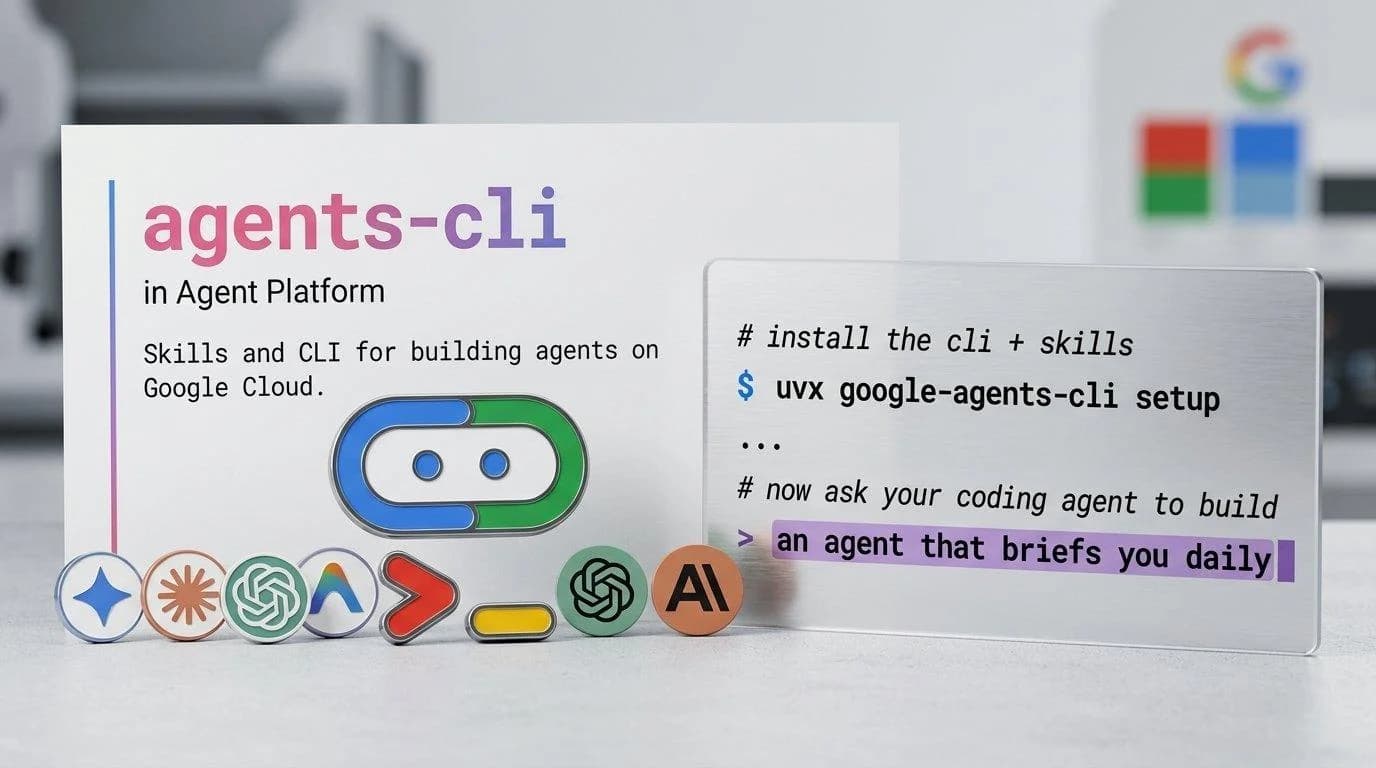
Google has published a technical introduction to the Agents CLI Extension System, a new mechanism for customizing the development lifecycle of AI agents.
The system allows developers to use different agent frameworks while retaining a consistent workflow for scaffolding, execution, evaluation, and deployment.
This addresses a practical problem in agent engineering: different frameworks frequently require different development and deployment processes.
What's technically interesting?
The Extension System allows developers to replace built-in CLI commands or introduce additional commands without modifying the underlying CLI.
An extension is defined through a manifest:
schema: agents-cli-extension/v1alpha1

name: custom-deployment

commands:
  # Custom command definitions
The manifest can override existing commands or expose additional workflows.
Extensions are distributed through Git repositories rather than a centralized package registry.
Importantly, the CLI resolves extension references to exact Git commit hashes and records them in lockfiles.
This provides reproducibility across developer machines and CI environments.
Framework interoperability
Google demonstrates how to use the extension mechanism with LangChain and LangGraph.
Developers can scaffold an agent using:
agents-cli create my-agent \
  --agent google/agents-cli/extensions/langchain/template@v1.8.0 \
  -d cloud_run
The generated project integrates with the Agents CLI lifecycle while using LangChain rather than requiring Google's Agent Development Kit.
Google also demonstrates a custom deployment extension that introduces software bill-of-materials scanning before deployment.
This is particularly interesting because it makes organizational policies part of the development toolchain.
The Extension System is experimental in Agents CLI 1.8.0, and its interfaces may change.
Why it matters for developers
As organizations adopt multiple agent frameworks, standardizing the surrounding infrastructure becomes increasingly important.
An engineering team might use one framework for research agents, another for coding agents, and a third for production workflow automation.
Maintaining completely separate deployment and evaluation pipelines for each framework creates unnecessary complexity.
The Extension System demonstrates a different approach:
Framework-specific execution + standardized development lifecycle.
Engineering takeaway: keep agent business logic independent of deployment infrastructure.
Use version-pinned extensions, reproducible environments, and centralized security policies to make agent systems easier to maintain as frameworks evolve.
The bigger picture
The strongest theme across these five developments is reducing the amount of trust placed in individual components.
Anthropic's formal-verification research demonstrates how AI-generated work can be checked independently.
The LiteLLM incident shows what happens when an exposed credential leads to privileged access across interconnected development systems.
Wiz's Gheist investigation reinforces that CI/CD infrastructure must enforce its own security boundaries.
OpenAI's Google Cloud partnership is expanding model portability, while Google's Agents CLI extensions demonstrate how development workflows can become less dependent on individual frameworks.
What deserves your attention first?
| Priority | Development | Engineering significance |
|---|---|---|
| 🔴 Critical | LiteLLM supply-chain compromise | Audit affected dependencies and credentials |
| 🔴 High | Gheist GitHub Actions campaign | Review CI/CD permissions and secrets |
| 🟠 High | Anthropic formal verification | Major advancement in AI-assisted correctness |
| 🟠 High | OpenAI on Google Cloud | Greater flexibility in model infrastructure |
| 🟡 Medium | Google Agents CLI extensions | More portable agent-development workflows |
Most important AI research: Anthropic's formal verification of 123 open-source libraries.
Most urgent security issue: LiteLLM's compromised release, particularly for developers operating AI gateways.
Most important infrastructure development: OpenAI's expansion into Google Cloud.
Most immediately useful developer-tool improvement: Google's framework-independent Agents CLI extensions.
The bigger picture
The industry is moving toward a model where AI can generate increasingly complex software, but independent infrastructure must verify that software and control how it reaches production.
A reliable development pipeline increasingly needs to combine:
AI-assisted implementation → Independent verification → Reproducible builds → Restricted deployment credentials → Continuous security monitoring.
The central lesson is that software reliability depends not only on how code is written, but also on how its behavior, dependencies, credentials, and deployment artifacts are verified.
As AI agents become more capable, those independent controls become more important—not less.
These briefings combine summaries of linked primary sources with engineering commentary by Emran Hejazi. Source links accompany each story so you can examine the original announcements and their claims.
Every new issue, in your feed reader.
Explore the architecture and engineering decisions behind my projects.